Salmon Faverolles originated in a small village in France called Faverolles. Their genetic composition is believed to be a mix of Houdan, Brahma, French Rennes, Flemish cuckoo, Malines, and Dorking. It is entirely possible that other breeds were used too, we will never know for sure since no records exist of the creation of this breed. Read Article
The Speckled Sussex is an old-time favorite in its homeland of England. It has endured over the centuries to become a firm favorite with a dedicated following. Although it, and other varieties of Sussex fowl, was in danger of dying out in the early 1900s, a few die-hard poultry keepers kept the lines going, greatly improving on the stock in hand to give us the robust, healthy stock that we have today. Read Article
Choosing a Breed for Your Spring Flock? Meet the Brahma! Cold-Hardy & Heat Tolerant
Buff BrahmaLight Brahma
The Brahma chicken is one of the best choices if you want a feather-footed breed that can handle heat better than most. They are large, calm birds with a calm and gentle nature. While Brahmas were originally developed for cold climates, with good shade, plenty of airflow, Brahmas do quite well in hot climates. Brahmas are easy to recognize by their big bodies, feathered legs and feet, and broad, sturdy build. Despite their size, they are very calm, friendly, and slow-moving. They are not aggressive and tend to get along well with other birds.
Hens usually weigh around 8–10 pounds, and roosters can reach 10–12 pounds or more. They typically lay about 150–180 large brown eggs per year.
These chickens come in three common colors: Light, Dark, and Buff. Light Brahmas are white with black markings on the neck and tail, Buff Brahmas have warm golden feathers with darker accents, and Dark Brahmas have deeper gray and black coloring. In hot climates, lighter colors such as Light and Buff Brahmas are often a better choice, as they absorb less heat than darker birds. When it comes to egg laying, Brahma hens are steady and reliable, though not high-production layers. Brahmas do take longer to mature than smaller breeds, usually starting to lay between six and eight months of age, but once they begin, they are consistent.


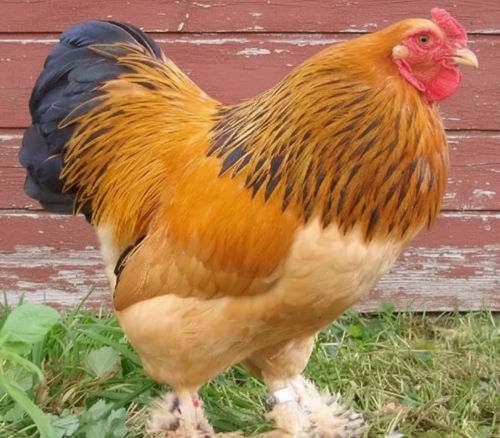
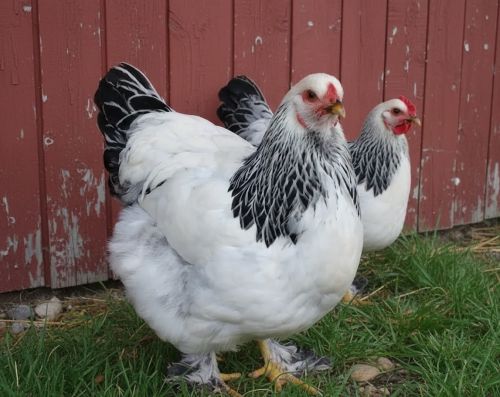
 The Brahma chicken is one of the best choices if you want a feather-footed breed that can handle heat better than most. They are large, calm birds with a calm and gentle nature. While Brahmas were originally developed for cold climates, with good shade, plenty of airflow, Brahmas do quite well in hot climates.
 TBN Ranch Chicken Keeping Resources