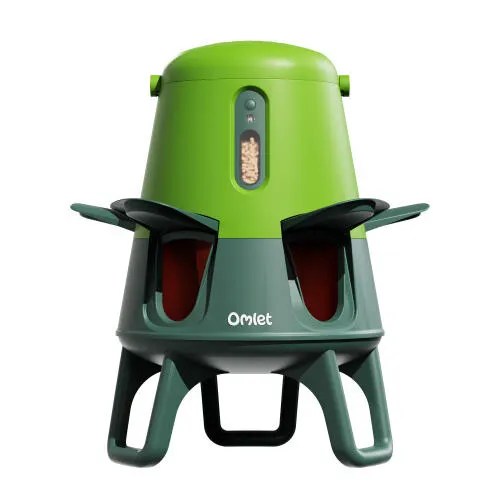
The Omlet Smart Chicken Feeder. Is it Everything it Claims to Be?

Not sponsored by Omlet, I bought the feeder, and here’s my honest opinion.

Well, I did it, I bit the bullet and bought this fancy (pricey) smart feeder, hoping it would solve my feed waste problem and help keep those pesty sparrows out of my feed. They say it’s no-spill, automatically opens and closes, sends notifications right to your phone, and has a reliable app. Is it true? Yes! I’ve been using the 12 lb feeder for two weeks, and I couldn’t be happier. Setup was easy, though like any new device, taking your time to read the manual helps you fully understand its potential.
I have zero feed on the ground, which means no waste, and that means it saves money. Not to mention no dropped feed on the ground and a closed feeder at night keeps the rodents away. I set the feeder to open at dawn and close at dusk, but you can customize the schedule anytime directly from your phone. The 12 lb capacity fed my six hens for a full week—exactly as Omlet promised. Don’t have a smartphone? No problem. The feeder works right out of the box using a built-in light sensor to open and close automatically. There’s nothing to complain about, this feeder is a total win on every level.
Price: Yep, kinda spendy, $229+ shipping. Is it worth it? 100% yes.
Want to learn more? Omlet Smart Feeder

Back to HOME PAGE

Aldi’s Eggs are MUCH Cheaper, Why?

It’s just efficient business practices, plain & simple. There’s absolutely no difference between Aldi’s eggs than those from big name grocery chains. In fact, they often all come from the same suppliers.

Their eggs are sold under the private label brand Goldhen. While the company does not publicly advertise its suppliers, industry tracking based on packaging plant codes indicates their major supplier is 1Rose Acre Farms, which is one of the largest egg producers in the United States. This same supplier often provides eggs for Walmart.
The Source of the Savings: Aldi’s low prices are the result of “no-frills” operational savings that are passed on to you. For example, about 90% of Aldi’s products are house brands. By cutting out the middleman of big name brands, they avoid paying for third party marketing and brand premiums. What does that mean? They deal more directly with manufacturers and skips extra layers that usually add cost. Big name brands means companies like Kellogg’s, Coca-Cola, or Doritos. Third party marketing refers to expensive advertising, TV commercials, celebrity endorsements, and large marketing campaigns those brands pay for. Brand premiums means customers often pay extra just because a product has a famous label.
How Aldi’s Keeps the Overhead Low: They operate with very small staffs, employees multitask and share duties, such as stocking, cashiering, etc. Customers bag their own groceries, which significantly lowers their overhead. Eggs arrive in display ready shipping boxes, meaning that instead of an employee stacking individual cartons on a shelf, they simply slide the entire shipping crate into the cooler. Also, Aldi doesn’t hire employees to gather carts from the parking lot. Instead, they require a quarter deposit to unlock a cart. This deposit is refunded to customers when they secure the cart back in the bay.
If Aldi’s hasn’t come to your neighborhood yet, I hope it does soon!

Back to HOME PAGE
  1. Rose Acre Farms is the second-largest egg producer in the United States. Headquartered in Seymour, Indiana, the company is a massive player in the agricultural sector, supplying shell eggs, specialty eggs, and processed egg products to major retailers, food service providers, and industrial manufacturers nationwide. The company manages roughly 25.5 million birds across 15 to 17 primary laying facilities spanning seven states, including Indiana, Iowa, Illinois, Missouri, Georgia, North Carolina, and Arizona. ↩︎

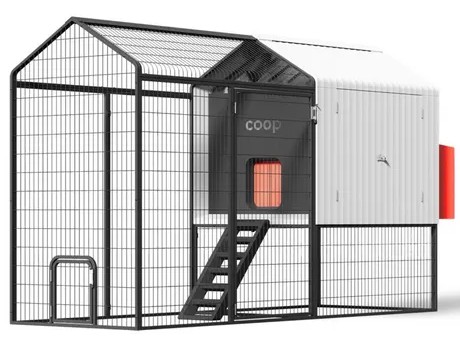
Seriously? Let’s Look at the Spendy AI Smart Coop by HatchingTime

First of all, I have no experience with this “Smart Coop,” so take that however you want. But I just left the website for this coop, and right off the bat I see issues. On top of the already SHOCKING price tag, be prepared to dig even deeper into your pockets if you think this coop is suitable for a new chicken keeper. I say “new” because any seasoned chicken keeper is laughing at this setup. Maybe as an extra coop, for quarantine, sick, or injured birds, but at that price? No.
Let’s Get to the Root of the Issues…
Unless it has a floor, which it isn’t described as having, it’s not at all predator or rodent proof, so plan on an additional expense there because predators don’t just exist at night, they are a threat at all times. The wire spacing is also too large, small predators can easily squeeze through it. And the size of this coop? The square footage is only really suitable for about 4 standard birds, or 5 bantams, and I’m being generous. The manufacturer claims 8 birds, that is true, but expect drama, bullying, and unhappy birds due to overcrowding.
If you can still see the possibilities in this coop, and for some people it might be a fit, that’s fair. But are you 100 percent comfortable trusting technology, especially AI in its early stages, to handle something as important as feeding, watering, safety, and relying on solar?
That’s a NO for me.
We all have our own opinions on the best way to enjoy our flocks, so if your interested, here’s the website for the AI Smart Coop by HatchingTime, because to be honest, only you know what fits your needs best. 🙂

Back to HOME PAGE