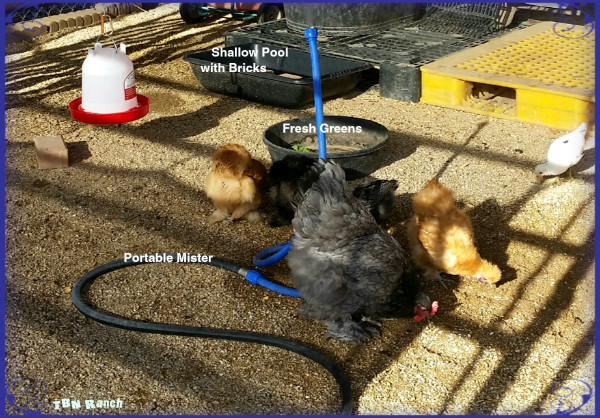
Oh my! 116 today and keeping chickens in this ridiculous heat adds to my chore list when it’s just so hard to be outdoors. But for the love of chickens, I pour on the sunscreen, hide from the sun under a giant umbrella, and head out to the barn. By 8 AM it’s already in the 90s and too hot for the flock to be confined. It’s most certainly better to allow chickens to dig holes, seek out shade, and follow their instincts on ways to best battle the heat. Of course, as a desert dweller, I have a few tricks up my sleeve to help them find relief. A Few Tips, Create a Cooling Station Here’s what I do. There’s a portable mist system in the shade and a low-sided shallow pool with a few bricks inside for them to sit on. The bricks stay cool, some use it, and some don’t. None of the birds seem to fancy the mist system, nevertheless, it does cool the immediate air by about 20 degrees, so I entice them to the area with fresh greens or fruit.
Layer pellets are available, but kept in their coop where the temperature is undesirable. Considering there is corn in feed, it should be kept at a minimum because corn produces heat. Some chicken keepers will pull feed completely during the day when it’s this hot. But I find this unnecessary since chickens limit their food intake by choice… at least mine do.
Predators are a worry when the chickens are allowed to free roam, but let’s face it, confined chickens in 116+ temperatures is a death sentence in these parts. I take my chances, keep an eye on them, and hope during the day predators won’t be actively looking for food until sundown. Chickens like to dig holes, don’t discourage this. It’s their instinct to find cooler ground. They will look for anywhere water has been and choose that spot as the ideal place to settle into. Help them out, dump their drinkers in the same place every day, or leave a hose in the shade on a tiny drip. Keep the drinkers clean and offer COLD water during the day. Chickens aren’t fond of hot drinking water. Large drinkers will stay colder longer, but I also use shallow buckets or bowls so I can add a chunk of ice during the day. The worst choice for a water source (where it’s super hot) is nipple drinkers, here’s why…
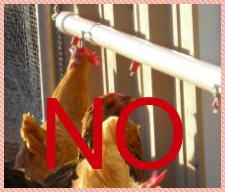
Nipple drinkers are neat gadgets, but if you live in an oven, forget using them, especially the type with those tiny drinker cups. The water in the small cups gets way too hot and chickens avoid using them. Using nipples is just as useless in my opinion. The water in the container itself may be cool, but the water sitting in the lines heats up fast, and your birds won’t drink enough to stay hydrated. Remember, the sun moves, either you have to move your drinker to keep it in the shade, or provide water in various locations to assure there is cool water throughout the day. Nipple drinkers are not usually movable, they’re meant to be low maintenance, fill ’em and leave ’em… which is exactly why they’re not used on my farm.
Keeping your birds hydrated with cool water is absolutely vital… and just to make sure they have enough fluid intake, offer up some watermelon!
The sun is the greatest threat to confined chickens, particularly in cramped or poorly ventilated areas. In hot climates like Phoenix, where temperatures can exceed 115°F, taking extra precautions is vital to keep your flock healthy and comfortable. When chickens become stressed or overheated, they may develop behavioral problems, reduce egg production, stop laying entirely, or, in severe cases, suffer fatal consequences. Here’s what you can do to keep your chickens happy and healthy this summer:
Suitable Housing
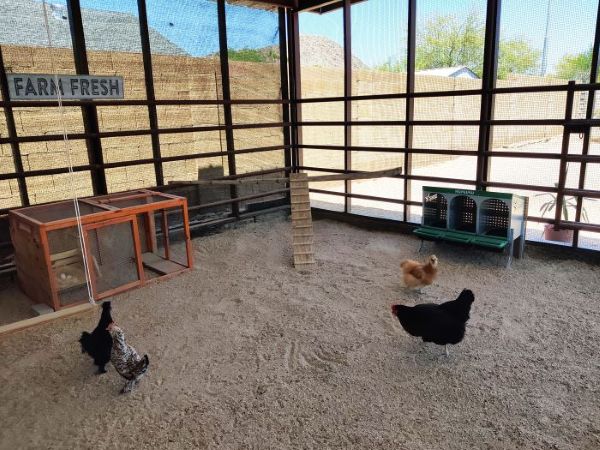
Meeting the basic needs of chickens during hot weather isn’t difficult. With a little planning and effort, your flock can stay comfortable and healthy even in extreme heat. One of the most critical factors is adequate space. Overcrowded housing drastically increases the risk of heat stress and can lead to aggressive behaviors like pecking, bullying, or piling, which only make the situation worse. Even if your coop has some shade, cramped conditions trap heat, reduce airflow, and create a dangerous environment. Ventilation alone isn’t enough if birds don’t have room to spread out. Ideally, each chicken should have at least 4 square feet of indoor coop space and 8–10 square feet of outdoor run space, more in hot weather. This extra space allows birds to distance themselves from one another, reduce body heat buildup, and access cooler areas. If your coop is undersized, the simplest and most effective solution is to build a spacious, secure run around it. Use shade cloth, trees, or other cover to protect the run from direct sun, and ensure the area has good airflow. Even temporary fencing can help provide relief by giving the birds more room during heatwaves. In hot weather, space isn’t just about comfort, it’s about survival. The more room your chickens have to move freely and access shade and fresh air, the better their chances of avoiding dangerous heat stress.
Coop Location, Shade, and Providing Comfort
Chickens need access to shade. Observe how the sun moves throughout the day and ensure their coop and play area have shade in both the morning and afternoon. Keep their water out of direct sunlight and refill drinkers with cold water in the afternoon. On especially hot days, freeze a chunk of ice and place it in a shallow water container to help keep them cool. Familiarize yourself with artificial shade options like shade cloth, shade sails, and my personal favorite, grommeted mesh shade tarps. Avoid using waterproof tarps, as they block airflow, which is essential for your birds’ well-being. Chickens naturally cool off by digging into the dirt, so it’s important to provide them with access to bare ground. A portable mister can also be incredibly helpful. Position it high enough so that the mist cools the air without soaking the birds. If your chickens free-roam, a damp area beneath a shade tree or low bush can become a perfect oasis. Try digging a shallow hole and letting a hose drip slowly into it. On particularly hot days, flood the area about an inch deep. Your chickens will stay cool and entertained as they search for worms and insects in the moist soil.
Warning Signs of Physical Heat Distress
A common sign of heat stress in chickens is a change in behavior, such as bullying, pecking at one another, or pacing. When overheated, chickens often hold their wings away from their bodies and pant, or do both simultaneously. More serious and dangerous signs of heat exhaustion include lethargy, pale combs or wattles, disorientation, and stumbling. At this stage, it’s crucial to act quickly. The best immediate response is to submerge the bird in a large bucket or tub filled with warm (not cold) water to help gradually lower its body temperature. Afterward, place the bird in a shaded, preferably grassy area, separated from the rest of the flock. If possible, set up a fan to increase airflow around the bird. However, avoid bringing the chicken indoors, even if it’s cooler, as the sudden temperature change can cause additional stress. Early Warning Signs of Heat Distress: Panting or open-mouth breathing Holding wings away from the body to increase airflow Reduced activity or restlessness Increased water consumption Reduced feed intake Pacing or agitation Spreading out on the ground or stretching out legs and wings Pale or shrunken combs and wattles
Quick Fix Fluids for Heat Distressed Birds
An excellent source of hydration on a hot summer day is watermelon! If you have a large flock, simply cut a watermelon in half, place it on the ground, and let them feast, they’ll pick it clean and love every minute of it. Another helpful option is to add electrolytes to your chickens’ water. You can find electrolyte supplements at your local feed store, and they provide an extra boost to help your flock stay hydrated and healthy during extreme heat. Smart Feed Choices in Summer: Scratch feed should be avoided during the summer months. Most scratch mixes contain a high amount of corn, which is considered a “hot” feed—it generates extra body heat during digestion. This added heat is the last thing your chickens need when they’re already struggling to stay cool. Instead, focus on providing fresh, hydrating foods and cool, clean water to help them beat the heat.
Best Bedding for Chickens in Summer
Sand: (Clean, Construction-Grade) Why it’s ideal: Sand stays cooler than other bedding types, drains well, and doesn’t retain moisture, which helps control odors and bacteria. Benefits: Doesn’t harbor parasites easily. Easy to clean with a cat litter scoop. Reflects heat away rather than trapping it. Pine Shavings (As a Secondary Option) Note: Pine shavings are absorbent and offer a clean, low-dust environment, however, shavings can retain heat and moisture, so use a thin layer and stir or replace regularly in hot weather.
❌ Bedding to Avoid in Summer
Straw of Hay: (When Damp of Deeply Layered) Why to avoid: Straw and hay can trap moisture and heat, creating the perfect environment for mold, bacteria, and ammonia buildup. This can lead to respiratory problems or heat stress. Especially risky in deep-litter systems during hot weather. Cedar Shavings: Why to avoid: Cedar emits strong oils and fumes that can irritate chickens’ respiratory systems, especially in hot, enclosed environments.
A fan to help move the air around your birds is extremely beneficial.






 TBN Ranch Chicken Keeping Resources