Chickens, Heat Distress Symptoms, Treatment, Prevention

Heat distress can lead to heat stroke, this is more common in poorly ventilated or coops that are either too small or over crowded. Here are some guidelines for both treatment and prevention of heat distress in chickens. Don’t bring your chickens indoors where it’s cooler, this will make it difficult for your birds to acclimate when returned to the coop. Move them to a shaded area and follow these steps listed below.

What Are The Signs of Heat Distress?


Panting: Chickens will often pant to try to cool themselves down when they are overheated. This is a common and visible sign of heat stress.
Wings drooping: When chickens are too hot, they may spread their wings away from their bodies in an attempt to release heat.
Lethargy: Heat-stressed chickens may appear lethargic and less active than usual. They may sit or lie down more frequently.
Pale comb and wattles: The comb and wattles of a chicken may appear pale or discolored during heat stress.
Diarrhea: Heat-stressed chickens may have loose or watery droppings.

Treating Heat Distress

Provide access to cool water: Offer the affected chicken cool, (not cold) water to drink. You can add electrolytes to the water to help with rehydration. This is available at any feed store.
Spray or soak the chicken with water: Lightly spraying or gently soaking the chicken with cool/warm water can help lower its body temperature. Do not submerge the bird in cold water, this can lead to shock.
Use fans or air circulation: If possible, set up fans or improve ventilation in the coop to reduce the temperature.
Use Shade Cloth: Never use tarps where birds are housed, they inhibit ventilation.

How to Avoid Heat Distress

Avoid overcrowding: Overcrowding can lead to increased body heat generation. Provide enough space for chickens to move around comfortably.
Limit outdoor activities during peak heat: If possible, restrict the chickens’ outdoor activities during the hottest parts of the day and allow them to roam when the temperatures are cooler.
Mist or sprinkle water in the area: Setting up a misting system or lightly sprinkling water in the chicken’s environment can help cool the air and reduce heat stress.
Monitor weather conditions: Stay aware of weather forecasts and plan ahead for extreme heat by implementing extra measures to protect the chickens.
Time feeding schedules: Consider feeding chickens during the cooler parts of the day to avoid additional heat generated during digestion.

Prevention is key to avoiding heat stroke in chickens. Being proactive and attentive to their needs during hot weather can significantly reduce the risk of heat-related health issues.

More Information

Back to HOME PAGE

Oyster Shells vs Crushed Egg Shells

The Better Choice Explained

Both oyster shells and egg shells can serve as valuable calcium supplements for chickens, but there are a few reasons why oyster shells are considered a better option. They are more easily digestible for chickens than eggshells. Oyster shells have a porous structure that allows for better breakdown, eggshells are denser and can be more challenging for chickens to break down effectively.
First, let’s understand why you may want to supplement with oyster shells. The purpose of this as a supplement is for the quality of your flock’s eggs. The high calcium content and digestibility of oyster shells contribute to better shell quality in chicken eggs, reducing the chances of shell breakage or deformities.


Calcium Content of Oyster Shells
Oyster shells generally contain a higher amount of calcium compared to egg shells. Calcium is a crucial nutrient for chickens as it helps in the formation of strong eggshells, supports skeletal health, and aids in proper muscle and nerve function.
Slow Release
Oyster shells release calcium slowly into the chicken’s system, allowing for better absorption and utilization. On the other hand, egg shells may break down more quickly, potentially resulting in a sudden influx of calcium that the chicken’s body cannot fully absorb.
Digestibility
Oyster shells are more easily digested by chickens due to their structure and composition. They contain a form of calcium carbonate that is readily absorbed by the chicken’s digestive system. Egg shells, although also composed of calcium carbonate, have a slightly different structure and may be less efficiently broken down and utilized by chickens.

Back to Chicken Keeping Resources HOME PAGE

How A Chicken Digests Food

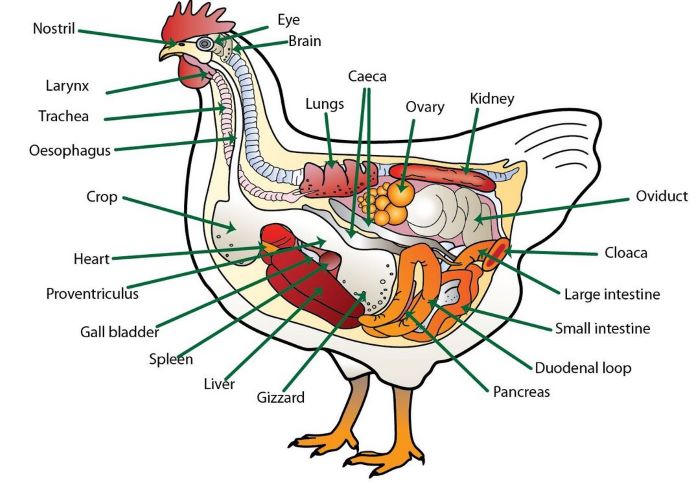
A Simplified Overview & Diagram of The Digestion Process

Ingestion: Chickens consume their food by pecking at it. Their digestive system is designed to efficiently process the seeds, grain, and vegetation they consume.
Beak and Gizzard: Once ingested, the food enters the chicken’s crop, which is a small pouch in the throat where some initial moisture is added. From there, the food moves down to the proventriculus, which secretes digestive enzymes. The food then enters the gizzard, a muscular organ containing small stones or grit. The gizzard helps grind the food mechanically, breaking it down into smaller particles.
Stomach and Digestive Enzymes: From the gizzard, the food enters the chicken’s stomach, called the ventriculus or “true stomach.” In the stomach, digestive enzymes and gastric juices are secreted to break down proteins, carbohydrates, and fats into smaller molecules that can be absorbed by the chicken’s body.
Small Intestine: The partially digested food then passes into the small intestine, where further enzymatic breakdown occurs. Bile, produced by the liver and stored in the gallbladder, is released into the small intestine to aid in the digestion and absorption of fats. Nutrients, such as amino acids, simple sugars, and fatty acids, are absorbed through the walls of the small intestine into the bloodstream for distribution to the body’s cells.
Cecum and Large Intestine: The undigested food, along with some digestive juices, then enters the ceca, which are two blind-ended pouches located at the junction of the small and large intestines. The ceca house beneficial bacteria that help ferment and break down plant fibers, releasing additional nutrients that the chicken can absorb. From the ceca, the material moves into the large intestine, where excess water is reabsorbed and any remaining nutrients are absorbed.
Cloaca and Excretion: Finally, the waste material, called feces, passes from the large intestine into the cloaca, which is a common opening for the digestive, urinary, and reproductive systems in chickens. The feces are then eliminated from the body through the vent, or the external opening of the cloaca.

Common Question Answered: A chicken’s egg and feces doesn’t come from the same place. The egg is formed and laid by the hen through a different process than the elimination of waste. The reproductive and digestive systems of a chicken are separate. While both the egg and feces exit through the vent, they are produced by different systems within the chicken’s body and are not related to each other.

Back to HOME PAGE