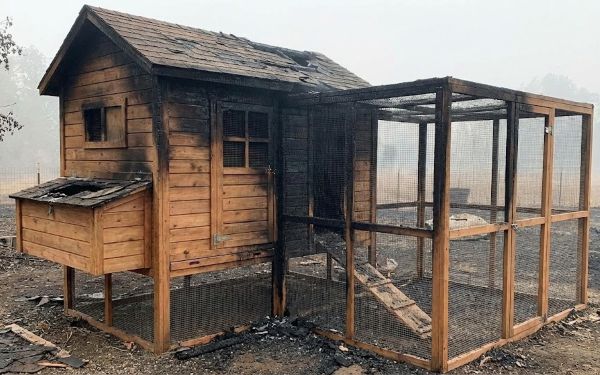
The Reality of Chicken Keeping in a HOT Desert Climate

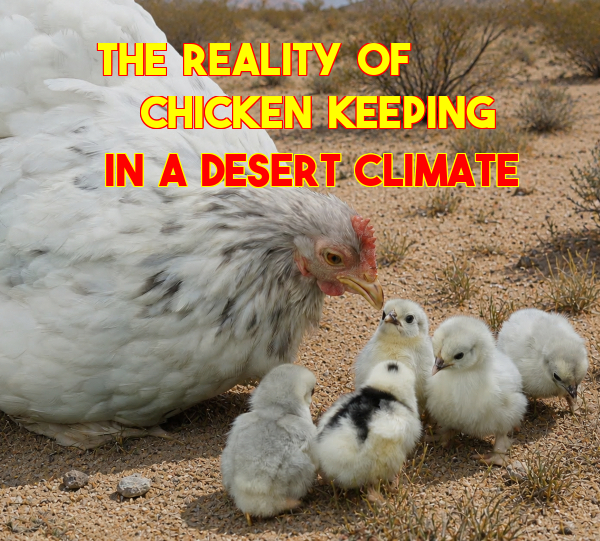
Phoenix, Arizona, is a great example of what chicken keeping is like when temperatures soar to 115+ degrees. This is not an exaggeration, and to be perfectly honest, 120 degrees is certainly not unheard of. Chickens are pretty hardy as a rule, but they are not invincible. They need special care when temperatures rise, you can learn more about that in the article below.

Now that the chickens are taken care of, let’s talk about you, your role in all this, and what you can expect your days to look like during the hottest months of the year. You might be thinking you can handle the job for just a few months of summer, but Phoenix is a lot different. From May through October, the heat is relentless, with June, July, and August being especially brutal.
That means you’re out in the heat too, and not just once or twice a day. If the water in the drinkers gets too hot, the chickens will avoid it, and that can be a death sentence, so it has to be refilled with cooler water throughout the day. This is why auto drinkers and nipple drinkers should NEVER be used in desert climates. Mist systems and fans need to be adjusted and managed, and diligent housekeeping is imperative because chicken droppings create even more heat. To be clear, diligent means every day.
There may be a chicken that needs medical attention, things break, and problems are inevitable. When something goes wrong, you need to be out in the heat dealing with it. That’s the reality. I’ve been doing this for 14 years, so for me, it’s worth it. The question is, is it worth it for you?
Back to HOME PAGE

No Heat Required: Keeping Chickens Safe and Comfortable in Winter

Chickens Are Built for the Cold, But Proper Shelter is Key

As temperatures drop, it’s common for chicken keepers to wonder whether they should add heat to the coop. In most situations, the answer is no. Healthy adult chickens are surprisingly cold-hardy and don’t need supplemental heat to get through winter. Their feathers provide excellent insulation, and they stay warm by fluffing up and roosting together. When we add heat, we prevent chickens from fully acclimating to cold weather, which can make them more vulnerable if the power goes out or the heat source suddenly fails.
The Danger of Heating a Coop
Safety is another big reason to skip added heat. Traditional heat lamps and space heaters are one of the leading causes of coop fires. With bedding, dust, feathers, and curious birds, the risk of accidents is real, and most coop fires happen at night. Even without a fire, heated coops can cause problems. Sudden temperature swings, like stepping from a warm coop into freezing air, increase the risk of frostbite and respiratory illness.
Radiant Heat Panels: Safer, But Still Usually Unnecessary
Radiant heat panels are often marketed as a safer option, and compared to hanging heat lamps, they can be lower risk. They don’t have exposed bulbs and provide gentle warmth instead of heating the entire coop. In special situations, such as caring for chicks, injured birds, or ill chickens, radiant heat can be helpful as a temporary, medical support tool. For most healthy adult flocks, however, they aren’t needed. They still rely on electricity, can fail unexpectedly, and may prevent chickens from fully adapting to winter temperatures.
What Really Matters is Ventilation
What matters far more than adding heat is a coop that’s dry, draft-free, and well ventilated. Cold air by itself isn’t the enemy, moisture is. Without proper ventilation, moisture from breathing and droppings builds up overnight, leading to frostbite, ammonia odor, and respiratory problems. The goal is to block direct drafts at roost level while allowing airflow above the birds’ heads, keeping bedding clean and dry all winter long.
Focus on good coop design, proper airflow, and overall flock health, and your chickens will come through winter just fine without added heat.

Cold Doesn’t Kill Chickens, But This Definitely Will

Back to HOME PAGE

What’s New in the Chicken Coop

The Ultimate Set-up Just Got Better

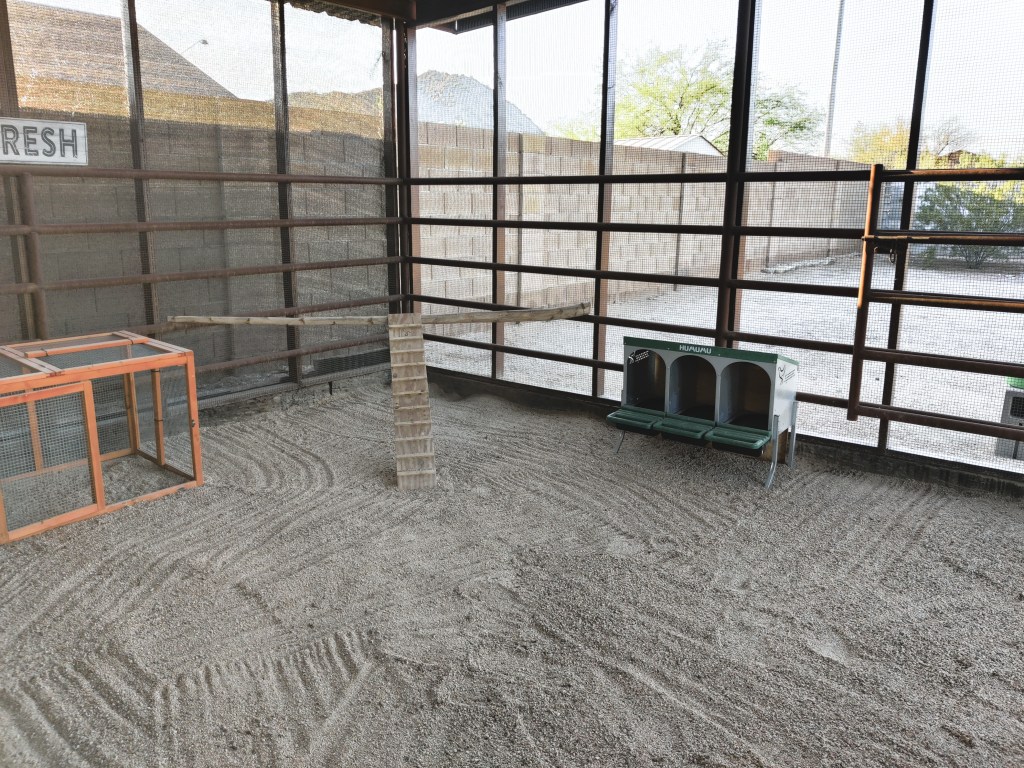
There have been many coop improvements made over the winter. The coop was once an open-sided covered corral for horses that I had professionally enclosed with heavy-grade hardware cloth – more about that build HERE.
The desert doesn’t offer many options for lush greenery, but I managed to find bushes native to the desert southwest and planted three of them in front of the barn for a little color and hopefully some shade when they mature. I have a giant drum fan to help move the air in the coop, and it’s suitable for normal summer heat, but Phoenix doesn’t have normal heat; we have to keep chickens alive in 115+ temps, which is nearly impossible without human intervention. Usually, that means a mist system of some sort, along with fans, ice, and whatever else might offer them some relief. In other words, everything needed to keep chickens alive in these ridiculous high temps is a giant inconvenience and one I was determined to somewhat avoid this summer. Here’s what I came up with…
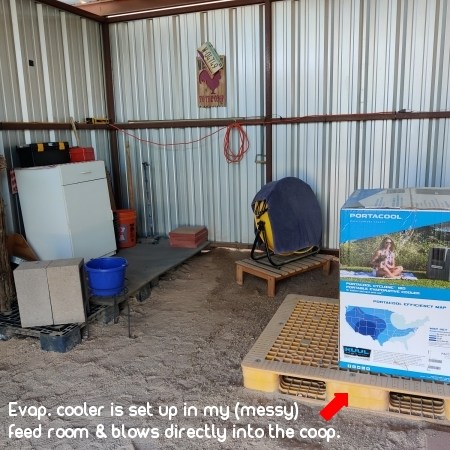
I bit the bullet and bought an evaporative cooler large enough to cool the coop area. I also bought 10 lb. feeders and scattered them in different areas of the coop to help minimize feeding chores. Daily farm chores now are basically watering and clean-up. Even my clean-up chores are easier now since I ditched the pine shavings and switched to sand. If you want to know more about sand vs. shavings, all the information is in a previous article HERE.
Purchasing an evaporative cooler is a double win-win scenario: it benefits the chickens by providing a more comfortable environment, and let’s be honest, it’s a relief for me as well. Working in scorching temperatures I definitely won’t miss.

About The Evap. Cooler…
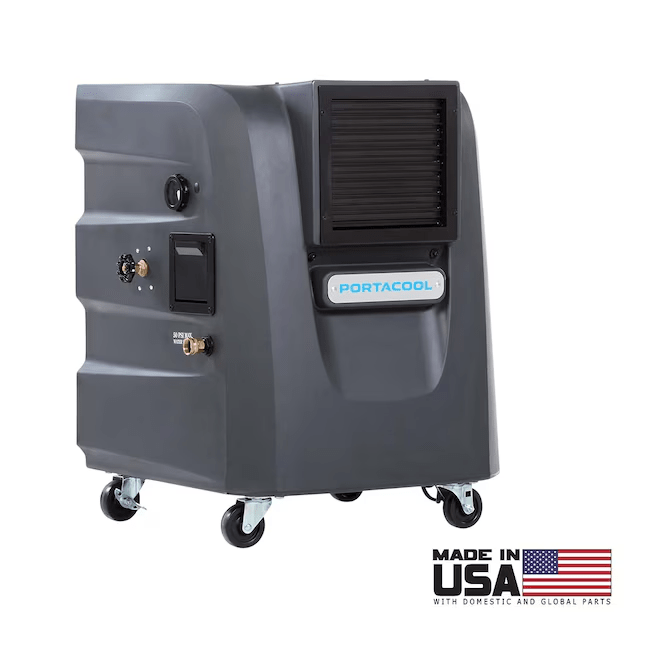
Portacool 2000-CFM 2-Speed Outdoor Evaporative Cooler

What’s an evaporative cooler? It produces cool air wherever needed, such as a backyard patio, garage, barn, or workshop. Evaporative coolers are most effective in dry climates where humidity levels are low. They can be an energy-efficient and cost-effective cooling solution compared to traditional air conditioning systems, as they consume less electricity. You can learn more about this evap. cooler or check out the large selection of different models available at Lowe’s.

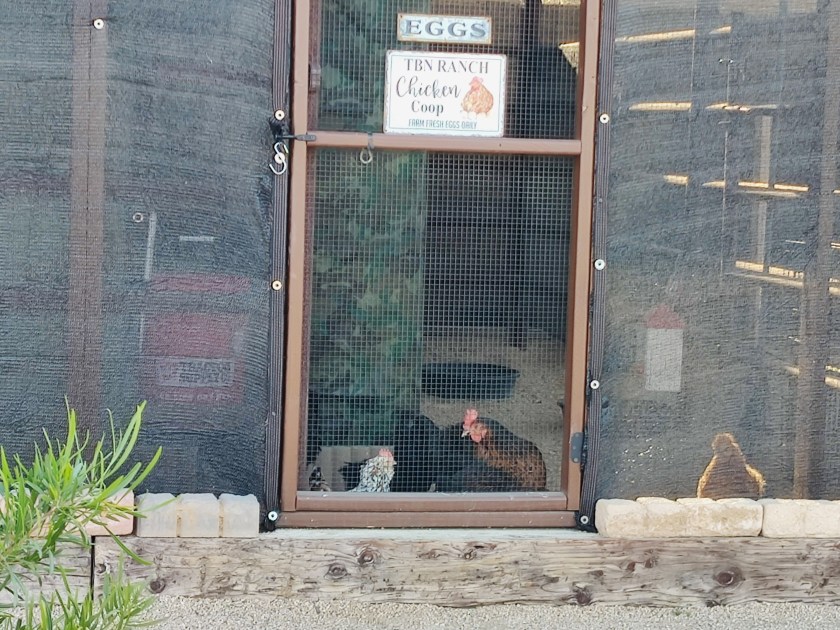
TBN Ranch Chicken Coop

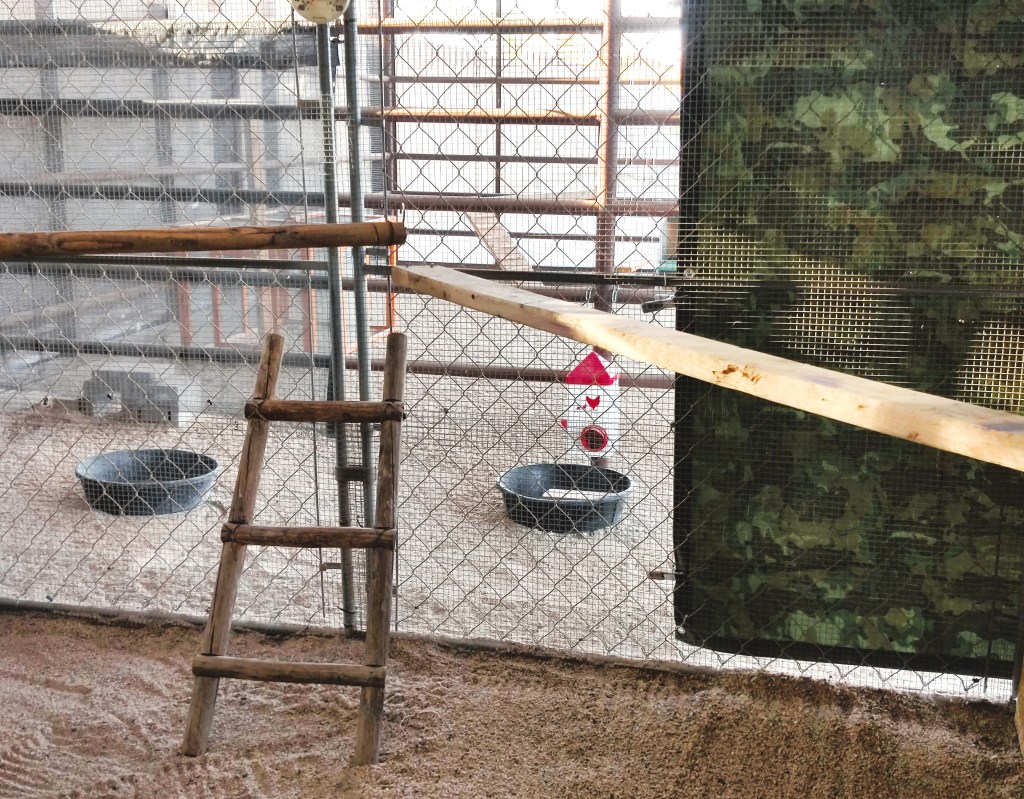
The Coop, Inside & Out…

A Few of the Hens…

A Guide for Keeping Chickens in Hot Climates

There are many ways to help your chickens survive the heat of summer. Luckily, in most parts of the country, this isn’t a big concern. However, if you are a desert dweller and have chickens, you’ll find a wealth of information in this article on how to manage them in hot weather.

Back to HOME PAGE