About the Welsummer

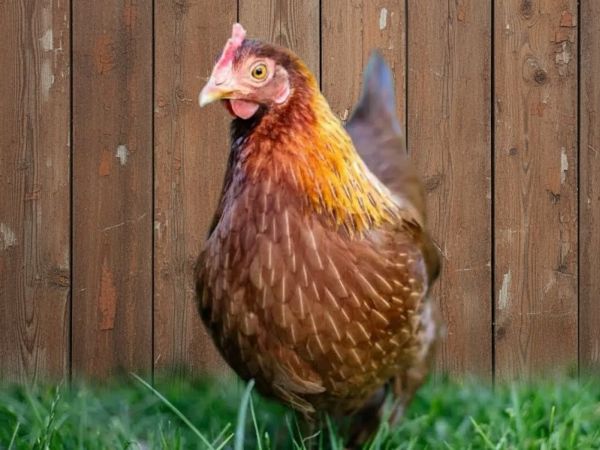
The Welsummer rooster is rustic-red and orange in color and the hen is a light and dark brown partridge pattern with gold around the neck area.  This dual-purpose large fowl lays large terracotta dark brown eggs, often with speckles. Expect about 160 eggs per year.
Features & Color Variations
Single comb, medium wattles, broad chest and back, wide full tail, and 4 toes.  There are three variations of the standard Welsummer, Partridge, Silver Duckwing, and the Gold Duckwing. Recognized Varieties: Red Partridge
Behavior
Welsummers are friendly and intelligent, but not considered especially docile. They generally confine well but prefer to forage. Setter/broody: yes.
Bantams
The Welsummer Bantam lays light brown eggs, and their production is slightly higher than the standard at about 180 eggs per year. Bantams exist in both Partridge and Silver Duckwing colors but are rare.
Origin: Netherlands
Class: Continental
Type: Large Fowl
Size: Medium (6-7 lbs)
Rarity: Common
Purpose: Dual

Back to HOME PAGE

Save

Save

Save

Save

Save

Save

Breed Focus, About the Australorp

australorp-hen

The Australorp is a great choice if you’re looking for an excellent layer of large brown eggs. Expect approximately five eggs per week from this *dual-purpose bird. Their color is black, their weight at maturity is 7-8 pounds, and they are docile, friendly, and considered shy.
About the Australorp
Single Comb
4 Toes
Broody/Setter
Confines Well
Average, 260 Eggs Yearly
Cold Hardy
Class: English • Rarity: Common
The Australorp is of Australian origin, developed as a utility breed with a focus on egg laying. It achieved worldwide popularity in the 1920s after the breed broke numerous world records for the number of eggs laid. The most popular color is black, which is the only color recognized in the United States. However, blue and white are also recognized in its home country. South Africa recognizes buff, splash, wheaten laced, and golden as well.
The Australorp is a great starter bird if you’re new to chicken keeping. The chicks are hardy and very easy to raise.
* Dual Purpose: provides 2 kinds of resources, meat & eggs.

Back to HOME PAGE

Save

Save

Save

Save

Save

Save

Save

Save

Save

Save

Save

Save

Save

Save

Save

Save

Introducing Hatch-a-Long Chicks to the Flock

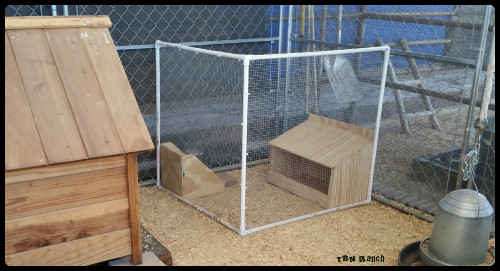
Mamma hen was separated from the flock five weeks ago to hatch and raise her baby chicks in a quiet and safe environment.  The chicks are now two weeks old and it’s time to move Mamma and her babies back to the coop. To keep harmony among the flock, I’ve closed off a corner with hardware cloth to allow visibility between the existing flock, Mamma, and babies. The frame is merely PVC pipe cut in 3-foot sections with wire attached using zip ties.

Here’s the set-up I’m using from Nursery to Coop

Moving the hen with her chicks is best done at night when all the birds are sleeping. Last night wearing my handy headlamp, I headed out to the nursery coop. Throwing a blanket over the nest, I took Mom and her chicks, (nest box and all), and placed it in the designated transition pen inside the coop. Come morning it will be introduction time! Safe, peaceful, and everybody is happy.
After a week or so, I’ll allow Mamma to take her babies out of the enclosure.  She will protect her babies from the existing flock, and at about five weeks, she will begin putting distance between her and them.
Note:
Many chicken keepers allow their hens to hatch their eggs in a secluded area within the chicken coop. Others move hen and eggs back to coop three or four days before the hatch, both ways are certainly okay. I just like to give my hens a quiet place to do their mothering, it’s merely a personal preference.

Silkie and Chicks 51016
Mamma & her babies
Back to HOME PAGE