Supplemental Feeds… Before the First Egg

Hemp Seed as a Supplement

The rule of thumb is starter crumbles or pellets until the first egg. Young birds are often uninterested in table scraps, but there are a few other nutritious feed sources they will eat… and actually like. After the first 3 weeks, it’s just fine to introduce a bit of grass, this is a good way to keep chicks busy, especially if they are beginning to peck each other. Just make sure to sprinkle grit around to help with digestion.
At about 4 months old, I introduce hemp seed and rolled oats just to add a little extra nutrients to my young pullets diet. For no particular reason other than they like chicken scratch, I add that too.  I don’t recommend adding this mix to their starter feed, they will only make a mess trying to pick out all the good stuff. I always feed supplements and treats in a separate hanging feeder.
Liquid supplements mixed in their feed is certainly a plus, and I do use them for my Silkies, but they like hemp seed better and it’s a great source of protein containing a wide variety of vitamins and minerals. However, it should be fed sparingly because of the high-fat content.

As a feeding guideline,  I feed four young pullets hemp seed, rolled oats, and scratch in these amounts…
2 heaping tablespoons of rolled oats per day
2 heaping tablespoons of scratch per day
2 tablespoons of hemp seed every other day.
Hemp Seed is usually sold by the pound at feed stores that sell lose bulk feed, and rolled oats too!
My pullets are now 7 months old and laying daily. This is the only flock I’ve supplemented with hemp seed and the first time I’ve had flawless perfect first eggs.
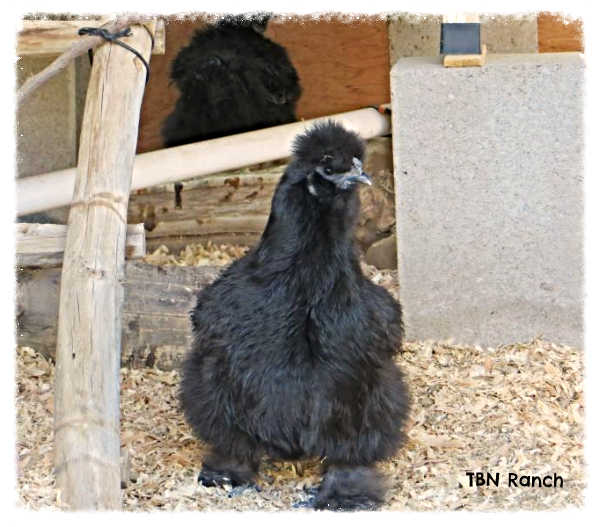
Silkie Bantam
Back to HOME PAGE

Choosing a Good Laying Hen

Leghorn / Hen: 4 pounds

The best egg layer and the feed-to-egg conversion ratio are excellent, holding down the cost of egg production. These birds start laying earlier than most at 41/2 – 5 months and on average lay 10 -12 weeks longer than most good laying hens. If you’re looking for the breed that’ll give you the most eggs of superior quality in the smallest amount of space, consider the Leghorn.  They are a white egg layer of top-grade eggs with good size.
Although these birds aren’t usually found in your local feed store, you can ask a feed store to order them for you when THEY buy chicks, they’re often willing to oblige.

Rhode Island Red / Hen: 6 lbs.

Martha & Michelle 2010

R.I. chicks are readily available in almost all feed stores. They are excellent layers of sizable brown eggs. They do quite well in confinement but can be a bit bossy.  These dual-purpose heavy birds are a dark mahogany color and have earned their reputation as a favorite among chicken keepers for years.
No other heavy breed lays more or better eggs than the Rhode Island Red.

The Dominique / Hen: 5 1/2 pounds

Mamma, Dominique

This is one of my favorite breeds on the farm. They are hardy in extreme heat, confine well, are extremely docile, friendly, and brown egg layers. You can expect the Dominique to lay every other day, and here in Arizona mine lay most all winter.
My Dominique hens are non-aggressive to other members of the flock, and I’ve introduced new birds with only minor confrontations.
This particular hen is now three years old and still laying quality eggs every other day.
More Options…
You can also buy pullets (hens at their point of lay) if you want to skip raising chicks altogether. Check your local Craigslist under Farm & Garden, you may find just the breeds you’re looking for right in your neighborhood. Expect to pay $15 to $25 each. Beware of buying chicks though… they’re usually not sexed and you might end up with a rooster, finding yourself in violation of most local city codes.

Back to Chicken Keeping Resources HOME PAGE