Uses, Precautions, & General Information
In chicken coops, agricultural lime, also known as calcium carbonate or calcitic lime, is commonly used. It is typically sold in garden centers, feed stores and sometimes hardware stores. Agricultural lime is used for various purposes in chicken coops, but is it right for your coop needs? Hope this information helps you decide.

The Benefits of Agricultural Lime
Keeping the chicken coop smelling fresh is important, and lime plays a key role in this. Lime helps to get rid of bad smells by balancing out acidic substances and lowering the levels of ammonia in the chicken waste and bedding. This makes the environment nicer for both the chickens and the people taking care of them.
Disease Prevention: Lime has antimicrobial properties that can help reduce the risk of bacterial and fungal growth in the coop. By controlling microbial populations, it can contribute to the overall health and hygiene of the chicken coop.
Drying Agent: Lime can absorb moisture, which helps to keep the coop bedding dry. This is important for preventing the growth of mold and bacteria, as well as reducing the risk of respiratory issues in the chickens.
Pest Control: Lime can deter pests such as flies and mites, which are common nuisances in chicken coops. Its alkaline nature can make the environment less hospitable for these pests.
Precautions
When using lime in a chicken coop, it’s important to follow recommended guidelines for application to ensure the safety and well-being of your chickens. Lime is typically applied to the floor of the coop and always in moderate amounts. Overuse of lime can lead to excessively high pH levels, which may be harmful to the chickens.
It’s also crucial to follow recommended safety precautions, such as wearing protective gear like masks and gloves when handling lime, as it can be caustic to skin and eyes in its powdered form. Remember, good ventilation is always important to prevent the inhalation of lime dust.
Just a Little Reminder:
Always Be Safe Around Chickens
You should always wear a mask when cleaning the coop; it just makes good sense to avoid inhaling debris from a chicken coop. You can learn more about the importance of wearing a mask HERE.
 While bagged commercial feed may suffice, there are numerous ways to enhance the overall health of your chickens.
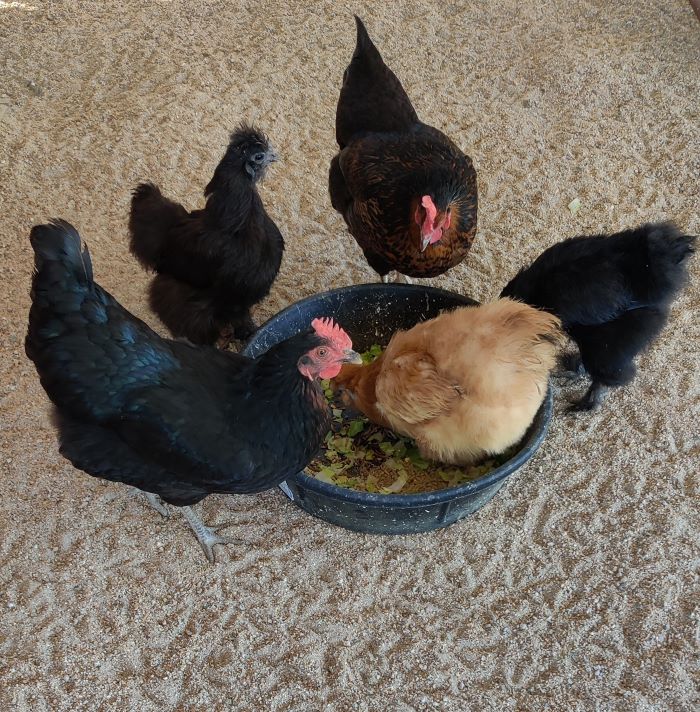

 TBN Ranch Chicken Keeping Resources