“Predators Only Come Out at Night”—It’s One of the Biggest Myths in Chicken Keeping!

There’s no disputing the benefits of free-roaming, chickens love scratching around in the dirt, hunting for bugs, and enjoying everything nature has to offer. Especially if your coop setup is small, it makes total sense that you’d want their days filled with sunshine and fresh grass. After all, most people say predators only strike at night, right? If your flock is tucked away safely in a locked coop when the sun goes down, you’d naturally think you’re giving them their best life.
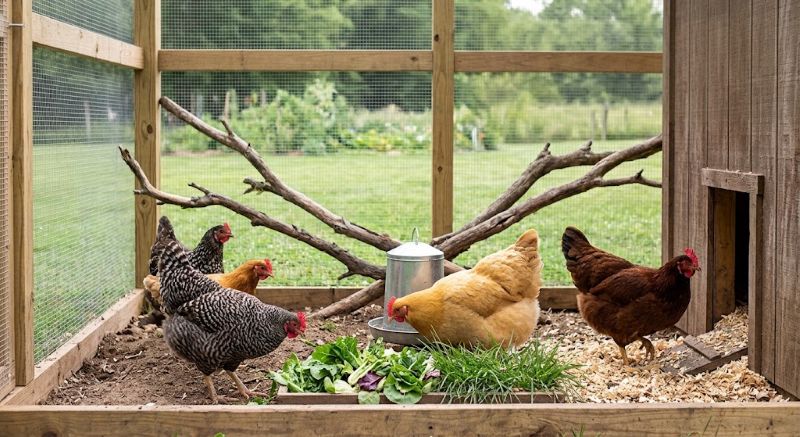
The truth is, the second you open that coop door, your flock becomes a target. It’s a complete myth that predators only hunt at night. Even living in the fifth largest city in the country, I’ve lost hens in broad daylight to hawks, bobcats, and coyotes, and a few years ago, I lost an entire flock in a single afternoon. On top of wild animals, you also have to watch out for loose neighborhood dogs, which can be just as deadly. The only real way to keep your birds safe is to keep them confined in a larger, comfortable setup stocked with fresh greens, mealworms, and occasional treats.
I know you see chicken keepers all over social media with their birds frolicking in the grass, roaming free and looking happy as can be. It sounds great, but is that their actual daily reality? As someone who has kept chickens for over 20 years, I can guarantee you that anyone who lets their flock roam free has lost birds to predators at one point or another. I guess if you have 50 birds and lose six to a coyote, it’s a trade off you might accept. But what if you are like most backyard chicken keepers and have only six or seven birds total? Are you really willing to take that risk?
Now, you might be thinking, “What if I have a rooster?” Sure, a solid rooster will absolutely put his life on the line for his hens. He’ll keep a lookout, sound the alarm, and maybe even scare off a smaller hawk or a neighborhood cat. But let’s be real for a second, a rooster is still no match for a coyote, a bobcat, or a loose dog. While having a vigilant rooster on duty definitely helps their odds, relying on him as your main defense is still a huge gamble. At the end of the day, trust me when I say even the bravest rooster can’t outfight a hungry predator.