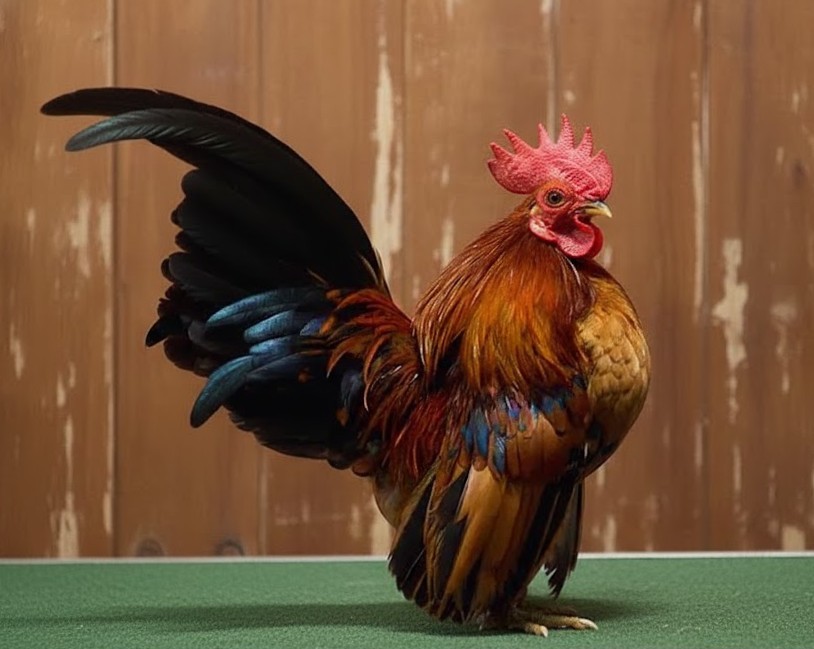
The Serama chicken is the smallest chicken breed in the world, originating from Malaysia and bred primarily as an ornamental or companion bird rather than for egg or meat production. Adult Seramas often weigh well under a pound, yet they carry themselves with surprising confidence. Their upright posture, prominent chest, and alert personality make them stand out immediately. While they behave like full-sized chickens in many ways, their tiny size means they require more attentive care and are best thought of as delicate bantams rather than hardy farm birds.
Temperament is one of the Serama’s strongest traits. They are typically friendly, curious, and people-oriented, and many become quite tame. Roosters can be bold despite their size, and hens are generally gentle. However, their confidence does not protect them from physical harm.
Seramas are easily bullied by standard-sized chickens and can struggle to compete for food or space in mixed flocks. While some people successfully keep them with larger birds, it requires ample room, multiple feeding stations, and careful observation. Many owners ultimately choose to house them separately for safety.
Housing and environmental management are critical for Seramas. Because of their small bodies, they are especially sensitive to cold. Temperatures below about 50°F can stress them, and freezing conditions can be dangerous or even fatal without protection. A draft-free coop, deep bedding, low roosts, and a safe heat source such as a radiant heat panel are important in cooler climates. They tolerate heat better than cold, provided they have good ventilation and shade. Predator protection is also essential, as Seramas are vulnerable to a wide range of predators. Hardware cloth with small openings and fully covered runs are a must.
Feeding Seramas properly is one of the most important aspects of their care. A high-quality all-flock feed or starter/grower crumble with around 18–20% protein works well, and many breeders feed starter or grower feed throughout their lives due to their size and nutritional needs. Standard layer pellets are often too large and too low in protein, and the added calcium can be harmful to birds that are not laying. If layer feed is used, it should be in crumble form, with oyster shell offered separately. Seramas eat very small amounts but need consistent access to food, as long gaps without eating affect them more quickly than larger chickens.
Egg production is not a strong point of the Serama breed. Hens lay very small cream or lightly tinted eggs and do so inconsistently. They are prone to broodiness and are better appreciated for their personality and appearance than for productivity. Health-wise, Seramas are generally hardy when well cared for.


 TBN Ranch Chicken Keeping Resources