Before and After Pictures of TBN Ranch
Seven years ago we sold our newly built cookie-cutter home in a residential neighborhood to buy the house of my dreams. We traded cathedral ceilings, a sparkling pool, and gorgeous appliances for a move-in ready horse property. I guess we failed to see the harsh reality that TBN Ranch was going to need some sprucing up. Oh, and some major repairs.
Today I’m happy to say we have indeed made progress, thought I’d share the before and after pictures of this ongoing makeover. All I have to say when looking at the before pictures are WHAT WERE WE THINKING???
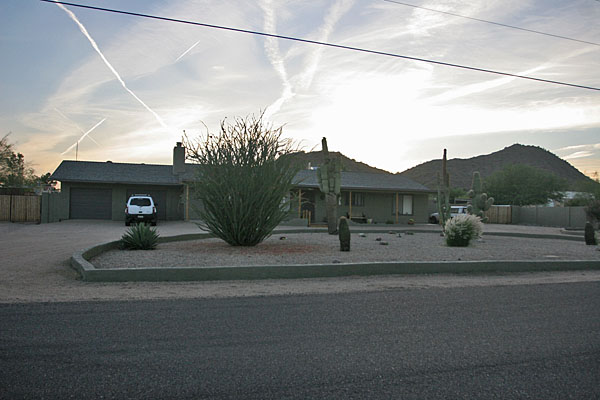
Below: The TBN ranch house, 2004
Above: It took three years to rid the house of its stark white and ugly aqua trim. The garage was an obvious add-on, not to code, and with wood siding that was falling off. The swamp cooler didn’t work, and that dinky two-ton AC unit was ancient and inefficient.
Below: The newly painted ranch house. The garage has been repaired and the wood siding replaced with stucco. The AC unit on the roof has been replaced with a four-ton unit and the swamp cooler removed. It was not a surprise the house needed a roof, but we didn’t expect to find three layers of shingles during the tear-off. Nevertheless, it’s all done now, and what a difference!
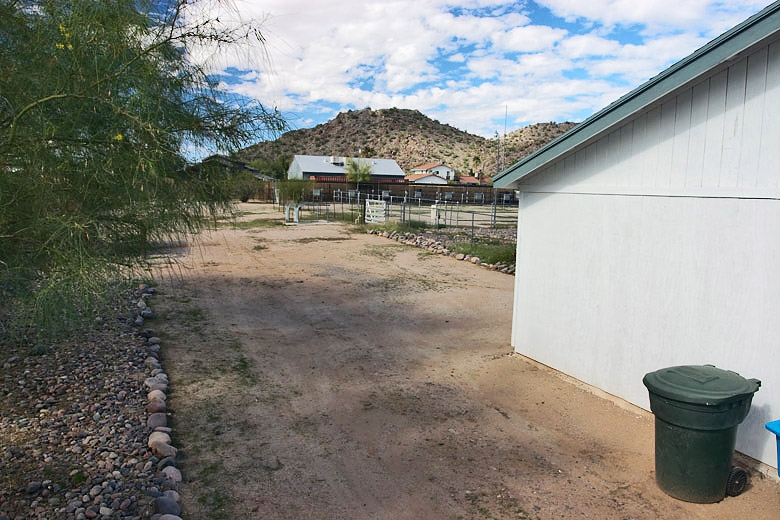
Below is the service drive, what a mess. To the left of service, drive was forty feet of river rock that had to be moved so I could have a shoeing bay built, which took a month by hand. It took two dump trucks of sand to level the ground before my farrier could build a suitable place for horseshoeing.
Before
After, Yes indeed… that is the same service drive!
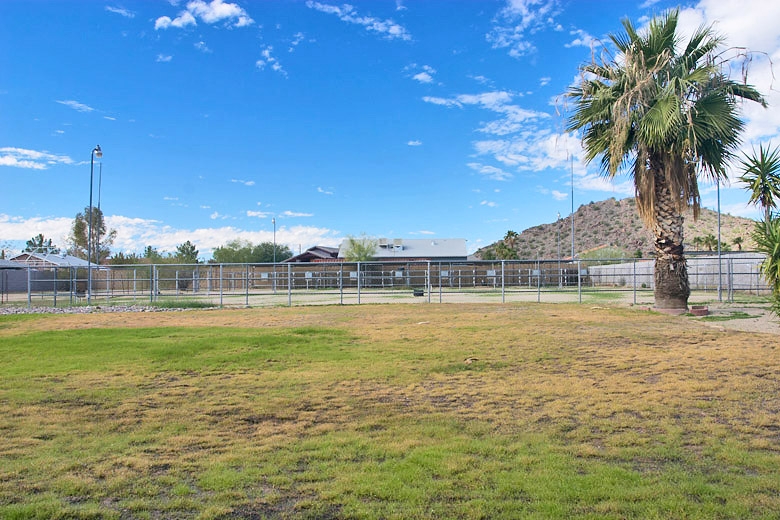
Below was the yard from hell. It had twenty-seven thousand gopher holes and as you can see somewhat of a lawn. No trees for shade except for that overgrown hideous palm tree.
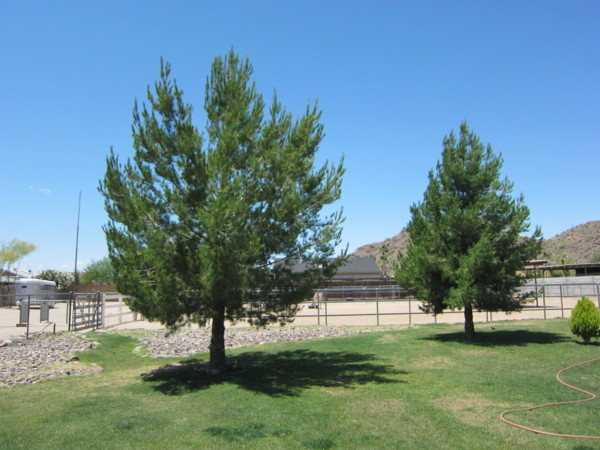
Below is a current picture of the yard, I planted three beautiful pine trees and an Arbor Vitae tree and called a professional to skin and trim the palm tree. [pictured right]
The automatic sprinkler system of course leaked, but that has been repaired, so the only excuse I have for the poor turf quality is our lovely dogs.
Below: The biggest problem was the weeds by the wash racks. Also, there needed to be secure ground footing atop the concrete slab.
The weeds were an easy fix and have been easy to maintain with a once-a-year ground service.
Below: There wasn’t any electricity in the stable, the ground footing was like concrete, and darn those weeds were everywhere. Also, the Palo Verde tree behind the pens was pushing against the roof and needed to be cut down. All the rail feeders needed to be moved from front to back so they were undercover and out of the sun and rain.
Below is the stable with crushed cinder block footing and each pen has individual overhead lighting. The Palo Verde tree has been removed and the feeders have been placed in the shade.
Below: The interior paddock fencing was pretty sad looking, to say the least, and the poles on both sides of the cattle gate were completely rotted. Eighty-five feet of PVC pipe for water to the stable needed to be replaced along the fence line too.
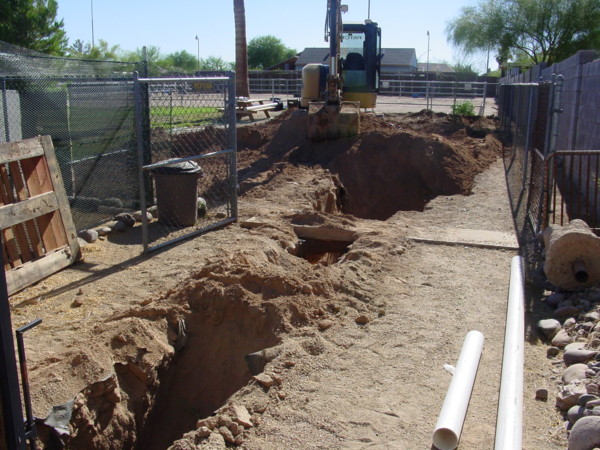
The most resent major upgrade was the pleasant surprise that the septic drain field needed to be replaced. Ouch!
What’s next? Well, there’s a to-do list a mile long, but that’s another story…







 TBN Ranch Chicken Keeping Resources