Home

Organic Farm Directory of U.S., Canadian and International Farms

A directory of more than 1,400 farms raising pasture-based meats, including free-range chicken.

Eatwild was founded by Jo Robinson in 2001 to promote the benefits—to consumers, farmers, animals, and the planet—of choosing meat, eggs, and dairy products from 100% grass-fed cows, sheep, goats, and deer (“ruminant” animals), or pigs and poultry (“non-ruminants”) raised on pasture rather than in confinement.
Eatwild.com is now the #1 clearinghouse for information about pasture-based farming and features a state-by-state (plus Canada) directory of local farmers who meet Eatwild’s criteria and sell their products directly to consumers. Many can also ship or deliver their products to you.

Back to Chicken Keeping Resources HOME PAGE

Do Eggs Need Refrigeration?

The answer is both yes and no. If they are store-bought in the United States, yes. Commercial eggs in the U.S. are washed and processed before being sold in supermarkets. This washing removes the protective outer coating of the eggshell called the “bloom.” As a result, refrigeration is necessary.
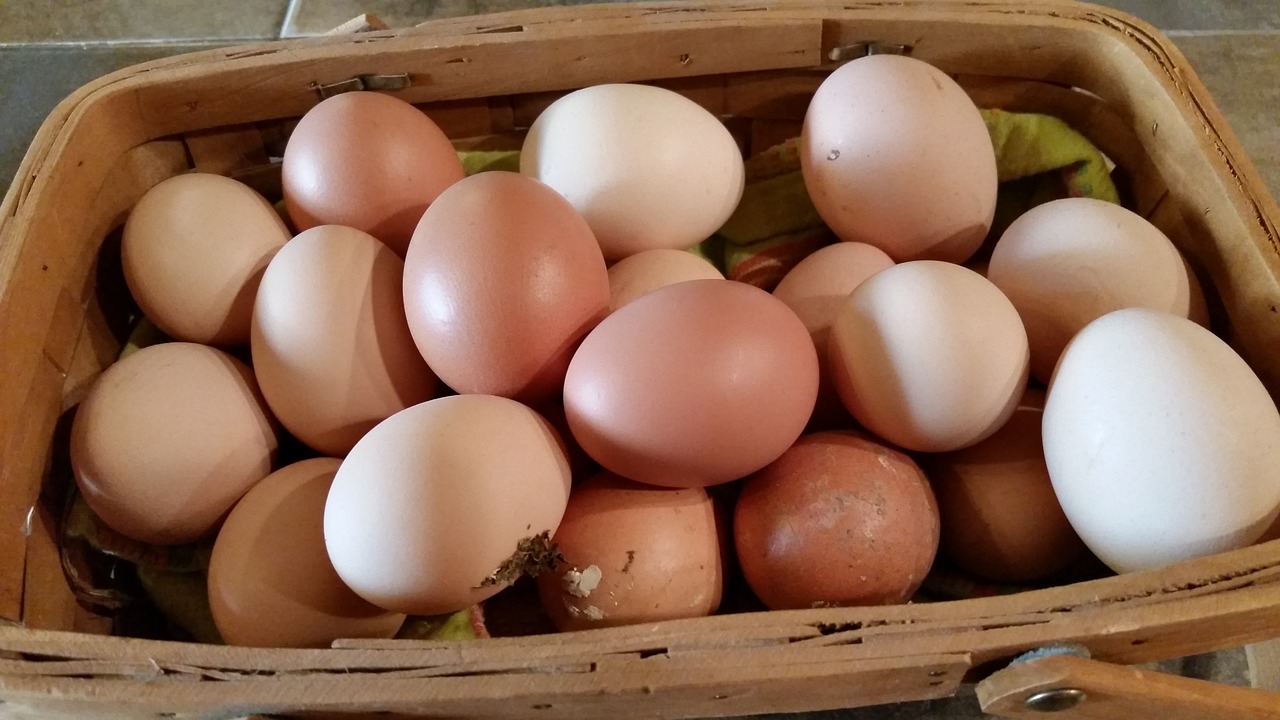
On the other hand, farm-fresh eggs don’t necessarily need to be refrigerated, because the eggs are unwashed, retaining the natural protective coating, which helps keep out bacteria, therefore, preserving freshness.
However, farm-fresh eggs generally have a longer shelf life when refrigerated compared to eggs that are not. If you chose to keep your unrefrigerated farm-fresh eggs on the counter, they should be used within a week or so.
How to Properly Store Eggs
Store your refrigerated eggs point down.
Don’t store them on the door where temperatures fluctuate.
Once an egg is refrigerated it must remain refrigerated.
Your store-bought refrigerated eggs in the U.S. have a shelf life of about 4-5 weeks beyond the pack date.
How to Determine the Freshness of an Egg:
Fill a bowl with water and gently place the eggs into it.
If the eggs sink and lay flat on the bottom, they are fresh.
If they stand upright on the bottom they are less fresh.
If they float to the surface the egg should be discarded.
Interesting Fact: Not all countries refrigerate eggs at the retail level, here are some examples:
United Kingdom, Ireland, Australia, New Zealand, and Scandinavian countries.

Back to HOME PAGE

Oyster Shells vs Crushed Egg Shells

The Better Choice Explained

Both oyster shells and egg shells can serve as valuable calcium supplements for chickens, but there are a few reasons why oyster shells are considered a better option. They are more easily digestible for chickens than eggshells. Oyster shells have a porous structure that allows for better breakdown, eggshells are denser and can be more challenging for chickens to break down effectively.
First, let’s understand why you may want to supplement with oyster shells. The purpose of this as a supplement is for the quality of your flock’s eggs. The high calcium content and digestibility of oyster shells contribute to better shell quality in chicken eggs, reducing the chances of shell breakage or deformities.


Calcium Content of Oyster Shells
Oyster shells generally contain a higher amount of calcium compared to egg shells. Calcium is a crucial nutrient for chickens as it helps in the formation of strong eggshells, supports skeletal health, and aids in proper muscle and nerve function.
Slow Release
Oyster shells release calcium slowly into the chicken’s system, allowing for better absorption and utilization. On the other hand, egg shells may break down more quickly, potentially resulting in a sudden influx of calcium that the chicken’s body cannot fully absorb.
Digestibility
Oyster shells are more easily digested by chickens due to their structure and composition. They contain a form of calcium carbonate that is readily absorbed by the chicken’s digestive system. Egg shells, although also composed of calcium carbonate, have a slightly different structure and may be less efficiently broken down and utilized by chickens.

Back to HOME PAGE