How to Introduce Chicks to a Broody Hen

Putting chicks under a broody hen is a natural way to raise baby chicks. These chicks are called hatch-a-longs. There are a few steps to follow for this to be successful. But keep in mind, there’s no guarantee your hen will accept the chicks, so keep a watchful eye after the introduction.

How To Introduce Hatch-a-Longs to Broody Hen

Make sure your hen is truly broody, which means she is sitting on eggs (or fake eggs) and exhibiting signs of wanting to hatch them. Signs of broodiness include sitting on the nest for long periods of time, puffing up her feathers, and spreading herself over the eggs giving her a flattened appearance. She may be pulling out her feathers for the nest. Important: Your hen needs to be dedicated to her eggs for at least 2 weeks.
Prepare a safe and clean environment: Choose a clean and dry area within your coop or a separate brooding area that is safe from predators, drafts, and dampness. Provide bedding such as pine shavings for the hen and chicks to nest in. A completely enclosed area is best.

The enclosure I use for my broody hen & hatch-a-longs

Purchase day-old chicks preferably, but up to 3 days old is usually acceptable. Place the chicks in a temperature-controlled brooder with access to food & water until nightfall.
Late at night is best to place chicks under your hen. Broody hens are more receptive to accepting new chicks at night when they are more relaxed and in that weird hypnotic state that occurs after dark. Your chick feed and drinker should be in place at this time. Make sure both are close by and easily accessed by the chicks. Your hen can eat the chick starter, it will be good for her since she probably hasn’t been eating enough while broody.
Tuck the chicks under the broody hen’s wing. If possible, do this in complete darkness to minimize disruption. Avoid disturbing the broody hen too much during this process.
Observe the broody hen and chicks closely to ensure that the hen is accepting the chicks and keeping them warm. The hen’s body heat is crucial for the chicks’ survival, especially during the first few days of their lives.
Continue to provide a safe and clean environment for the broody hen and chicks, free from drafts, predators, and dampness. Regularly clean the bedding and ensure that the chicks have enough space to move around and grow.
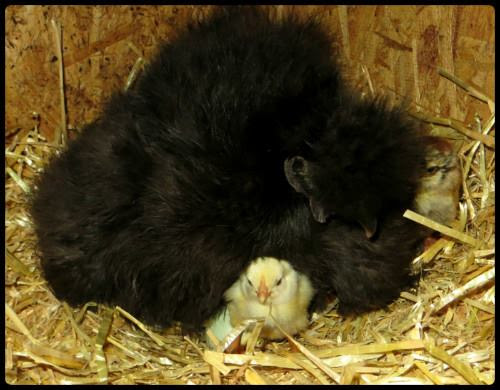
Silkie hen & her hatch-a-long

In The Perfect Scenario, What to Expect

By following these steps and providing proper care, the broody hen should take care of the chicks, keeping them warm, teaching them to eat and drink, and providing them with maternal care.
After a Few Days, the hen can be allowed to take her chicks out with the other hens and she will protect them but watch carefully to make sure.
By Week Five or Six, the hen will begin distancing herself from the chicks. Make sure to have multiple feeders & drinkers, as the new birds will surely have to find their place in the pecking order. If there’s going to be drama (expect it) it will be where the food is.
Lastly, have fun, and don’t forget to enjoy the experience.

Back to HOME PAGE

The Role of a Rooster and the Benefits of Having One

The primary role of a rooster in a flock of chickens is to fertilize the eggs laid by the hens. Aside from fertilizing eggs, roosters also play a protective role in the flock. They are naturally aggressive and territorial animals that will defend their hens from predators, such as hawks, foxes, and other animals that may threaten the flock.
Another benefit of having a rooster in the flock is that they can help to establish a pecking order among the hens, which can reduce aggression and fighting within the flock. Additionally, the presence of a rooster can help to stimulate the hens to lay more eggs, as the hens will be more likely to mate and produce fertilized eggs.
Unfortunately, roosters are not usually allowed within the city limits in most states because of noise ordinances. But if that law doesn’t apply to you, a rooster most definitely has an important role in maintaining a harmonious social structure among the hens. Lucky you!
Special Considerations for Keeping a Rooster
As a general rule of thumb, a rooster can comfortably handle around 10-12 hens in a flock. It’s important to provide enough space and resources for all the birds to thrive, and to monitor the flock for any signs of aggression or over-mating, which can be harmful to the hens. Keep in mind, a spacious area for you flock is always a better environment when a rooster is present.

Back to Chicken Keeping Resources HOME PAGE

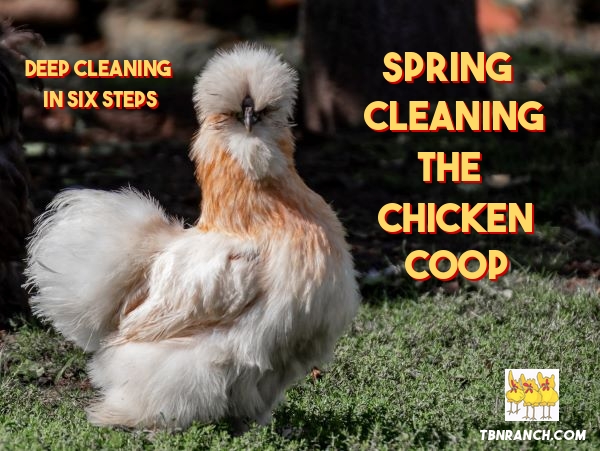
Spring Cleaning the Chicken Coop Here’s How in Six Steps

That Once a Year Deep Clean Time Has Arrived

After months of cold weather, the coop is probably about as foul as it ever gets, so it’s that time of year for deep cleaning. That means bedding, nest boxes, roosts, feeders & drinkers, and scraping up all the soiled material from the floor.
Confine the chickens to an outdoor run for the day with a sandbox or fresh dirt to have a nice dust bath while their coop is being cleaned. It’s best to let the coop air out & dry for most of the day before adding new shavings and bedding. Choose a sunny breezy day for this not-so-fun chore because the coop will air out and dry quicker. Don’t forget to wear gloves, boots, and a mask when cleaning, there’s going to be all kinds of nasty dust and muck stirred up that can’t be healthy for you… so gear up and protect yourself.
If your chickens are in a shed or enclosed structure, avoid harsh cleaners, vinegar & Dawn dish soap is a suitable cleaner and safe for you and your birds. Use a putty knife to scrape off hard-to-clean areas, and sweep out all the old bedding and pests that have probably been hiding in there over the winter. If you have windows, brush off the cobwebs and all the feathers stuck in them, get the Windex, and make the glass shine.
There are always repairs or needed improvements on chicken coops, and this is the time to address them. Duct tape, zip ties, and baling wire go a long way to fixing things, so make sure you’re armed with these valuable tools. 🙂
After the coop has been thoroughly cleaned, add your fresh bedding, feeders & drinkers, and nest boxes, and don’t be afraid to move things around and make changes. Chickens don’t mind change, and a little change of scenery might even be welcomed. Before returning your birds to the coop, this is a good time to check their individual overall health and address accordingly.

The Simple Version:
Here Are the Six Spring Cleaning Steps to Follow:

Empty the coop: Start by removing all of the bedding and nesting material from the coop. This includes any straw or wood shavings, as well as any old eggs or feathers that may have accumulated.
Scrub the coop: Use a scrub brush and mild detergent to thoroughly clean the inside of the coop. Pay special attention to the corners and crevices, where dirt and bacteria can accumulate. Rinse the coop with clean water and allow it to dry completely.
Treat for pests: Check for any signs of pests, such as mites or lice. If you see any, treat the coop and chickens with a pest control product that is safe for use around poultry.
Inspect and repair: Inspect the coop for any signs of wear or damage, such as holes in the walls or roof. Repair any damage before adding new bedding to the coop.
Add new bedding: Once the coop is clean and dry, add fresh bedding to the floor and nest boxes. Choose a bedding material that is appropriate for your chickens, such as straw or wood shavings.
Restock supplies: Check your supplies of food and restock as needed, make sure you have extra in case of a shortage.

Back to Chicken Keeping Resources HOME PAGE