Lakenvelders, Where to Get Chicks

Lakenvelder

While breed researching for my fall chicks, I ran across an interesting breed to consider. This rare breed is often available for purchase from Murray McMurray Hatchery.
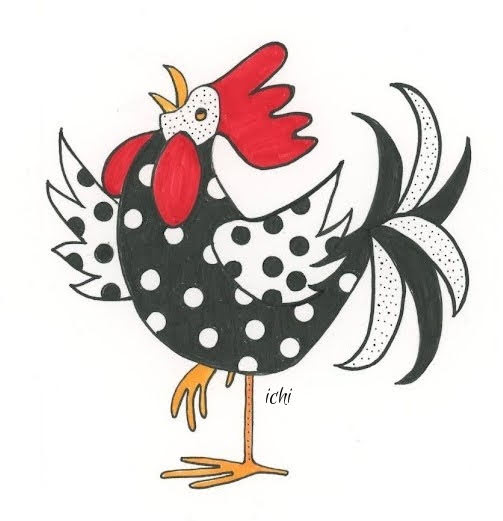
These are one of the most beautiful in the appearance of any of our rare varieties with their striking black and white markings and slate-colored legs. We are told that the word “Lakenvelder” when translated from the Dutch means “a shadow on a sheet”, a particularly descriptive name. They were bred extensively in Germany and Holland as long ago as the early 1800s but were not recognized here until the 1930s.
They are quite small when mature, 3 to 4 Ibs., and very quick and active, foraging widely if allowed to run. The skin is white and the breast unusually plump and round, almost like wild game birds. Hens lay white eggs and are non-setters. Baby chicks are mostly creamy white with a half collar of black on the neck and a sprinkling of black on the head and back.
On average, a Lankenvelder hen can lay between 180 and 220 eggs per year.

Back to Chicken Keeping Resources HOME PAGE

Introducing Hatch-a-Long Chicks to the Flock

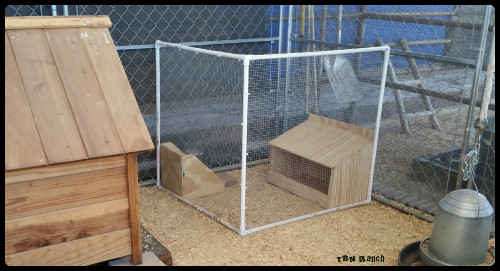
Mamma hen was separated from the flock five weeks ago to hatch and raise her baby chicks in a quiet and safe environment.  The chicks are now two weeks old and it’s time to move Mamma and her babies back to the coop. To keep harmony among the flock, I’ve closed off a corner with hardware cloth to allow visibility between the existing flock, Mamma, and babies. The frame is merely PVC pipe cut in 3-foot sections with wire attached using zip ties.

Here’s the set-up I’m using from Nursery to Coop

Moving the hen with her chicks is best done at night when all the birds are sleeping. Last night wearing my handy headlamp, I headed out to the nursery coop. Throwing a blanket over the nest, I took Mom and her chicks, (nest box and all), and placed it in the designated transition pen inside the coop. Come morning it will be introduction time! Safe, peaceful, and everybody is happy.
After a week or so, I’ll allow Mamma to take her babies out of the enclosure.  She will protect her babies from the existing flock, and at about five weeks, she will begin putting distance between her and them.
Note:
Many chicken keepers allow their hens to hatch their eggs in a secluded area within the chicken coop. Others move hen and eggs back to coop three or four days before the hatch, both ways are certainly okay. I just like to give my hens a quiet place to do their mothering, it’s merely a personal preference.

Silkie and Chicks 51016
Mamma & her babies
Back to HOME PAGE

The Dorking

dorking-table-breed

The Dorking is a breed of chicken that is believed to have originated in the Roman era. It is named after the town of Dorking, located in the county of Surrey in England. The breed was first mentioned in literature in the late 16th century and was used primarily for meat and eggs. Dorking chickens are large birds with a single comb and five toes on each foot. They are known for their docile and calm temperament, making them a good choice for backyard chicken keeping. Dorking chickens come in several varieties, including the White Dorking, Red Dorking, and Dark Dorking. They are slow-growing birds and are not as prolific as some other chicken breeds.
Dorking chickens are not known for being particularly good egg layers, and they typically produce fewer eggs than other breeds. On average, a Dorking hen will lay around 80-100 eggs per year. This is lower than many other breeds, which can lay closer to 200 eggs per year. However, the eggs produced by Dorking chickens are larger and may have thicker shells, which can make them more desirable to some people.
Plumage/Colors: Silver grey, Red, White, Dark, Cuckoo
Eyes: Bright red
Comb: Single, large, or Rose
Feet & legs: Featherless, five toes
Cock weight: Large Fowl 10-14lb (4.55-6.35kg)
Bantam: 40-48oz (1130-1360g)
Hen weight: Large Fowl 8-10lb (3.60-4.55kg)
Bantam: 32-40oz (910-1130g)
Egg production – Low to medium
Egg Color – Tinted
Classification – Heavy; Soft Feather

Back to Chicken Keeping Resources HOME PAGE