Thinking about raising chickens because of egg prices? Before you commit to this, you might want to learn what you’re signing up for! Before diving into this rewarding hobby, it’s important to understand the time, effort, and costs involved. Here’s what you need to know to enjoy the luxury of farm-fresh eggs.
Thinking of adding to your flock this Spring? Unsure about which breeds to pick? It’s a great time to browse and maybe place an order to ensure you get the chicks you want. Check out this nationwide list of hatcheries, they will safely ship your chicks right to your local post office.
I Did My Homework on This So-Called Designer Bird & Here’s What I Think
Steele EggerSteele Egger Chicks
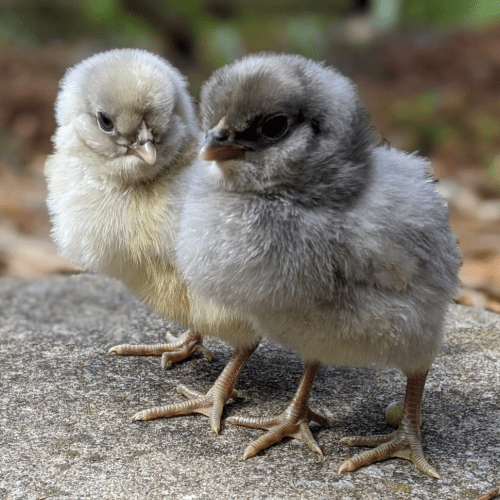
Clever name for this grayish breed because this hybrid was created by Lisa Steele of Fresh Eggs Daily. Hybrids AKA crossbreeds are created specifically for egg production qualities, feather patterns, or egg colors. The Steele Egger’s color is considered blue or splash, but from what I’ve seen the mature hens are mostly gray. The chicks are gray, or yellow, or a mix of gray and yellow. Be Advised, Hybrids are created by crossing two different parents and will not breed true. In this case, we know the Easter Egger lays blue-green eggs, but what we don’t know is the breed it was crossed with. There’s no guarantee the Steele Egger will lay colorful eggs, there is a 1 in 64 chance the Easter Egger will lay a tan or tinted egg. However, if you’re looking for a prolific egg layer, the Easter Egger is a superstar, so whatever breed it’s crossed with was probably chosen to create a super superstar. Or, it was bred for colorful eggs as the priority. Sounds like a win-win situation to me! The Steele Egger is an exclusive breed at Meyer Hatchery, unfortunately, Meyer Hatchery does not disclose what breed or breeds is used to create the Steele Egger. But I have my suspicions, time will tell, and eventually, that information will leak from somewhere. What the heck, I’ll put my two cents in now just for kicks, I say a Cream Legbar. Why? Because a crest is mentioned as a possibility, it’s cream with gray barring, AND this breed lays a pale blue egg. Kind of a no-brainer, but who knows!



 TBN Ranch Chicken Keeping Resources