A Simplified Overview & Diagram of The Digestion Process

Ingestion: Chickens consume their food by pecking at it. Their digestive system is designed to efficiently process the seeds, grain, and vegetation they consume.
Beak and Gizzard: Once ingested, the food enters the chicken’s crop, which is a small pouch in the throat where some initial moisture is added. From there, the food moves down to the proventriculus, which secretes digestive enzymes. The food then enters the gizzard, a muscular organ containing small stones or grit. The gizzard helps grind the food mechanically, breaking it down into smaller particles.
Stomach and Digestive Enzymes: From the gizzard, the food enters the chicken’s stomach, called the ventriculus or “true stomach.” In the stomach, digestive enzymes and gastric juices are secreted to break down proteins, carbohydrates, and fats into smaller molecules that can be absorbed by the chicken’s body.
Small Intestine: The partially digested food then passes into the small intestine, where further enzymatic breakdown occurs. Bile, produced by the liver and stored in the gallbladder, is released into the small intestine to aid in the digestion and absorption of fats. Nutrients, such as amino acids, simple sugars, and fatty acids, are absorbed through the walls of the small intestine into the bloodstream for distribution to the body’s cells.
Cecum and Large Intestine: The undigested food, along with some digestive juices, then enters the ceca, which are two blind-ended pouches located at the junction of the small and large intestines. The ceca house beneficial bacteria that help ferment and break down plant fibers, releasing additional nutrients that the chicken can absorb. From the ceca, the material moves into the large intestine, where excess water is reabsorbed and any remaining nutrients are absorbed.
Cloaca and Excretion: Finally, the waste material, called feces, passes from the large intestine into the cloaca, which is a common opening for the digestive, urinary, and reproductive systems in chickens. The feces are then eliminated from the body through the vent, or the external opening of the cloaca.
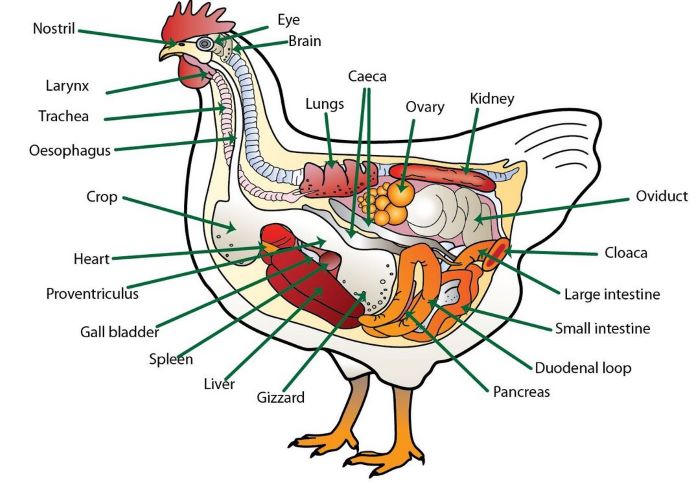
Common Question Answered: A chicken’s egg and feces doesn’t come from the same place. The egg is formed and laid by the hen through a different process than the elimination of waste. The reproductive and digestive systems of a chicken are separate. While both the egg and feces exit through the vent, they are produced by different systems within the chicken’s body and are not related to each other.
 TBN Ranch Chicken Keeping Resources