About the Mille Fleur

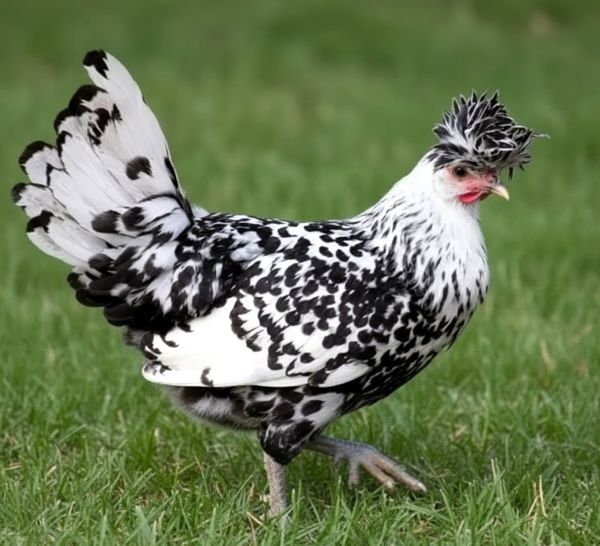
Mille Fleur means “Thousand Flowers” in French, which refers to the colorful feather patterns on the birds.


Appearance:
The Mille Fleur chicken has a small to medium-sized body, weighing between 1.5 to 2.5 kg.
The most distinct feature of this breed is its feathers, which are covered in small, round, and colorful spots.
The base color of the feathers is typically a light brown or tan, with black, white, and reddish-brown spots.
They have a single comb, red wattles, and yellow skin.
Temperament:
Mille Fleur chickens are known for being friendly and docile, making them great pets.
They are active foragers and enjoy free-ranging.
Relatively quiet and do not make a lot of noise, which makes them suitable for urban environments.
Egg production: 😦
Mille Fleur hens in my opinion are not prolific egg layers.
Their eggs are very small with a very light brown or tinted shell color.
About
The Mille Fleur d’Uccle is an ornamental chicken that is known for its distinctive appearance and small size. The name “d’Uccle” is derived from the town of Uccle (or Ukkel) in Belgium, where this breed is believed to have originated.
The Mille Fleur d’Uccle is a bantam breed, which means it is a smaller version of a standard-sized chicken. It is known for its unique feather pattern, characterized by a mottled or speckled appearance with a base color of white or cream and tiny black or dark brown spots that resemble a “thousand flowers” or “mille fleurs” in French. The feather pattern is intricate and complex, with each feather having its own unique arrangement of spots, making each bird’s pattern slightly different.
The exact origin of the Mille Fleur d’Uccle is unclear, but it is believed to have been developed in the late 19th or early 20th century in Belgium through crossbreeding of several other bantam chicken breeds, including the Barbu d’Anvers (d’Anvers or Antwerp Belgian) and the Barbu de Watermael (de Watermael Belgian). The aim was to create a unique and visually appealing breed for exhibition and ornamental purposes.
The Mille Fleur d’Uccle has gained popularity worldwide as an ornamental chicken breed due to its attractive appearance, friendly temperament, and small size, which makes it suitable for backyard or urban chicken keeping. Today, it is recognized as a distinct breed by many poultry associations and is exhibited in poultry shows and competitions around the world.

Back to Chicken Keeping Resources HOME PAGE

Silkies, A Unique Breed of Chicken

Silkie chickens are a unique breed of chicken known for their distinct appearance and personality. They are the best breed if you’re looking to hatch eggs because they are excellent dedicated mothers, and you can count on them to be broody many times a year.
Silkies can come in a variety of colors, including splash, white, black, blue, buff, gray, and partridge. Their feathers have a unique fluffy and soft appearance because they lack the barbs and barbules that hold the feathers together in most other chicken breeds. This gives Silkie a distinctive appearance and texture.
Additionally, they have black skin and bones, and their feathers can have a slight iridescence or shine to them.

Here are Some of the Key Characteristics that Make Silkies Different

Appearance: Silkies have a unique appearance that sets them apart from other breeds. They are covered in fluffy, fur-like feathers that feel soft and silky to the touch. They also have black or blue skin, dark-colored meat, and a distinctive crest of feathers on their head.
Personality: Silkies are known for their friendly and docile nature. They enjoy affection and attention and are a great choice for children to raise.
Broodiness: Silkies are known for their broody nature, meaning they have a strong instinct to sit on and incubate their eggs. This makes them popular among backyard chicken keepers who want to hatch their chicks.
Size: Silkies are a smaller breed of chicken, weighing between 2-3 pounds on average.
When it comes to egg production, silkies are not considered to be prolific egg layers.
On average, Silkies lay around 100-120 small, cream-colored eggs per year. As a comparison, the popular Rhode Island Red hen lays approximately 250-300 eggs per year. Keep in mind, egg production for all breeds can be influenced by various factors, such as age, diet, and environment.

Back to HOME PAGE

Silkie Bantam

All About the Beautiful Silkie Bantam

Silkies are a breed of chicken known for their fluffy, soft plumage that resembles fur. They have a distinctive appearance, five toes, and with combs and wattles should be a mulberry color or black. Their beak is usually a blue-gray color. They have black eyes and are described as exotic chickens. They are prized for their soft fluffy appearance and are quite popular in showing and exhibition.
They are known for having a calm and docile temperament, making them a popular choice for backyard flocks. They are a bantam breed, which means they are smaller in size compared to other chicken breeds. Silkie bantams typically weigh between 1.5 and 2.5 pounds. The weight can vary slightly depending on the sex of the bird, with roosters generally being slightly heavier than hens.
Silkies are thought to have originated in Asia, with China being the most likely place of origin. They were brought to Europe in the 13th century by Marco Polo and were later introduced to the Americas by early settlers. They are a hardy breed, able to tolerate cold weather, and can be raised in both free-range and confined environments.
Silkies are not known for being great layers, but I don’t find this to be true. My Silkie ladies lay most every day…. when not broody. They do indeed tend to be quite broody but are very attentive mothers, so they’re a great option for people who are interested in breeding ornamental chickens.

The Silkie chicken breed is available in bearded and non-bearded varieties. The bearded Silkie strain has a muff under the beak which covers the earlobes – this is absent in the other non-bearded Silkies. The Silkie rooster has a circular-shaped comb while the hen has a small, flat comb.
Silkie chickens come in many interesting colors, but accepted varieties include black, blue, buff, and white colors. Splash and partridge are also recognized and accepted APA colors.
Silkies are rather slow to mature, and usually don’t start laying until they reach 6 or 7 months. Eggs are cream in color and are considered small to medium.
Interesting fact: Silkies cannot fly, so roosts in the coop should be positioned low to the ground. You can offer a ladder to a higher roosting bar, but for the most part, I find Silkies prefer to be no more than 2 ft off the ground.

Back to Chicken Keeping Resources HOME PAGE