Strategies For Successfully Managing Mice
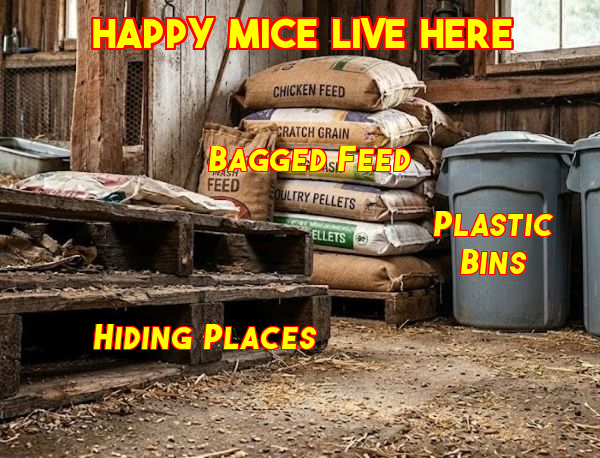

🐭 Controlling mice in the chicken coop is something nearly every chicken keeper eventually has to deal with. Where there is grain, warmth, and shelter, rodents will inevitably appear. Chickens themselves do not mind the occasional mouse, but a growing rodent population can quickly become a nuisance. Mice consume expensive feed, contaminate food with droppings and urine, damage wood and insulation, and can carry parasites and disease. Because mice reproduce rapidly, what begins as a small problem can grow quickly if it is not managed.
The most effective approach to controlling mice is not simply trying to kill them. Successful rodent control focuses on management practices that make the coop and surrounding area less attractive to mice in the first place. If food, shelter, and easy access are removed, rodents will usually move on.
Feed management is the most important step. Chicken feed is the main reason mice move into a coop. Chickens are messy eaters, and spilled grain becomes a ready meal for rodents once night falls. Using feeders that limit spillage, such as treadle feeders, can make a significant difference. It’s important to not have food available at night, and clean up spilled feed from the ground. When mice cannot reliably find food, they are far less likely to remain in the area.
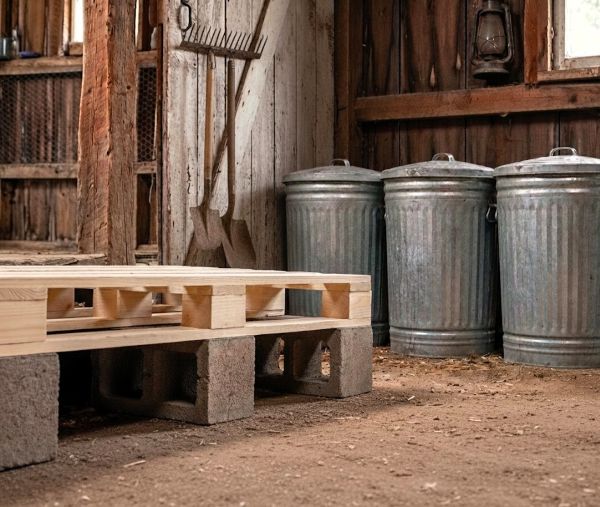
Proper feed storage is just as important. Mice can chew through feed bags and thin plastic containers with little effort. Feed should always be stored in rodent-proof containers such as metal garbage cans with tight fitting lids.
Reducing hiding places around the coop also helps discourage rodents from settling in. Mice prefer areas where they can move from cover to cover without being exposed. Raise pallets a foot off the ground, keep grass and weeds trimmed around the coop and avoid storing piles of lumber or straw, etc. directly on the ground.
Is your coop itself rodent proof? Keep in mind that a mouse can squeeze through very small opening, sometimes no larger than a dime. Gaps around doors, small holes in siding, and openings where pipes or wires enter the building can all provide entry points. These areas can be sealed with hardware cloth.
🐭 FYI: Mice are primarily nocturnal. Peak activity is at night, they come out to search for food, explore, and build nests between dusk & dawn. During the day they are usually resting or hiding in nests (inside walls, burrows, clutter, etc.).
The Goal: No hiding places, Metal Feed Cans, & a Tidy Space
Rodent poisons are not recommended around chickens. Poisoned mice may be eaten by chickens, barn cats, owls, hawks, or other wildlife. This can lead to secondary poisoning, harming animals that naturally help control rodent populations. For most backyard chicken keepers, prevention, good management provide safer and more responsible solutions.
🐭 If you have an infestation problem, trapping provides a safer and more responsible solution when mice are already established in high numbers. Snap traps are generally the most effective and humane option when placed along walls or runways where mice travel. Baits such as peanut butter, oats, or a small amount of chicken feed mixed with peanut butter tend to work well. Of course, traps should always be placed where chickens can’t reach them.
The reality of keeping chickens is that mice may never disappear completely. But with consistent management practices, controlling feed, keeping the coop area clean, storing grain properly, it is possible to keep rodent numbers low.
Mice are a nuisance, and rats can feel even more unsettling. In many cases, where you find one, the other isn’t far behind. While the methods used to control them are similar, this article explores rodent management in greater detail. Effective Rat Management For Backyard Chicken Keepers

 TBN Ranch Chicken Keeping Resources