Chicken Coop is Finished

Preparing for the Brooder to Coop Transition

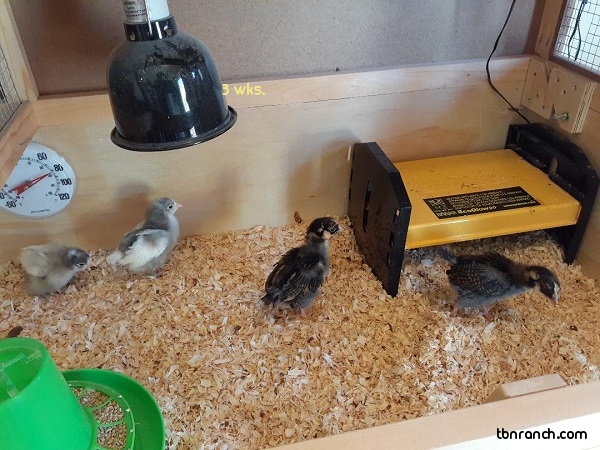
The chicks are heading into their 5th week in the brooder and will be ready to move into the coop the following week. This is what I call their transitional week. Their radiant heat source is slowly taken away, and they’ll also lose their all-night red lighting.
The first few nights I switch from red lighting to a white night light, then the night light is taken away. By the time they transition from brooder to coop, they will have learned to accept cooler temperatures and total darkness at night.
In most parts of the country, chicks are kept in the brooder until they are fully feathered, which is usually around 8 weeks. Here in Phoenix, Arizona, by the end of April temperatures during the day reach about 85-90, lows about 65. Therefore, it’s plenty warm to move the chicks to the coop at about 6 weeks. As you can see, they’re pretty well-feathered already!

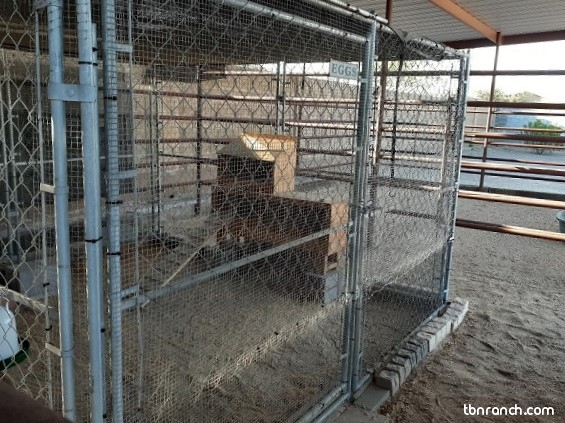
The Finished Coop

The coop is an existing 10×10 x walk-in covered dog enclosure converted to a chicken coop. It’s inside a 3 stall covered open air barn, offering them plenty of shade and fresh air. It has taken almost 3 weeks to completely cover the chair link fencing with 1/2 inch hardware cloth.
Needless to say, I have spent my self-quarantine time wisely. Unfortunately, my fingers are a mess from working with stubborn wire and zip ties.

Predators have been a problem in the past, we have had our share of traumatic experiences with hawks, bobcats, and coyotes. I’ve lost at 8 birds over the years, with so much time on my hands, this was a good time to put the effort into predator-proofing the coop. Not to mention keeping wild birds from entering the coop and eating all the chicken feed.

Tip: Chicken wire isn’t going to keep your birds safe from predators, always use hardware cloth. Chicken wire can be chewed through or easily bent to give predators access.
Also, lay /bury hardware cloth at the base of the coop to prevent digging by raccoons and coyotes, etc.  More About Predators

Back to Chicken Keeping Resources HOME PAGE

Updating the Chicken Coop

Chicks in the Brooder are Three Weeks Old

The March 18th chicks are growing fast and there’s work to be done before they leave the brooder and move into the coop.  As long as I’m stuck at home, seemed like a great time to update the chicken coop. There’s always something I’m not satisfied with, and this year I’m going to do something about it.
My biggest pain in the butt is wild birds eating all my chicken feed. They squeeze through the tiniest hole in the chicken pen, and then can’t get out. They fly around inside bouncing off the walls, causing chaos among the flock.
You probably think this is no big deal, but chicken feed is expensive, and wild birds can easily eat 5 lbs. or more every single day. Taking that into consideration, it would be a lot cheaper to just buy eggs.
The coop is a 10×10 covered chain link pen, inside an open-air barn or shedrow at the back of our property. I had it completely covered with aviary netting, which was somewhat suitable, however, birds and lizards would get caught in it. That’s another problem I  want to avoid so I took all of it off. One problem was solved, but another was created.   I was now committed to finding a favorable solution.
The Solution
I bought 3 50ft rolls of 1/2 inch hardware cloth and have almost finished covering the entire coop. Talk about time-consuming, OMG. My fingers are a mess, my nails are broken, and my arms look like I’ve been in a battle zone.  But, there will be no birds getting in my coop this year!

The Girls at Three Weeks Old

Back to Chicken Keeping Resources HOME PAGE

Chicks Arriving Tomorrow, This is our Brooder Set-up

Brooder is Ready to Go

Here are a few pics of my set-up where the chicks will live for the next 5 to 7 weeks. Depending on their growth, the weather, and most importantly, when they are mostly feathered. Usually, they are feathered for sure by 8 weeks, but usually, the temperatures in Phoenix allow us to move them from the brooder to coop earlier. What kind of chicks? Guess you’ll have to wait and see!
The Brooder Set-up
My husband built this custom brooder complete with electric and self-closing doors on top. The floor in the brooder is lined with textured linoleum tiles and the windows are plexiglass.  There are plenty of storage cabinets below for all those chick-rearing necessities.
I use radiant heat but have two 50-watt backup heat lamps overhead just in case of a sudden drop in outside temp. I also have a temperature reading from the brooder to the house, so I don’t have to wonder if they are too cold or hot.

The Brooder Shed below is 8×10, heavily insulated, then drywall, and I had the gruesome chore of painting the inside pale yellow, ( I hate painting.) There is power, but no plumbing. Fortunately, the hose is only steps away.

I’ll be picking up the chicks across town, I found this handy cage at Goodwill for $1.99, can’t beat that! It will comfortably hold at least 18 chicks. They like to be transported tightly packed together, it helps keep them warm and feeling safe.

Back to Chicken Keeping Resources HOME PAGE