How to Introduce Chicks to a Broody Hen

Putting chicks under a broody hen is a natural way to raise baby chicks. These chicks are called hatch-a-longs. There are a few steps to follow for this to be successful. But keep in mind, there’s no guarantee your hen will accept the chicks, so keep a watchful eye after the introduction.

How To Introduce Hatch-a-Longs to Broody Hen

Make sure your hen is truly broody, which means she is sitting on eggs (or fake eggs) and exhibiting signs of wanting to hatch them. Signs of broodiness include sitting on the nest for long periods of time, puffing up her feathers, and spreading herself over the eggs giving her a flattened appearance. She may be pulling out her feathers for the nest. Important: Your hen needs to be dedicated to her eggs for at least 2 weeks.
Prepare a safe and clean environment: Choose a clean and dry area within your coop or a separate brooding area that is safe from predators, drafts, and dampness. Provide bedding such as pine shavings for the hen and chicks to nest in. A completely enclosed area is best.

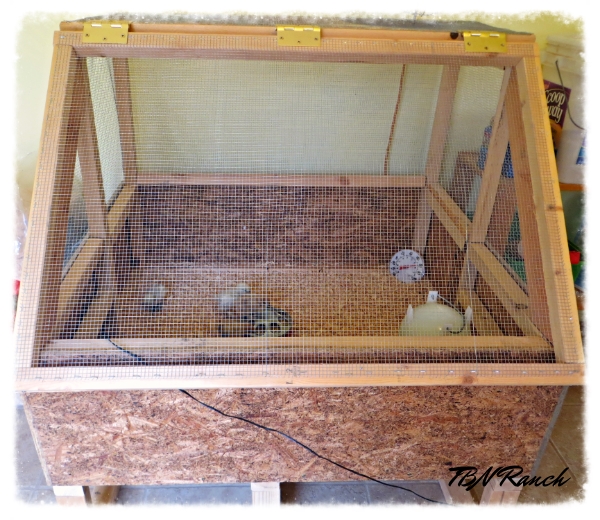
The enclosure I use for my broody hen & hatch-a-longs

Purchase day-old chicks preferably, but up to 3 days old is usually acceptable. Place the chicks in a temperature-controlled brooder with access to food & water until nightfall.
Late at night is best to place chicks under your hen. Broody hens are more receptive to accepting new chicks at night when they are more relaxed and in that weird hypnotic state that occurs after dark. Your chick feed and drinker should be in place at this time. Make sure both are close by and easily accessed by the chicks. Your hen can eat the chick starter, it will be good for her since she probably hasn’t been eating enough while broody.
Tuck the chicks under the broody hen’s wing. If possible, do this in complete darkness to minimize disruption. Avoid disturbing the broody hen too much during this process.
Observe the broody hen and chicks closely to ensure that the hen is accepting the chicks and keeping them warm. The hen’s body heat is crucial for the chicks’ survival, especially during the first few days of their lives.
Continue to provide a safe and clean environment for the broody hen and chicks, free from drafts, predators, and dampness. Regularly clean the bedding and ensure that the chicks have enough space to move around and grow.

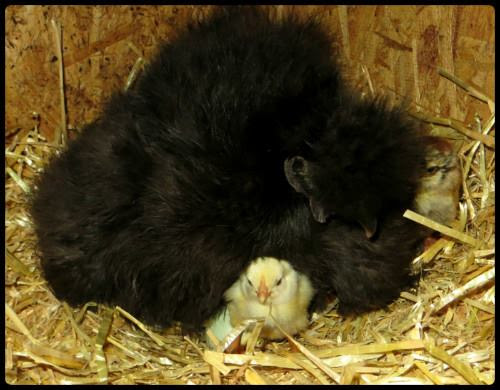
Silkie hen & her hatch-a-long

In The Perfect Scenario, What to Expect

By following these steps and providing proper care, the broody hen should take care of the chicks, keeping them warm, teaching them to eat and drink, and providing them with maternal care.
After a Few Days, the hen can be allowed to take her chicks out with the other hens and she will protect them but watch carefully to make sure.
By Week Five or Six, the hen will begin distancing herself from the chicks. Make sure to have multiple feeders & drinkers, as the new birds will surely have to find their place in the pecking order. If there’s going to be drama (expect it) it will be where the food is.
Lastly, have fun, and don’t forget to enjoy the experience.

Back to HOME PAGE

100+ Brooder Ideas for Baby Chicks

What Is a Brooder? Why You Need One, & Ideas For Choosing Your Own

View A collection of Brooder Box Ideas

A brooder for chicks is a special enclosure or container designed to provide a warm and safe environment for newly hatched chicks to grow and develop until they are fully feathered. You can expect your chicks to be fully feathered somewhere between 5 & 8 weeks.
Brooders can be made of various materials, including cardboard boxes, plastic containers, or specially designed enclosures. They typically include a heat source, such as radiant heat or a heat lamp to keep the chicks warm. Inside the brooder will be bedding material, such as pine shavings to absorb moisture and provide a soft surface for the chicks to rest on, as well as a feeder & drinker especially made for baby chicks.
The goal of a brooder is to create an environment that mimics the warmth and protection provided by a mother hen, helping to ensure the health and well-being of the young chicks as they grow and develop.
Chicks need a brooder because they are not able to regulate their body temperature effectively when they are first hatched. They need to be kept warm in a controlled environment until they are able to maintain their own body heat.
The brooder also needs to be kept clean and dry to prevent the chicks from getting sick or developing health problems. Adequate ventilation is also important to ensure that the air inside the brooder is fresh and the chicks have access to oxygen.
Raising chicks should be fun, so being creative with a brooder box is encouraged. Here are over 100 ideas to inspire you.

What Do My Brooders Look Like?

Back to HOME PAGE

The Hierarchical System Among Chickens

The Pecking Order, A Natural Disturbance Among the Flock

Chickens are social animals that naturally establish a pecking order within their group. The pecking order is a hierarchical system that determines the rank and status of each chicken in the flock. The pecking order is important for the social organization of the flock and helps to maintain order, reduce aggression, and ensure access to resources such as food, water, and nesting sites.
The establishment of a pecking order is a natural process that begins when chicks are first introduced to each other.
Chickens use a variety of signals and behaviors to establish their place in the pecking order, including aggression, dominance displays, and submissive behaviors.
The factors that determine the pecking order among chickens:
Age
Older chickens tend to have higher status in the pecking order than younger chickens. This is because older chickens are larger and more experienced, and they have had more time to establish their dominance within the flock.
Size and Strength:
Chickens that are larger and stronger tend to have higher status in the pecking order. These chickens are able to compete more effectively for resources such as food, water, and nesting sites, and they are often able to intimidate smaller and weaker birds.
Personality:
Chickens have different personalities, and some birds are more assertive and dominant than others. Chickens that are more aggressive and assertive tend to have higher status in the pecking order than more submissive birds.
Previous Interactions:
Chickens remember previous interactions with other birds and use this information to establish their place in the pecking order. If a chicken has successfully challenged another bird in the past, it may be more likely to challenge that bird again in the future.
Once the pecking order is established, each chicken knows its place in the hierarchy and behaves accordingly. Chickens at the top of the pecking order are more likely to have access to resources such as food and water, and they may also have access to better nesting sites. Chickens at the bottom of the pecking order are more likely to be subjected to aggression and may have limited access to resources. However, the pecking order also helps to reduce aggression and maintain order within the flock by establishing clear social boundaries and reducing the need for constant competition.

Back to Chicken Keeping Resources HOME PAGE