Silk, my Silkie Bantam hen, has passed away at five years old. There is comfort in knowing she wasn’t alone, didn’t suffer, and her last experience was one of warmth and familiarity being held lovingly in my arms.
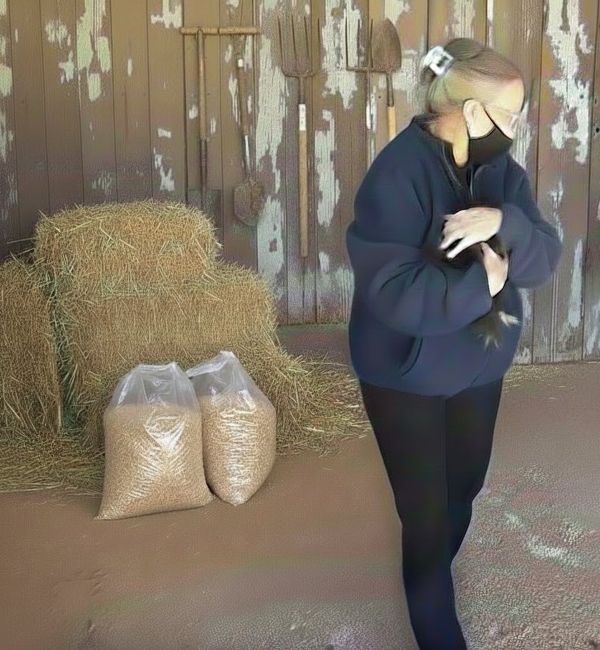


Silk, my Silkie Bantam hen, has passed away at five years old. There is comfort in knowing she wasn’t alone, didn’t suffer, and her last experience was one of warmth and familiarity being held lovingly in my arms.
I always knew what my ideal chicken coop would look like, but trying to create a building plan that made sense to a contractor who knows absolutely nothing about chickens, well, that’s nearly impossible. I’m still wrapping my head around the idea of AI being an asset to society, but here I am, using it. With its help, I designed the coop of my dreams. I know it’s ridiculously over-the-top and elaborate in every way, but maybe you’re a dreamer like me, so here’s what I came up with.

The air conditioner isn’t something most chicken keepers would ever need, but we live in the desert, where temperatures hit 119°F this past July. Mist systems, a pool, and fans are essential to keeping our birds alive and comfortable, but adding an A/C unit would make life so much easier for all of us. A ceiling fan in the run? Perfect!
We also live in the foothills of a 700-acre mountain range, which means predators are a constant concern. Coyotes and bobcats pose the biggest threat to my flock, so a concrete perimeter and gravel base around the coop would be ideal.
After designing this insanely gorgeous coop, I asked AI for an estimate on the cost of materials and a pro contractor to build this monstrosity. Not a shocking response, but, oh my… $18,000. Like I said, it’s just a dream.

Bringing a flock of hens home seemed simple at first, just a few eggs, I thought. But they brought lessons I never imagined. I make my way to the coop each day at sunrise, the hens clucking away and breaking the morning quiet. It may be hard to imagine, but the smell of dry, gritty earth and sun-baked foliage is something you learn to find beauty in over time.
Keeping chickens here feels like a kind of rewilding, not of wilderness, but of care and diligent attention. In a place where water and shade are precious, you begin to see how every living thing adapts. The hens move with quiet wisdom, digging into the cool earth or finding shelter beneath sparse desert trees and makeshift shade cloths.
Eggs of all colors and sizes are gathered each day. They follow the natural rhythm of my flock, arriving whenever, rather than on a schedule. That kind of cycle feels sacred, a small, circular rebellion against the idea that everything must be constant and controlled.
When the monsoon season arrives, I welcome the brief shift in temperatures and the distinctive smell of rain on the crispy creosote bushes. Somehow, the smell of rain on the wet city streets feels strangely comforting. As thunder rolls and the wind violently picks up, the desert becomes a conversation again, one of long-awaited change. The flock huddles down when harsh weather threatens, quietly finding shelter until it passes. Winter, by contrast, is mild and comfortable, offering the flock a much needed reprieve. There were moments when the heat left me exhausted, and the needs of my flock felt greater than what I could give. Yet in facing those moments, I uncovered a resilience I never expected to find.
Rewilding doesn’t always mean returning to forests or rivers. Sometimes it’s about remembering how to live in the place you already are. Even a small desert chicken farm can provide that sense of reconnection, where a flock of hens teaches you to observe, adapt, and find grace—even in a climate that is not always kind.
 TBN Ranch Chicken Keeping Resources