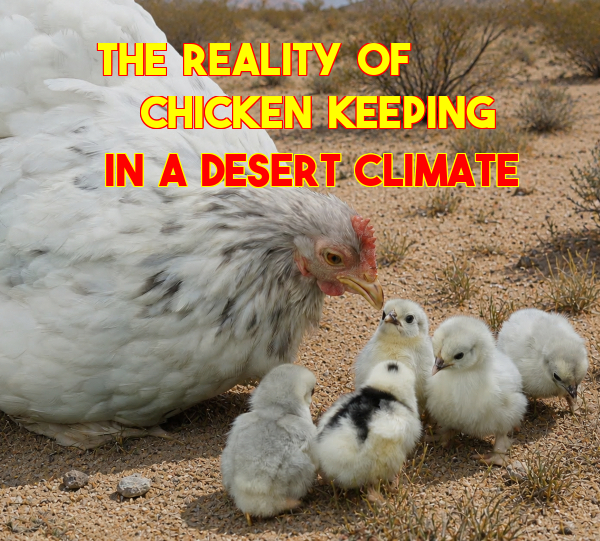
The Reality of Chicken Keeping in a HOT Desert Climate

Phoenix, Arizona, is a great example of what chicken keeping is like when temperatures soar to 115+ degrees. This is not an exaggeration, and to be perfectly honest, 120 degrees is certainly not unheard of. Chickens are pretty hardy as a rule, but they are not invincible. They need special care when temperatures rise, you can learn more about that in the article below.

Now that the chickens are taken care of, let’s talk about you, your role in all this, and what you can expect your days to look like during the hottest months of the year. You might be thinking you can handle the job for just a few months of summer, but Phoenix is a lot different. From May through October, the heat is relentless, with June, July, and August being especially brutal.
That means you’re out in the heat too, and not just once or twice a day. If the water in the drinkers gets too hot, the chickens will avoid it, and that can be a death sentence, so it has to be refilled with cooler water throughout the day. This is why auto drinkers and nipple drinkers should NEVER be used in desert climates. Mist systems and fans need to be adjusted and managed, and diligent housekeeping is imperative because chicken droppings create even more heat. To be clear, diligent means every day.
There may be a chicken that needs medical attention, things break, and problems are inevitable. When something goes wrong, you need to be out in the heat dealing with it. That’s the reality. I’ve been doing this for 14 years, so for me, it’s worth it. The question is, is it worth it for you?
Back to HOME PAGE

Rewilding With Chickens: Lessons Learned from a Desert Flock

Observing, Adapting, and Rewilding in Arizona

Bringing a flock of hens home seemed simple at first, just a few eggs, I thought. But they brought lessons I never imagined. I make my way to the coop each day at sunrise, the hens clucking away and breaking the morning quiet. It may be hard to imagine, but the smell of dry, gritty earth and sun-baked foliage is something you learn to find beauty in over time.
Keeping chickens here feels like a kind of rewilding, not of wilderness, but of care and diligent attention. In a place where water and shade are precious, you begin to see how every living thing adapts. The hens move with quiet wisdom, digging into the cool earth or finding shelter beneath sparse desert trees and makeshift shade cloths.
Eggs of all colors and sizes are gathered each day. They follow the natural rhythm of my flock, arriving whenever, rather than on a schedule. That kind of cycle feels sacred, a small, circular rebellion against the idea that everything must be constant and controlled.
When the monsoon season arrives, I welcome the brief shift in temperatures and the distinctive smell of rain on the crispy creosote bushes. Somehow, the smell of rain on the wet city streets feels strangely comforting. As thunder rolls and the wind violently picks up, the desert becomes a conversation again, one of long-awaited change. The flock huddles down when harsh weather threatens, quietly finding shelter until it passes. Winter, by contrast, is mild and comfortable, offering the flock a much needed reprieve. There were moments when the heat left me exhausted, and the needs of my flock felt greater than what I could give. Yet in facing those moments, I uncovered a resilience I never expected to find.
Rewilding doesn’t always mean returning to forests or rivers. Sometimes it’s about remembering how to live in the place you already are. Even a small desert chicken farm can provide that sense of reconnection, where a flock of hens teaches you to observe, adapt, and find grace—even in a climate that is not always kind.

Back to HOME PAGE