The Daily Reality of Raising Backyard Chickens


The dream of collecting fresh eggs from your backyard is one of the biggest attractions of modern suburban homesteading. However, behind the dream lies the reality, keeping a small flock of four to six hens requires consistent labor, routine maintenance, and a non-negotiable commitment to cleaning. While chickens are relatively low maintenance, having a small flock demands a steady commitment and a good deal of your time.
Every morning begins with letting the flock out of the secure coop into their enclosed run. Waterers must be checked, dumped, and refilled with fresh water. Mid-day or late afternoon requires a quick trip to gather eggs before they get broken or dirty. Dusk brings the mandatory task of locking the coop door to protect the flock from predators like raccoons, foxes, coyotes, etc. These are non-negotiable chores every single day.
Maintaining a tidy coop is where the real effort lies. Chickens produce a surprising amount of poop. Without regular care, smells become overwhelming fast, attract flies, rodents, and can cause respiratory disease over time. Scraping manure off the roosting boards, checking nesting boxes for broken eggs, replacing soiled straw or wood shavings, and wiping down the nest boxes is a necessary part of chicken keeping. Raking the outdoor run to prevent mud buildup and turning over soil or adding fresh pine shavings keeps odor at bay, which is a weekly chore at the very least.
Whatever bedding method is used, a comprehensive scrub-down is necessary every few months. Deep cleaning involves hauling out all old bedding, scrubbing surfaces, cleaning drinkers and feeders, and adding lime to the ground to deter mites and lice.
While keeping chickens is not backbreaking work, it does require a daily commitment, regardless of rain, snow, or heat. For those willing to put in the time, the reward is a steady supply of farm fresh eggs. But there are other benefits too, chickens have distinct personalities and can be fun to watch. You may find that spending time with a flock is not about the work at all, could it be your new way to relax, unwind, and be entertained? I’m not opposed to calling chicken keeping… therapy.

Back to HOME PAGE

Starting a Backyard Flock: Pros, Cons, and Practical Tips

Thinking about starting a backyard flock? Chickens aren’t just about eggs, they bring personality, entertainment, and yeah… a little work too, but it’s rewarding work. Within the flock, a pecking order governs who gets first dibs on everything, the food, best perch, even the nest boxes. Watching them sort it out can be entertaining, or maybe better described as… a soap opera. Their verbal chatter is constant, clucks, cackles, and gossip-like conversations that only they understand. Some hens announce their egg-laying achievement with a noisy “cackle song” that lets you know they’ve laid. I have one hen ( Nugget, a 4 y/o Mille Fleur) who never lays an egg but has made it her job to inform me with her repetitive cackle that another hen has.
Depending on the breeds you keep, your nest boxes could be filled with white, chocolate-brown, brown, pale blue, mossy green, and even speckled eggs. Whatever the color of the egg, when you crack one open, you’ll see the difference instantly, bright golden yolks and firm whites, a freshness that store-bought eggs can’t match.

Each chicken comes with a unique personality. Some may follow you around curiously, some are aloof, and the bold leaders just seem interested in being just that. Sometimes there’s that special one who might jump in your lap for extra attention. One thing is for sure, spend some time with your chickens and you’ll see plenty of antics accompanied by endless drama. Over time, your chickens will come to know you, greeting you at the gate, especially if you have treats or kitchen scraps.
Chickens live by a sense of rhythm. As the sun goes down, they all march into the coop and put themselves to bed. In the winter, their egg-laying slows, reminding us to respect the natural cycles of rest and renewal. 
Is keeping chickens cost-effective? Well… no, not really. Fresh eggs come at a price. A spacious, predator-safe coop and run can be expensive to set up, and feeding a small flock of 6–8 birds usually runs about $30+ a month, substantially more if you choose organic feed. That’s enough to buy a lot of store-bought eggs. So what’s the bottom line? It all comes down to whether the expense and commitment are worth it to you.

Back to HOME PAGE

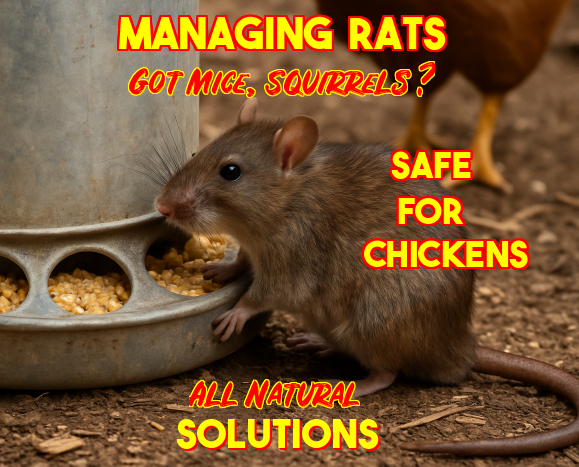
Keep Rodents Out of the Chicken Feed With This Natural, Chicken-Safe Solution

Back to HOME PAGE