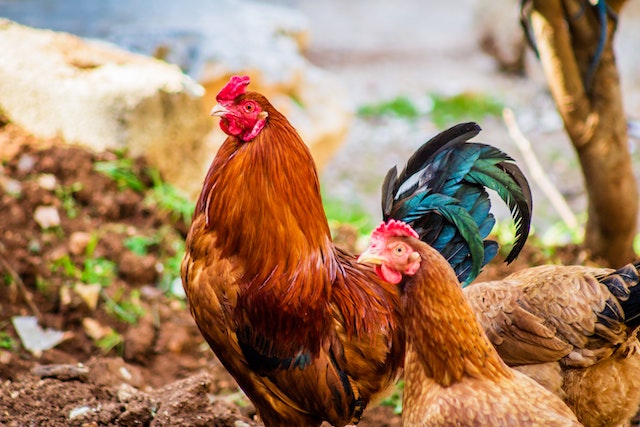
Did You Know?
Chickens are one of the oldest domesticated animals, with evidence of their domestication dating back to ancient Egypt over 4000 years ago.
Chickens are intelligent birds and can remember and recognize up to 100 other chickens.
Chickens have a complex social hierarchy and communicate with each other using over 30 different vocalizations.
Chickens can dream and have a sleep-wake cycle similar to humans.
Chickens have a good sense of direction and can find their way home over long distances.
Chickens have a pecking order and establish a social hierarchy through pecking and other forms of behavior.
Chickens can exhibit personality traits such as shyness or aggression, and some breeds are known to be more docile or energetic than others.
Chickens are omnivores and will eat a variety of foods, including seeds, insects, and even small reptiles.
Chickens have a highly developed sense of taste and are able to distinguish between different flavors.
Chickens are known for their ability to produce eggs, but they can also be raised for their meat.
More Interesting Facts…
Chickens, like all animals, have certain vital signs that are important indicators of their health and well-being. Some of the vital signs of chickens include:
Heart rate: A chicken’s normal heart rate is between 250 and 300 beats per minute.|
Respiratory rate: A chicken’s normal respiratory rate is between 15 and 25 breaths per minute.
Body temperature: A chicken’s normal body temperature is between 105-106.7 degrees Fahrenheit (40.5 and 41.5 degrees Celsius).
Capillary refill time: This is the time it takes for the blood to return to a chicken’s comb (the fleshy protuberance on top of its head) after being pressed. A normal capillary refill time is less than 2 seconds.
Hydration: Chickens should have moist, elastic comb and wattles (the fleshy protuberances on either side of the head). Dry comb and wattles can be a sign of dehydration.
Behavior: Chickens should be active and alert, with a normal appetite and thirst.
Monitoring these vital signs can help you identify any health issues that your chickens may be experiencing, and allow you to take appropriate action to address them.



 TBN Ranch Chicken Keeping Resources