Safeguarding Your Health: Wear a Mask in the Chicken Coop, Here’s Why

Poultry dust is the airborne particulate matter that is frequently present in elevated concentrations inside your chicken coop. Occasionally, (usually) reaching a density sufficient enough that it’s visible to the naked eye. Certainly you have seen this in a ray of light while cleaning.
Poultry dust refers to tiny particles that float in the air and are often found in high amounts inside the coop. This dust is considered “biologically active” because it contains microorganisms, and this is a good reason indeed for wearing a mask in your chicken coop.
Poultry dust poses an elevated risk of respiratory diseases, as its fine particles can transport pathogens deep into the lungs. Inside the chicken coop, airborne components such as softwood dust, fungal spores, and harmful bacteria are continually stirred up by the scratching behavior of your chickens, and when you’re cleaning the coop.
This “dust” contains various harmful components such as manure, feed, feathers, dander, and other residues from poultry. It also includes litter, biological contaminants, endotoxins from bacteria, and inorganic particles from building materials like concrete dust or insulation fibers. If you use substances like diatomaceous earth and chemical powders or sprays used for mite and lice control, lime, and other floor applications they also contribute to the composition of the dust.
Dust particles also can carry viral particles, mites, molds, and more. Smaller particles are particularly dangerous as they take longer to settle, remaining in the air for an extended time and increasing the risk of inhalation.
You can help protect yourself by using a disposable dust mask such as the N95. But, use what you can afford, certainly any mask is better than nothing at all.

Back to HOME PAGE

Salmonella and Poultry

If you’re a poultry keeper and not concerned with salmonella, you should be. Here are the facts and how to protect yourself and your family. Salmonella is a type of bacteria that is carried in the intestines of animals and can be shed into the environment. People typically become infected after eating contaminated foods or from contact with animals or their environments.
Fact:  Chicks, ducklings, and other poultry are a recognized source of Salmonella.
Exposure to Salmonella
People get sick from Salmonella by hand-to-mouth contact. Usually, this happens when people handle birds or their droppings and then accidentally touch their mouths or forget to wash their hands before eating or drinking. Even birds that do not look sick may be shedding Salmonella. And even though a bird looks clean, it may still have germs like Salmonella on its feathers or feet. Salmonella can cause diarrhea, vomiting, and fever. Occasionally people become sick enough to need to see a doctor or be hospitalized. Most people develop symptoms 1 to 3 days after being exposed to Salmonella and recover in about a week. Some people are more susceptible to infection and will have more severe disease. These people include young children, pregnant women, the elderly, people on chemotherapy, diabetics, and others with weakened immune systems.
Prevention
Do not let children less than five years of age or others at high-risk handle poultry or items contaminated by poultry. Wash your hands thoroughly after handling poultry or their droppings. Do not eat or drink around poultry or their living areas. Do not let poultry live inside your home. Do not wash the birds’ food and water dishes in the kitchen sink.
Disinfectants for Good Poultry Housekeeping
Roccal®: Mix 1/2 fluid oz of Roccal per gallon of water.
Nolvasan® (chlorhexidine diacetate 2 percent): Mix
3 fluid oz of Nolvasan per gallon of water.
Household bleach (sodium hypochlorite 6 percent):
Mix 3/4 cup of household bleach per gallon of water.
Lysol® spray for footwear
Purell® hand pump for hand disinfection

Source: United States Department of Agriculture, USDA

Back to Chicken Keeping Resources HOME PAGE

Cleaning Farm Eggs

Egg Washing, Good or Bad?

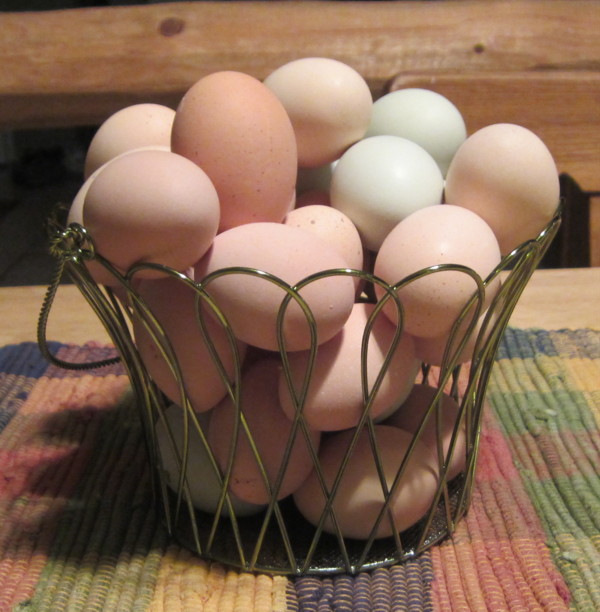
I do not wash eggs. Unwashed eggs have a natural antibacterial coating called bloom, therefore, I highly recommend dry cleaning farm fresh eggs. If you have to clean them, using a sanding sponge or loofah will help preserve most of the bloom intact. Make sure you sanitize your cleaning materials for cleaning eggs, every time.
Why Not Wash Eggs?
Bacteria, plain and simple.  Did you know that submerging eggs in cold water causes the pores in an eggshell to pull bacteria from the surface and into the egg?  However, if you still want to wash eggs, always use warm water and dry each egg thoroughly before storing.  Many poultry keepers then use a sanitizing spray of diluted bleach before storing, I do not.
Here at TBN Ranch, dirty eggs are either washed and immediately eaten, pitched in the trash, or scrambled up and feed back to the birds. They love them, and it’s an excellent nutritional source.

Back to HOME PAGE