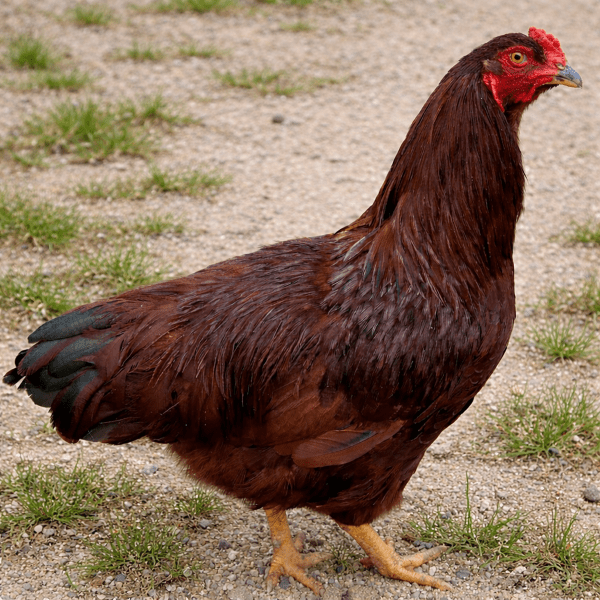
The Buckeye was bred to be a functional “utility” bird, meaning it excels at both egg production and meat quality.
While the bird is primarily a deep, lustrous red, it has a few distinct color traits that set it apart:
Black accents: Black feathers in the tail.
The Buckeye was developed out of the Plymouth Rock, Cochin, and Red Game fowl to give the Buckeye its heavy, broad build and tight feathering.
Color: A unique, rich Mahogany Red (darker than a Rhode Island Red)
Comb Type: Pea Comb (small and flat, making them highly resistant to frostbite)
Body Shape: Slanted back with a powerful, stout build.
Weight: Roosters: 9 lbs; Hens: ~6.5 lbs.
Legs & Skin: Yellow legs and yellow skin.
Foraging : They are incredibly active and prefer to find their own snacks (bugs and greens) rather than sitting at a feeder all day.
Disposition: Generally calm and friendly toward humans, though they are very “busy” birds.
Cold Weather: Thanks to that tiny pea comb and thick feathers, they handle freezing winters better than almost any other breed.
Egg Laying: They are steady producers, typically laying 4 medium light brown eggs per week.
Conservation Status: They are currently listed as a “Watch” breed by the Livestock Conservancy, meaning they are relatively rare and benefit greatly from dedicated backyard keepers.


 TBN Ranch Chicken Keeping Resources