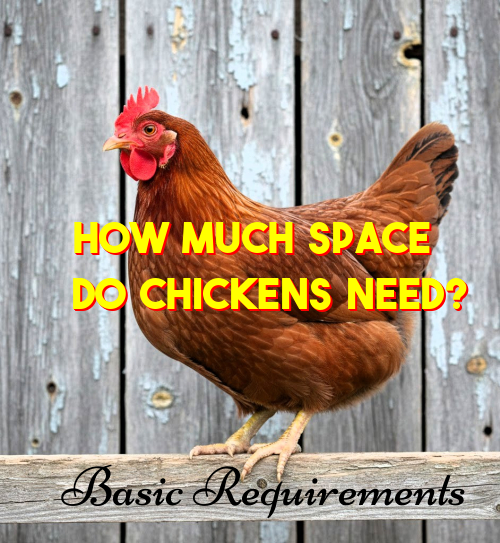
The subject of how much space per bird is often a question of great debate. There are minimum requirement guidelines, but most chicken keepers would agree that 1 foot per chicken is a cramped environment. If your flock is not allowed to free range during the day and is kept constantly in cramped quarters, you’re going to find yourself scrambling around looking for a way to separate the docile birds from the aggressive ones. A pecking order is established in all flocks, confined or not. If there isn’t enough room for the weaker birds to escape trouble, you’ll be pretty frazzled by their battles and the sometimes the unfortunate outcome. You can get away with a small housing space if your chickens will be free-range during the day. When it’s all said and done, at the end of each day there is usually only one argument… the nests. This problem is usually resolved quickly by the boss hens who choose first, leaving the weaker birds with what’s left. The best living arrangement for your flock is to offer them space, and the more the better. Happy chickens are those who are free from conflict. Happy chickens are healthy chickens, and that means better egg production. Recommended Space per Chicken, My Opinion… At a minimum, 2 square feet of floor space in the coop if your chickens are allowed to free range or have a fenced area attached to the housing area. If your birds are confined all the time, 3-4 square feet of floor space. You won’t gain anything by trying to house too many birds in a small area, the truth is, happy birds fill the egg basket plain and simple.
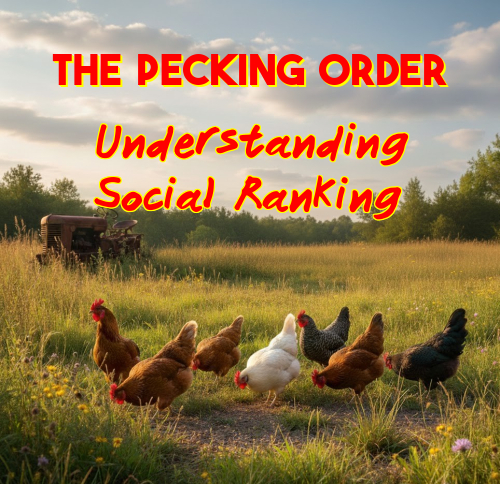
The pecking order determines which chicken may eat first, where a chicken is allowed to sit on the perch, or even even drink. It is often the stronger or larger birds that rank highest in the social order. The organizational power among chickens can be pretty brutal, fighting, pecking, and injuries often occur. To minimize chaos, offering feeders, drinkers, and nesting areas in more than one place is helpful. The perch is a common place for pecking or bullying, especially when there are rank differences. Watching them find a place to retire for the night is a complicated process. The pecking order rarely changes among an existing flock, however, we have some power over the pecking order simply by removing the higher-ranking birds for a few weeks. I bring this up because it is sometimes necessary to intervene when the pecking order becomes so aggressive that weaker birds are plagued with injuries. Once a weaker bird’s skin is exposed from being pecked on, the situation worsens and another problem occurs. One measly drop of blood is enough to create absolute havoc in the chicken yard. Something happens to chickens when they get a taste of blood, and they become quite capable of literally pecking a bird to death. Of course, before this happens the injured chicken will have to be removed and placed in isolation to heal and grow new feathers. It is usually 3 weeks to a month before new feathers cover the affected area. Or, you can do nothing, and stay out of the pecking order process entirely, which many poultry keepers believe to be the best way. But I’m not at all fond of watching my birds one by one begin to look like they’ve been through a meat grinder. It certainly makes better sense to remove the troublemakers rather than constantly doctoring chickens. There are usually 2 or 3 thugs that dominate a small flock, isolate them from the weaker birds for a few weeks. Then you can re-introduce them to the flock, but only one bird at a time over the course of a week. This will lessen the chances of them ganging up on the existing flock. Note: It’s important to consider the fact that overcrowding can contribute to argumentative behavior or feather loss due to pecking.



 TBN Ranch Chicken Keeping Resources