
The Silkie Bantam (my personal favorite breed) is a very unique breed, believed to have originated in Asia — possibly China, India, or Japan. Classified as a bantam breed, they are recognized by the American Poultry Association in both bearded and non-bearded varieties, with several accepted colors including white, black, blue, buff, partridge, splash, and gray.
Physical Traits
Silkies are most famous for their signature soft, fluffy, fur-like appearance. Their skin is a black-blueish color, and their comb and wattles are mulberry-colored. Unlike most chickens, Silkies have five toes instead of four. They are small in size, with hens weighing around 2–3 pounds and roosters 3–4 pounds. They lay cream or tinted eggs, producing about three a week, when not broody. While not prolific layers, they more than make up for it with their exceptional broody tendencies. (broody describes a hen’s natural instinct to sit on eggs and hatch them.)
Temperament
Silkies are extremely gentle, calm, and friendly, especially if they are handled often as chicks. I don’t have much experience with roosters since they aren’t allowed where I live, but sources claim they are usually less aggressive than those of other breeds.
Heat and Cold Tolerance
Silkies require a bit more care in extreme weather due to their feather structure. Their fluffy feathers don’t insulate as well as standard feathers and are not waterproof. In cold weather, they can easily become chilled if they get wet. They tolerate mild cold fairly well if kept dry and in a draft-free coop, but below freezing they need extra protection such as insulation, deep bedding, and careful monitoring for frostbite.
When it comes to heat, many sources claim Silkies struggle in high temperatures. However, I will argue that since I raise Silkies in the desert. With a misting system, a fan, plenty of shade, and a shallow pool, my Silkies have handled temperatures as high as 119 and do remarkably well. In fact, my heavier breeds show far more signs of distress in extreme heat than the Silkies.
Broody Tendencies
Many hens will go broody multiple times a year, and once they commit, they are determined — even if it means setting on an empty nest. A broody hen will set on eggs for 21 days, raise the chicks for several weeks to a few months, and may start the cycle again shortly afterward. While broody, a hen doesn’t lay eggs, which explains why Silkies produce fewer eggs overall than non-broody breeds. FYI, a broody hen will happily set on and hatch eggs laid by other members of the flock.
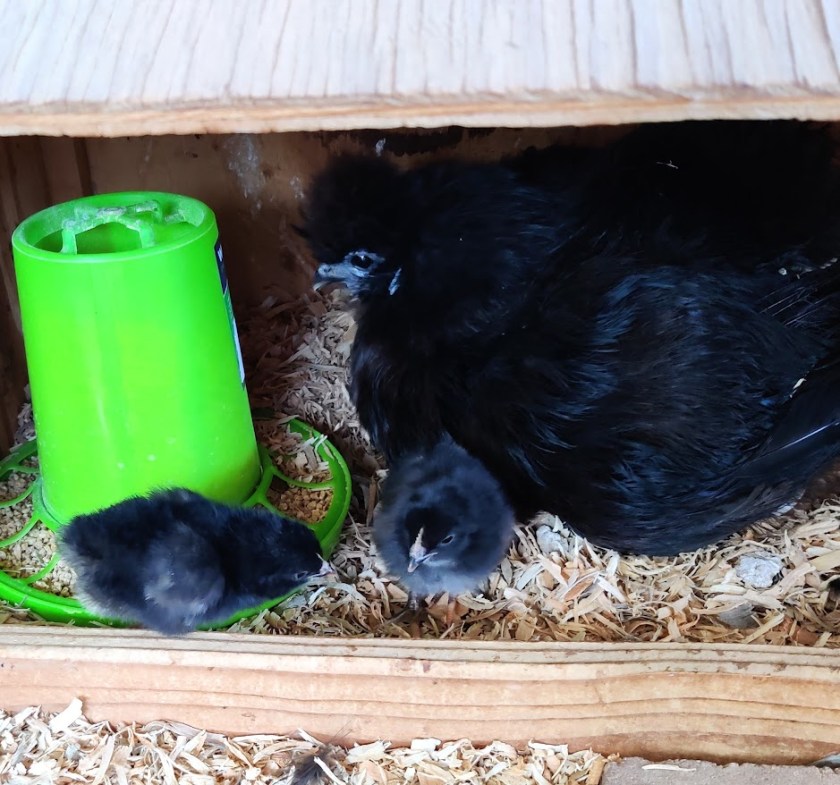
Great Adoptive Mothers
(Raising hatch-a-longs)
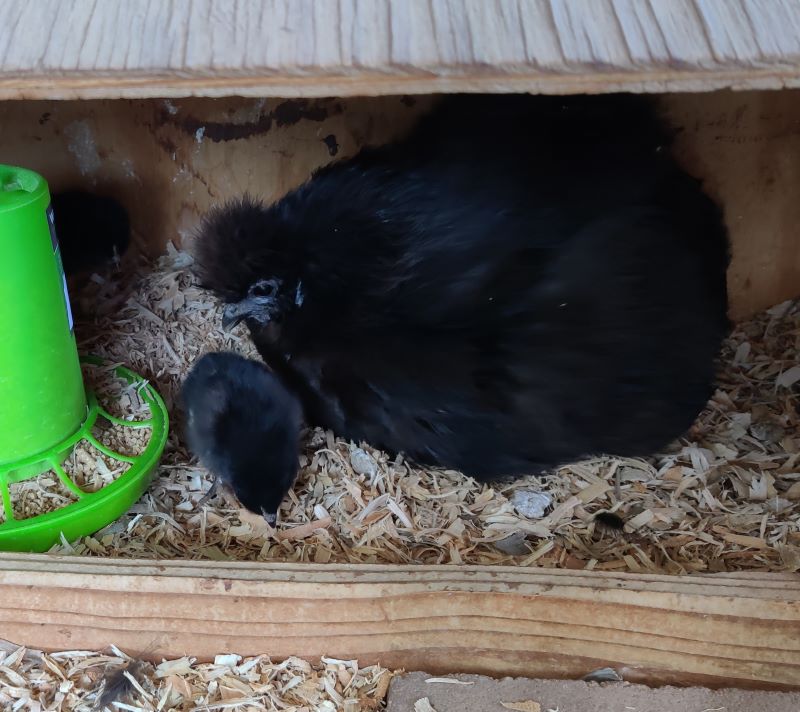
Silkies will usually accept 2 day old baby chicks that aren’t their own, including incubator-hatched or mail-order chicks, as long as the chicks are slipped under them at night. Of course, it’s important to watch closely to make sure they are accepted. I’ve had great success with my Silkies raising hatch-a-longs. Want to learn more?

Not only will the Silkie Bantam make a wonderful addition to your flock, their unique fluffy appearance will also add a little charm and beauty. Bye for now! 🙂





 TBN Ranch Chicken Keeping Resources