How to Care for your Mail Order Chicks

When your day-old chicks arrive from the hatchery they will need food, water, heat, light, fresh air, and space. They will arrive stressed from excess heat or cold, lack of food, and might be showing signs of dehydration.
Your chicks can survive several days on the stored yolk in their body, but heat, food, and water should be the priority upon their arrival.  It’s a good idea to have electrolytes on hand before you pick up your chicks. They might look a bit wilted from their travels, and this will help perk them up. I don’t usually use electrolytes for more than two days. A popular brand of electrolytes is Sav-a-Chick which is available online or at local feed stores.
Old School Practices:
On the day your chicks arrive you should have a draft-free box (lined with paper towels) large enough to provide a heat lamp (red bulb) at one end. Be sure to allow enough room for a cooler area so that the hatchlings can get away from the heat source if needed.  A good rule of thumb is to provide a 1/2 square foot of floor space per chick.
The temperature in your brooder should be 90-95 degrees for the first week, then decrease the temperature by 5 degrees each week following.  You can raise or lower the lamp to help obtain that proper temperature. If you don’t need to use a heat lamp in the brooder, for the first few days, keep a night light on so the chicks can find their food and water.
Today’s Heat Source Choice:
Heat lamps are often hard to regulate temperatures, another choice is using a Brinsea Chick Brooder. They are safer, and you won’t be spending so much time adjusting the heat lamp.
If your chicks are in a room with a temperature of around 60, radiant heat is a better choice than a heat lamp. We have learned over time to pitch the heat lamp and make the switch to a more natural heat source from a radiant heat brooder.
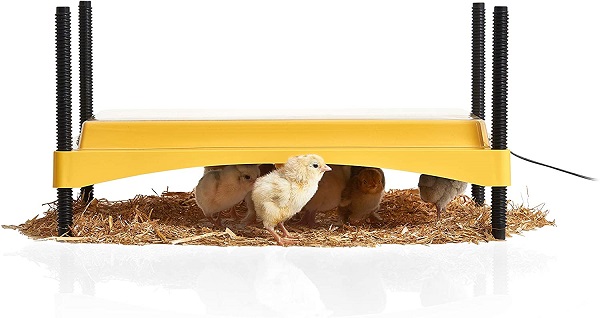
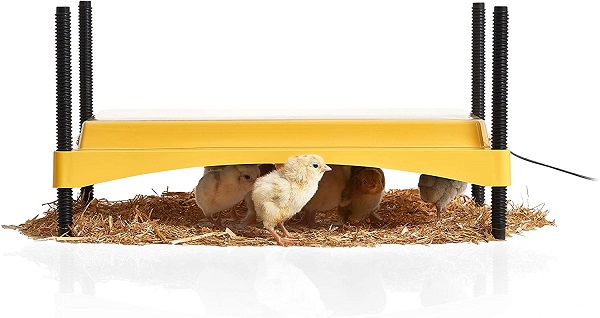
Radiant Heat brooder Available on Amazon

On week two, you can start using shavings for bedding (not cedar) in the brooder. You can also raise the drinker a bit to help keep the water clean. Use a drinker made for chicks to avoid the possibility of drowning.  Chick starter feed is all your hatchlings will need until they are at their point of lay… which is about 5-6 months, or so.
Important!
Something to watch for that can put your chicks in danger is pasting up, this is simply a poopy butt. This is common in baby chicks, and if not tended to, they won’t be able to poop and can die. So keep those fuzzy butts clean by using a baby wipe, or a wet paper towel. Learn more about Pasting Up.
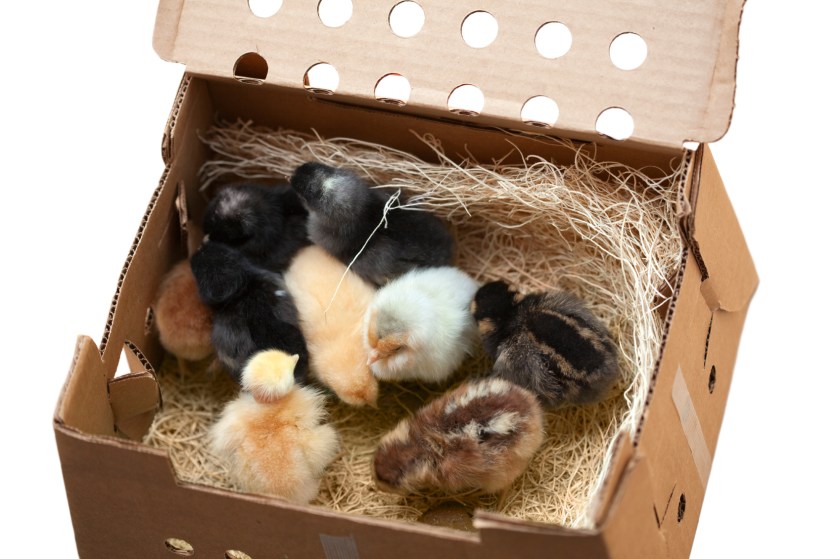
Mail-order chicks arrive in a box like this. 🙂
Back to HOME PAGE


Save

Save

EcoGlow Brinsea Brooder

Updated Review | The Pro’s and Con’s of Using the Brinsea EcoGlow for Chicks in Winter

If you raise chicks, then you already know keeping the brooder at a comfortable temp is near impossible. The weather changes from hour to hour, so unless you don’t mind being on call 24/7 to raise and lower the heat lamp, the Brinsea is a MUCH better way. No more worrying about baking your chicks alive under a  heat lamp, or wondering if they’re too cold. That’s worth about $80 bucks to me, how about you?
About the Brinsea Brooder
The EcoGlow Brinsea Brooder only uses 18 Watts (a tenth of the electricity of typical suspended infrared lamps) because the chicks are in contact with its warm underneath surface. The brooder runs at 12v for safety from a mains transformer (supplied) and with the convenience of a generous (about 10 feet) power lead.
Different sizes of chicks are accommodated by three adjustable height settings and an indicator light confirms the brooder is connected.
Various sizes & styles, price: from about $80 on Amazon Brinsea EcoGlow Brooder for Chicks or Ducklings

Back to Chicken Keeping Resources HOME PAGE

Save

Raising Winter Chicks in Phoenix

When Can Chicks Be Moved Outside in Phoenix?

It’s a good guess you have your new chicks in a box in the garage or shed and are watching them quickly outgrow their safe haven of comfort and warmth.
At about 6 weeks old they are becoming a handful, looking a bit crowded in their quarters, and you’ve had enough of keeping up with the mess. I understand your dilemma and have good news for you. We live in Phoenix! With mild winter temperatures, even at 6 weeks, your chicks will be fine outside with the right housing accommodations. However, first, you’ll want to lower the temperature in their brooder over the next few days to get them used to cooler temperatures.

A suitable coop for 6-week-old chicks is something that will protect them from wind and rain. If your coop is drafty, a large tarp will do wonders. Buy the highest-grade tarp you can find, or use two.
If there’s a cold snap, say below 50 degrees, simply cover the coop with a heavy blanket. Moving blankets from Harbor Freight work great and they’re only $8. The chicks will huddle together at night and keep each other warm.
Give them lots of shavings or hay in the coop, and provide a low-sided brooder box filled with shavings in the corner for them to sleep in. If they don’t use it, that’s okay too.

Prepare for the Phoenix Heat Now

While watching your chicks grow in the confinements of their coop, this is a good time to think about summer’s arrival and prepare for their outdoor environment. Keeping chickens in Phoenix is tough, keeping them in small confinement quite honestly… can be a death sentence.
June and July will no doubt reach 110 to 115 degrees. This means, your coop could easily exceed 120 degrees, even if it’s in the shade. It’s imperative to provide a play area where they can dig holes in the dirt to stay cool.
A play area can simply be a fenced area off the coop. Look for or create a shady spot preferably near a water source so it’s easy for you to access. This is important because there will be days when you’ll want to use a mister, or maybe flood them a spot to help them cool off.

I wasn’t kidding!
Back to Chicken Keeping Resources HOME PAGE