About the Mille Fleur

Mille Fleur means “Thousand Flowers” in French, which refers to the colorful feather patterns on the birds.


Appearance:
The Mille Fleur chicken has a small to medium-sized body, weighing between 1.5 to 2.5 kg.
The most distinct feature of this breed is its feathers, which are covered in small, round, and colorful spots.
The base color of the feathers is typically a light brown or tan, with black, white, and reddish-brown spots.
They have a single comb, red wattles, and yellow skin.
Temperament:
Mille Fleur chickens are known for being friendly and docile, making them great pets.
They are active foragers and enjoy free-ranging.
Relatively quiet and do not make a lot of noise, which makes them suitable for urban environments.
Egg production: 😦
Mille Fleur hens in my opinion are not prolific egg layers.
Their eggs are very small with a very light brown or tinted shell color.
About
The Mille Fleur d’Uccle is an ornamental chicken that is known for its distinctive appearance and small size. The name “d’Uccle” is derived from the town of Uccle (or Ukkel) in Belgium, where this breed is believed to have originated.
The Mille Fleur d’Uccle is a bantam breed, which means it is a smaller version of a standard-sized chicken. It is known for its unique feather pattern, characterized by a mottled or speckled appearance with a base color of white or cream and tiny black or dark brown spots that resemble a “thousand flowers” or “mille fleurs” in French. The feather pattern is intricate and complex, with each feather having its own unique arrangement of spots, making each bird’s pattern slightly different.
The exact origin of the Mille Fleur d’Uccle is unclear, but it is believed to have been developed in the late 19th or early 20th century in Belgium through crossbreeding of several other bantam chicken breeds, including the Barbu d’Anvers (d’Anvers or Antwerp Belgian) and the Barbu de Watermael (de Watermael Belgian). The aim was to create a unique and visually appealing breed for exhibition and ornamental purposes.
The Mille Fleur d’Uccle has gained popularity worldwide as an ornamental chicken breed due to its attractive appearance, friendly temperament, and small size, which makes it suitable for backyard or urban chicken keeping. Today, it is recognized as a distinct breed by many poultry associations and is exhibited in poultry shows and competitions around the world.

Back to Chicken Keeping Resources HOME PAGE

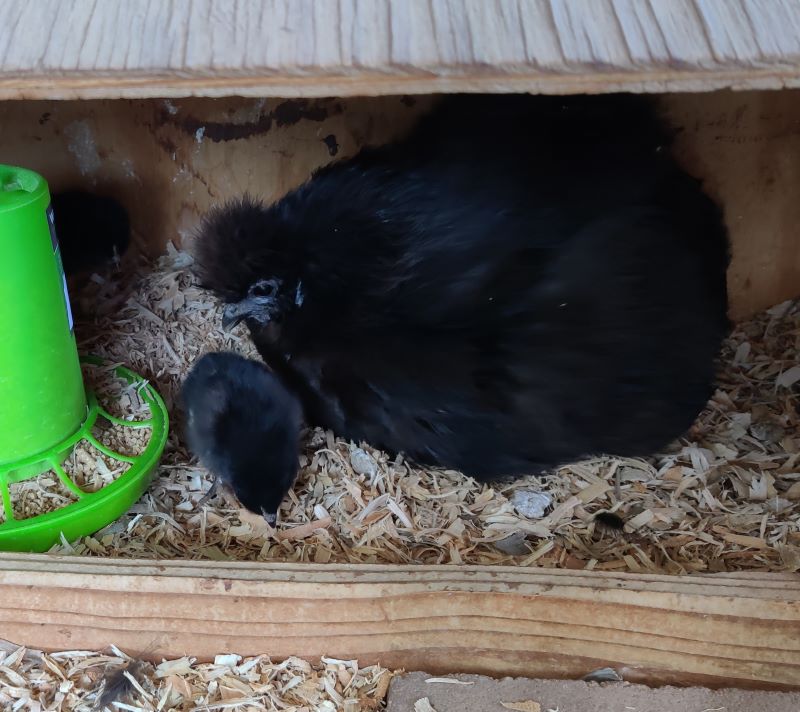
My Silkie Hen Welcomes Baby Chicks

The Successful Introduction of Hatch-a-longs (Orphan Chicks) to a Broody Hen

Backyard urban chicken keepers aren’t allowed to have a rooster because they are a neighborhood nuisance with their constant crowing. But what can you do if you want babies and aren’t interested in incubating eggs? You can place fake eggs under her when she’s broody, wait about two-three weeks, and tuck 1 to 3-day-old chicks under her in the middle of the night. How to do this is described in detail HERE.

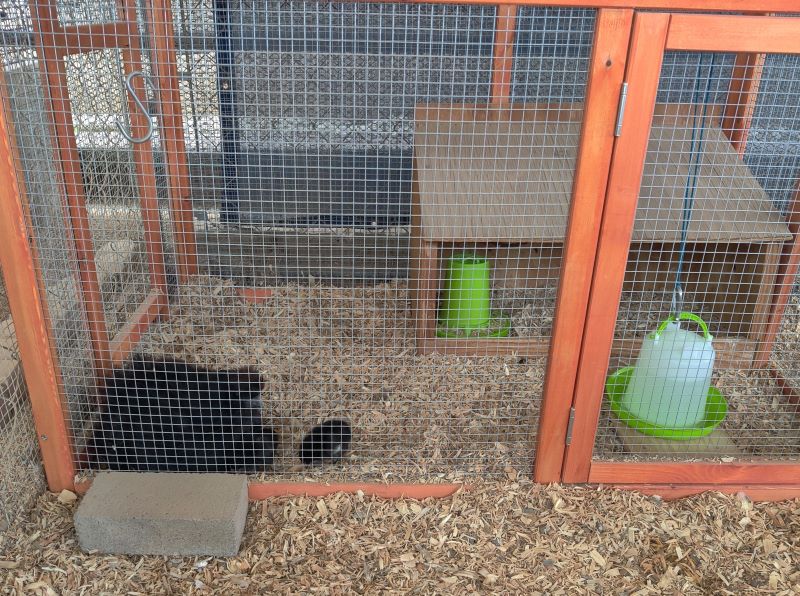
Mother Hen and Her Hatch-a-longs, Day 2

Silkie Hen with her Black Star Hatch-a-longs
Mamma Being Maternal
Hatch-a-long chicks are Black Stars, AKA, Black Sex-Links

About the Black Star

The Black Star, also known as a Black Sex-Link is produced by two separate breeds. The breeds are usually a Rhode Island Red or New Hampshire rooster mated with a Barred Plymouth Rock hen. The Black Star is known for its hardiness, excellent egg-laying ability, and attractive appearance. Continue Reading

Back to Chicken Keeping Resources HOME PAGE

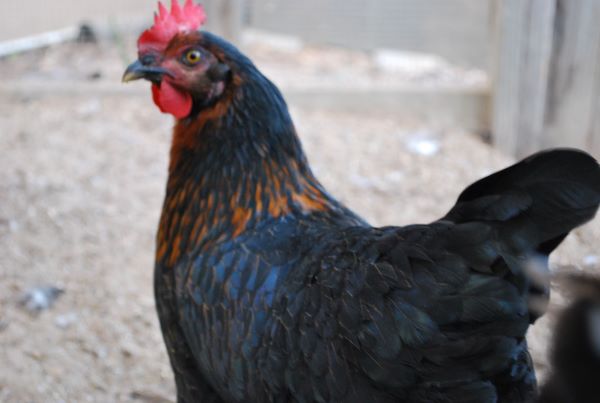
The Black Star, AKA, Black Sex-Link

The Egg Laying Superstar

The Black Star, also known as a Black Sex-Link is produced by two separate breeds. The breeds are usually a Rhode Island Red or New Hampshire rooster mated with a Barred Plymouth Rock hen. The Black Star is known for its hardiness, excellent egg-laying ability, and attractive appearance.
Appearance:
The Black Star chicken is a medium-sized breed with a sleek and slender body. It has glossy, jet-black feathers that have a greenish sheen in certain lighting, giving it a striking appearance.
The feathers of the Black Star are typically black throughout the body. However, the hens may have occasional gold flecking on the breast area. The roosters will feather out somewhat like a Barred Rock.
The comb and wattles of the Black Star chicken are usually red, and the beak and legs are yellow. They have clean legs and four toes.
Sexing Chicks is Easy!
Females are all black.
Males have a white spot on their head.
Egg-Laying:
One of the main reasons why Black Star chickens are popular is their excellent egg-laying abilities. Hens of this breed are known to be prolific layers, with the potential to lay around 250-300 large brown eggs per year.
The “Black Star” is not a recognized or standardized breed of chicken. Instead, it is a name or trade name used by hatcheries or poultry producers to describe a specific type of chicken that has been selectively bred or crossbred to exhibit certain characteristics.

Back to Chicken Keeping Resources HOME PAGE