What is a Proper Roost for Chickens?

What Should a Roost Be Made Of, How High, and What Size?

This can be a complicated question because the answer somewhat varies. Although most articles you’ll read will say 8 inches per bird, this in my opinion is an argument waiting to happen. When it comes to chickens, space means everything. Bigger is better to keep peace among a flock. If the roost is too small the birds lowest in the pecking order will be bullied.
It’s best to avoid plastic and metal roosts, plastic is slippery, and metal can be either too cold or too hot, depending on the climate where you live.
Wooden 2×2 roosts are the favorite, the flat surface allows chickens to roost comfortably and also allows them to cover their feet in cold weather. Round roosts make keeping their feet warm difficult. You can use 2×4 roosts too, but keep in mind that’s a bigger surface and may be harder to keep clean.
The roost should be long enough to accommodate all the chickens in the flock. Ideally, each chicken should have at least 10 – 12 inches of roosting space.
The roosting bars should be higher than the nest boxes, at least 3 feet high, but some higher would be preferred with a ladder or ramp to access. This also helps prevent injuries from your birds jumping down from a high roost. Harmony among the flock keeps everybody happy, so having more than one roost is recommended.

Need Some Help Choosing a Roost?
Here Are Over 50 Different Types and Creative Ideas To View

Back to Chicken Keeping Resources HOME PAGE

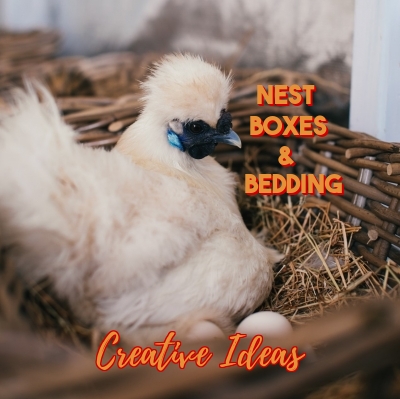
Chicken Nest Boxes and Bedding

There are many different types of nest box bedding that chicken keepers use. There’s no right or wrong one, you just have to find the one that suits your bird’s needs or preference for the type of nest boxes you have.
Nesting material is important, if your hens scratch around in their nesting box and kick all the bedding out you’re going to have broken eggs.  The kind of nesting boxes you have is also important. If they are semi-enclosed for privacy, such as a wooden box with a hole for entry there is less chance your birds will kick out their nest material. Shredded burlap partially covering the entry hole is also helpful.
Bedding Materials / Pros and Cons
Wood shavings: A great choice if you have a box that will prevent the chickens from kicking it all out of the nest.
Straw: Many people use straw, it’s inexpensive and goes a long way. However, it does get hard and brittle which can cause irritation to the hen’s vent area.  It also tends to mold.
Grass hay: I like it because it’s soft and stays soft for at least a month and my birds don’t kick it out of the nest. But a little spendy.
Sand: Clean, and makes for an easy clean-up using a kitty litter box scoop.
Solutions for Broken Eggs in the Nest Box
Lining the bottom of nest boxes with a cushioning material under the nest bedding can be very helpful if you are finding broken eggs.
Here are a few ideas that are often used as nesting box liners.
Corrugated cardboard
Rubber shelf liner
Carpet, upside down
Artificial turf, upside down
Rubbermaid kitchen sink mats

Back to Chicken Keeping Resources HOME PAGE