There are no hormones and less cholesterol in homegrown eggs. Also, there’s no worry about medications. Also, if the chickens are allowed to eat bugs, fresh greens, and scratch grains, the eggs will have a higher nutrient content. Researchers conclude that eggs from pasture-raised chickens may contain: 1⁄3 less cholesterol 1⁄4 less saturated fat 2⁄3 more vitamin A 2 times more omega-3 fatty acids 3 times more vitamin E 7 times more beta carotene
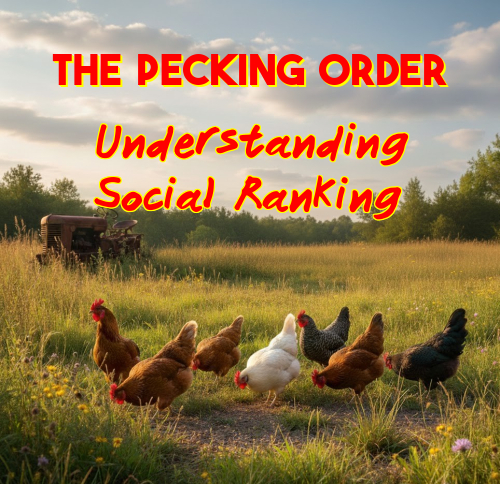
The pecking order determines which chicken may eat first, where a chicken is allowed to sit on the perch, or even even drink. It is often the stronger or larger birds that rank highest in the social order. The organizational power among chickens can be pretty brutal, fighting, pecking, and injuries often occur. To minimize chaos, offering feeders, drinkers, and nesting areas in more than one place is helpful. The perch is a common place for pecking or bullying, especially when there are rank differences. Watching them find a place to retire for the night is a complicated process. The pecking order rarely changes among an existing flock, however, we have some power over the pecking order simply by removing the higher-ranking birds for a few weeks. I bring this up because it is sometimes necessary to intervene when the pecking order becomes so aggressive that weaker birds are plagued with injuries. Once a weaker bird’s skin is exposed from being pecked on, the situation worsens and another problem occurs. One measly drop of blood is enough to create absolute havoc in the chicken yard. Something happens to chickens when they get a taste of blood, and they become quite capable of literally pecking a bird to death. Of course, before this happens the injured chicken will have to be removed and placed in isolation to heal and grow new feathers. It is usually 3 weeks to a month before new feathers cover the affected area. Or, you can do nothing, and stay out of the pecking order process entirely, which many poultry keepers believe to be the best way. But I’m not at all fond of watching my birds one by one begin to look like they’ve been through a meat grinder. It certainly makes better sense to remove the troublemakers rather than constantly doctoring chickens. There are usually 2 or 3 thugs that dominate a small flock, isolate them from the weaker birds for a few weeks. Then you can re-introduce them to the flock, but only one bird at a time over the course of a week. This will lessen the chances of them ganging up on the existing flock. Note: It’s important to consider the fact that overcrowding can contribute to argumentative behavior or feather loss due to pecking.
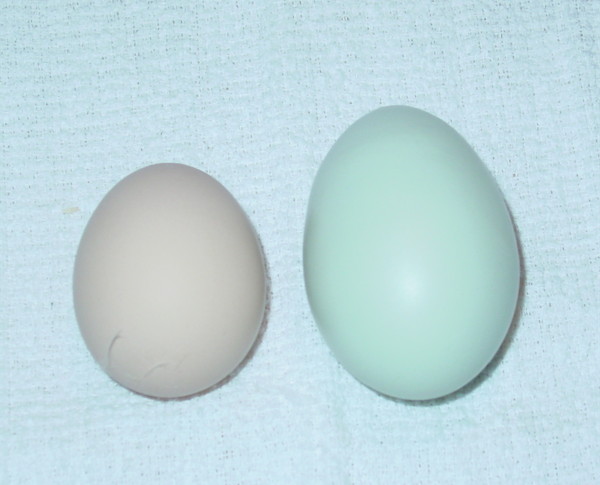
The Ameraucana is a distinct, recognized breed that must adhere to strict American Poultry Association (APA) guidelines to earn its title. These birds are unmistakable with muffs and beards, paired with a distinct pea comb. To be considered a true Ameraucana, a bird must have slate blue or black legs, a U-shaped body, and a tail set at a 45-degree angle. They are also limited to eight recognized color varieties, and they are strictly blue egg layers. Because the pigment, called oocyanin, permeates the entire shell. Now here’s the scoop on the Easter Egger, which you may be surprised to learn, isn’t a specific breed at all, but a hybrid! These birds are typically the result of crossing a blue egg layer with another breed, such as a Rhode Island Red or Marans. Because they’re crossbreeds, their appearance can be wildly unpredictable, while some may inherit the beard and muffs of their parents, others may not. Unlike the slate legs of the Ameraucana, you’ll often see Easter Eggers with green or willow colored legs. However, what is interesting about Easter Eggers, is the egg colors they may produce. While an individual hen will lay the same color egg her entire life, a flock of Easter Eggers can produce many different colors, including aqua, sage green, olive, tan, or even rose. This variety occurs because of the tinted factor, when a brown pigment is layered over a blue shell during production, the result ends up being a nice little surprise!
While many hatcheries claim to sell Ameraucanas, nearly none of them do. Most sell mutt Easter Eggers. Ameraucanas come in both a large and bantam variety. Standard Weight for Bantams Cock: 30 oz. Cockerel: 26 oz. Hen: 26 oz. Pullet: 24 oz. Standard Weight for Large Fowl Cock: 6 1/2 lbs. Cockerel: 5 1/2 lbs. Hen: 5 1/2 lbs. Pullet: 4 1/2 lbs.




 TBN Ranch Chicken Keeping Resources