How Long Does a Chicken Live?

It depends on whether or not they are LUCKY.  Hens on a mass-production egg farm can expect an unpleasant one or two-year lifespan before they are slaughtered.  Not a rosy picture, but wait, it’s even worse if a chicken hatches as a rooster. One may be somewhat luckier than the other… but quite frankly I’m not sure which one.
Backyard chickens can live eight to ten years in an ideal situation. Meaning, quality grub, green fixins, fresh water, shelter, and space to exercise their instinctual behaviors. Of course, there are always chickens with that special gusto for life who continue scratching in the dirt far beyond the norm.
The older a hen gets the fewer eggs she lays. Her production cycle may even cease altogether. But this is just a part of their change of life, the same as ours. Chickens grow old, but let’s not overlook their other valuable ageless contributions. They provide an endless amount of fertilizer for your garden and eat ticks, flies, mosquitoes, and the creepy crawlers that destroy the foliage in your yard. Chickens are hard workin’ bug eating machines that are quite happy to earn their keep…  at every stage of their life.

Back to Chicken Keeping Resources HOME PAGE

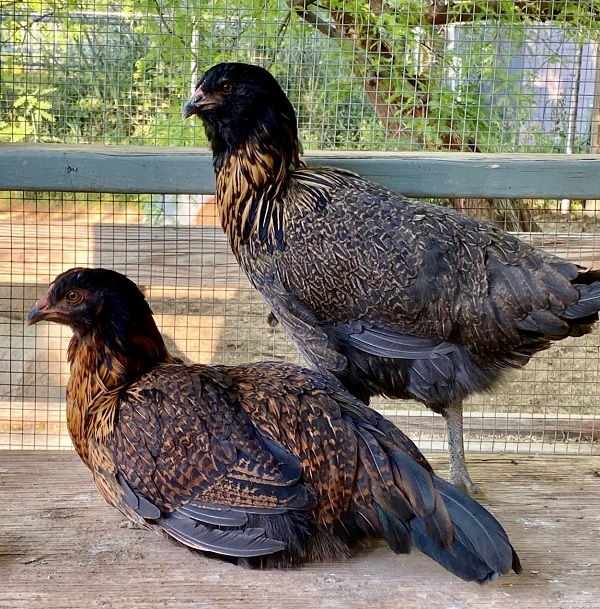
Orpington

The Orpingtons are very sweet, and friendly, and are seldom bullies towards the other members of the flock. However, living in the desert where the temperatures reach well over 110 they have proven their tolerance for heat to be quite low. Especially considering they can be broody and won’t leave the coop where temperatures can be life-threatening. Every situation is different and they may be fine as free-range chickens with plenty of shade and water.
Details of the Buff Orpington:
Type:   Large Fowl & Bantam
Size:   7-8 pounds
Purpose:   Dual (meat or egg production)
Recognized Varieties:   Buff, Black, Blue, White, (buff is most common.)
Eggs:
Color:  Brown
Size:  Large
Frequency:  3-4 per week
Breed Features:
Feathered Legs: No
Crested: No
Comb Type: Single Comb
Number of Toes: 4
Character & Traits:
Accepts confinement well
Cold Hardy
Heat tolerant to 100 degrees
Docile, friendly
Broody / Setter
Good layers through the winter

Back to HOME PAGE


About Combs and Wattles, Chicken Anatomy

Both male and female chickens have fleshy appendages at the tops of their heads called combs.  Wattles are two oblong fleshy appendages that hang below their chin.

What Are They For?
They both have a very important function. Scientists suggest that blood is circulated between the comb and wattles to help keep the chicken cool in hot weather. This gives the comb its deep red color and allows the blood to be cooled by the air before traveling through the bird’s body.
In winter, however, the comb is prone to frostbite in some breeds. But, little Vaseline on the comb and wattles will protect them from harm.
Another important function of the comb is to help attract a mate. A large bright comb is a sign of health and vitality. The rooster is at the top of the pecking order and his comb is larger and brighter than a hen’s. But, even among hens, the brightness and size of a comb often decide who is boss.
Chicks will begin to grow a comb within the first few weeks of their life. The comb also indicates maturity in females or pullets. When it reaches a bright red, the pullet is usually at her point of lay.
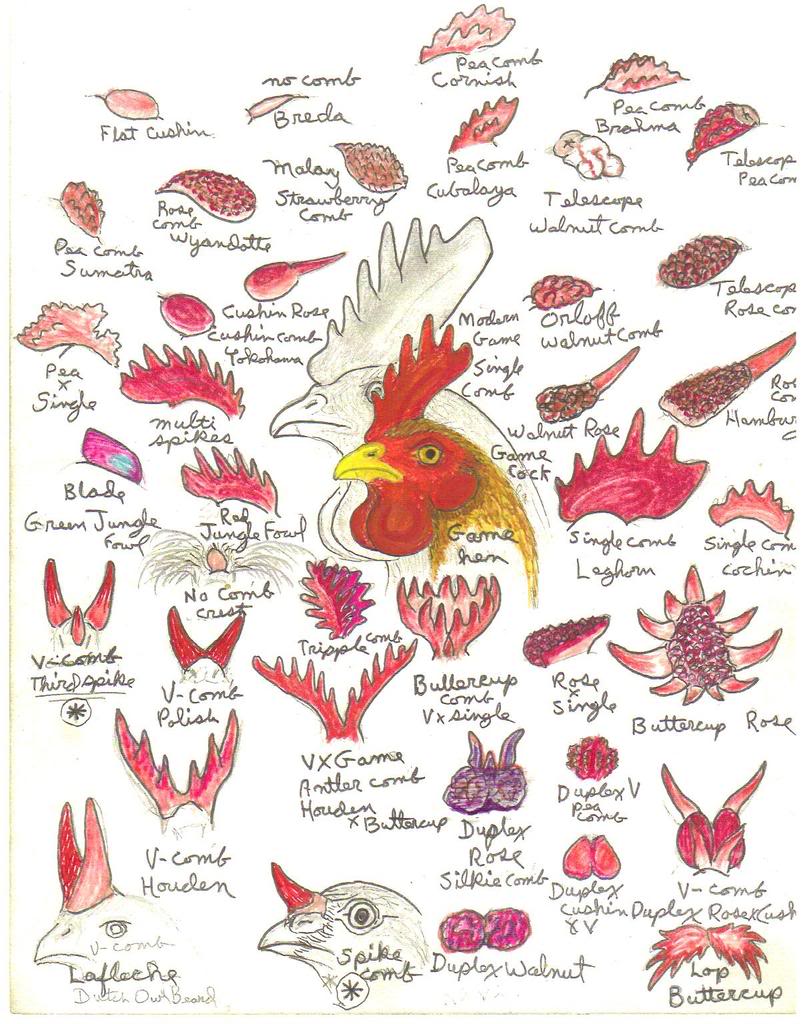
Combs vary in size, shape, and color based on the sex, age, and breed of a chicken.
7 Most Common Combs:
Buttercup
Cushion
Rose
Pea
Strawberry
V-Shaped
Single

Back to HOME PAGE