Looking for a little out-of-the-ordinary treat for your flock? We all know scratch is probably a chicken’s all-time favorite, but that should be your last treat choice in the summer months. Scratch produces heat, that’s why we feed it in the winter (especially at night) to help keep them warm. Layer feed already has corn, so let’s not add fuel to the fire by giving them even more.
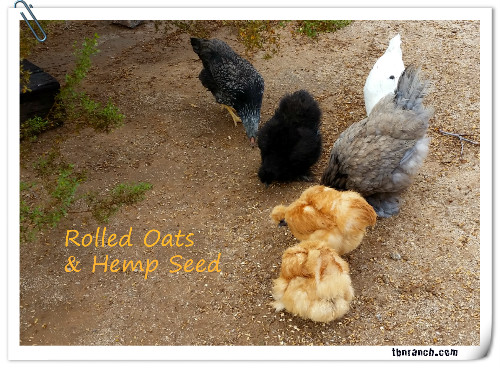
Instead… Try offering them rolled oats, they love it and it’s safe to feed as a treat! It’s super cheap and often sold by the pound in loose bulk feed bins. Hemp is another healthy supplement, but it’s high in protein and fattening, so just give a little. I add Hemp to the rolled oats, mix it all together and toss it to the flock mid-day. Hemp is spendy too, another reason to give them enough to add that little diamond in the rough among the oats.
FOX: Clever as a fox is a saying we’ve all heard, and it couldn’t be more true. They climb better than you could ever imagine and can dig their way into a coop with ease. Fox are smart and patient, they will watch your coop for weeks before they attack. Every bird the fox can grab in the coop will be killed, and often the entire flock will be completely wiped out. They’ll take as many birds from the coop as they can with them. Signs a Fox Leaves Behind After an Attack Many birds missing Feathers sprawled in the coop AND away from the coop Broken necks
COYOTE
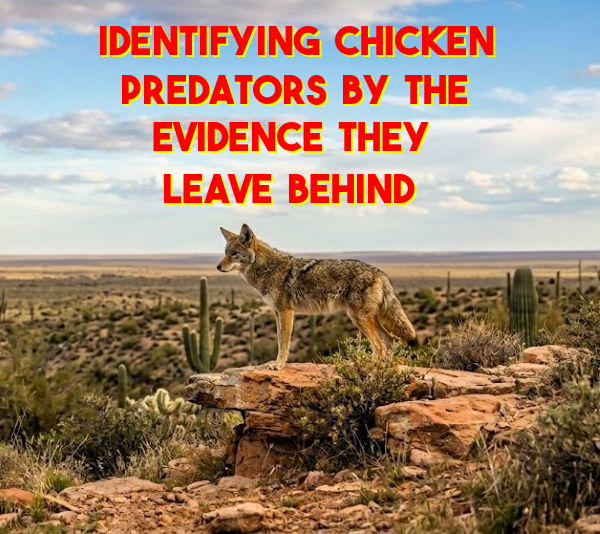
Coyotes will either tunnel or muscle their way into a coop. They’re smart, staking out the premises first to learn when the ideal time is to attack. A coyote is most likely to be seen at dawn and dusk, however, broad daylight attacks are not unheard of. Keep in mind coyotes are very active at night, and they can easily scale a 6-foot fence. When a coyote gains access to a chicken coop they’re known to kill all the birds, then take a couple with them. Signs a Coyote Leaves Behind After an Attack Birds missing. Necks broken. Feathers scattered everywhere in the coop.
RACOON
Racoon: These clever egg-stealing masked burglars leave significant evidence of their presence. A raccoon rips open the crop and sometimes the breast to feast. You’ll find all the chickens still in the coop as a rule because coons have difficulty carrying them off. One of the raccoon’s most distinctive features is their extremely dexterous front paws, in other words, they’re extremely talented at opening door latches! Signs a Raccoon Leaves Behind After an Attack Rips open the crop and sometimes the breast. Dead chickens will most likely be left in the coop.
OPOSSUM
Opossum: This little critter is after your chicks and eggs. That’s his primary agenda, but it may go after a small adult chicken at times. The opossum gains access usually through a small opening in the coop Signs an Opossum Leaves Behind After an Attack Doesn’t take birds from the coop. Tears open the abdomen. Interesting Fact: The opossum is a Marsupial. The adult females have a marsupium, or pouch where they keep their young while they grow up. Cool
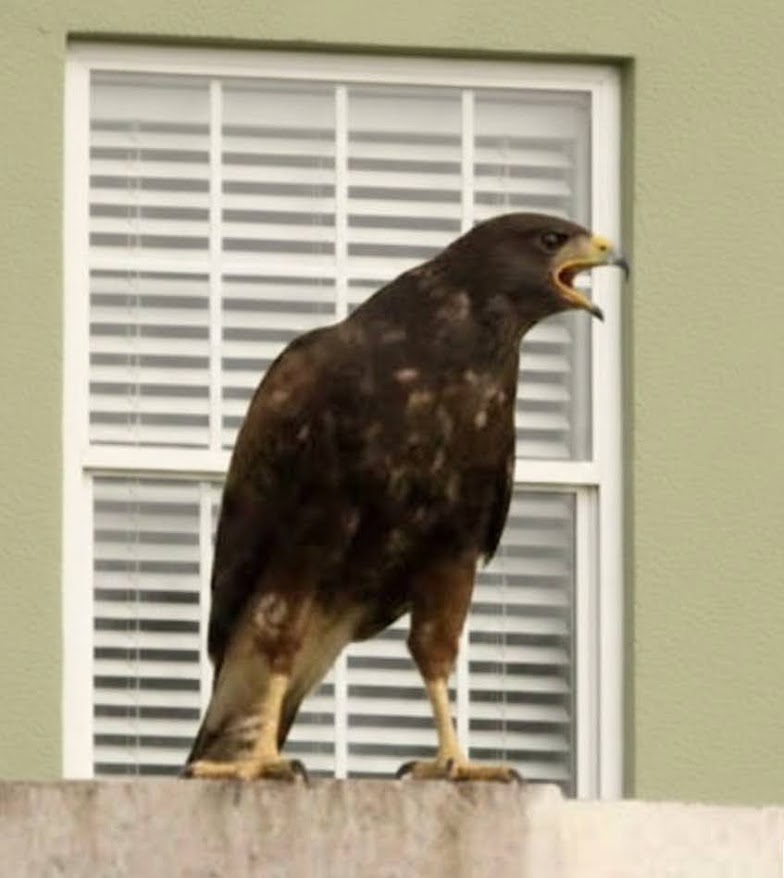
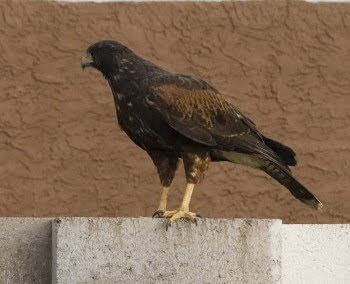
Harris HawkHarris Hawk
Hawks: These predators usually attack when chickens are free roaming during the day. Hawks, like the fox and coyote, are well prepared for their attack by staking out the premises beforehand. There’s no mistaking the evidence of a chicken attacked by a hawk, the signs are quite different from all other predators. Sharp talons and beaks are extremely effective in killing or injuring multiple birds. Signs the Hawk Leaves Behind After an Attack Some birds will be missing. Some injured birds will appear to be cut up. Injuries look as though chickens were stabbed with a knife.
OWL
Owls attack similarly to the hawk. They also stake out the potential of a meal by watching the chickens for a spell before they attack. Hawk or Owl? It’s not entirely impossible to tell the difference between a hawk and an owl attack. Raptors usually poop when they kill, fortunately, the poop of an owl and hawk are slightly different. You’ll find their poop near the feathers of the victim. Owl: White streak with clumps Hawk: Just a white streak Signs an Owl Leaves Behind After an Attack Neck and head ate. Deep knife-looking cuts on the abdomen.
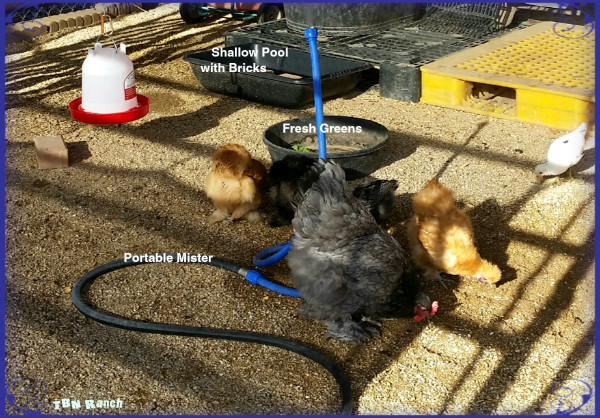
Oh my! 116 today and keeping chickens in this ridiculous heat adds to my chore list when it’s just so hard to be outdoors. But for the love of chickens, I pour on the sunscreen, hide from the sun under a giant umbrella, and head out to the barn. By 8 AM it’s already in the 90s and too hot for the flock to be confined. It’s most certainly better to allow chickens to dig holes, seek out shade, and follow their instincts on ways to best battle the heat. Of course, as a desert dweller, I have a few tricks up my sleeve to help them find relief. A Few Tips, Create a Cooling Station Here’s what I do. There’s a portable mist system in the shade and a low-sided shallow pool with a few bricks inside for them to sit on. The bricks stay cool, some use it, and some don’t. None of the birds seem to fancy the mist system, nevertheless, it does cool the immediate air by about 20 degrees, so I entice them to the area with fresh greens or fruit.
Layer pellets are available, but kept in their coop where the temperature is undesirable. Considering there is corn in feed, it should be kept at a minimum because corn produces heat. Some chicken keepers will pull feed completely during the day when it’s this hot. But I find this unnecessary since chickens limit their food intake by choice… at least mine do.
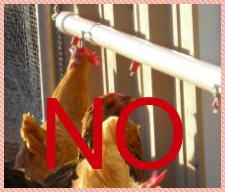
Predators are a worry when the chickens are allowed to free roam, but let’s face it, confined chickens in 116+ temperatures is a death sentence in these parts. I take my chances, keep an eye on them, and hope during the day predators won’t be actively looking for food until sundown. Chickens like to dig holes, don’t discourage this. It’s their instinct to find cooler ground. They will look for anywhere water has been and choose that spot as the ideal place to settle into. Help them out, dump their drinkers in the same place every day, or leave a hose in the shade on a tiny drip. Keep the drinkers clean and offer COLD water during the day. Chickens aren’t fond of hot drinking water. Large drinkers will stay colder longer, but I also use shallow buckets or bowls so I can add a chunk of ice during the day. The worst choice for a water source (where it’s super hot) is nipple drinkers, here’s why…
Nipple drinkers are neat gadgets, but if you live in an oven, forget using them, especially the type with those tiny drinker cups. The water in the small cups gets way too hot and chickens avoid using them. Using nipples is just as useless in my opinion. The water in the container itself may be cool, but the water sitting in the lines heats up fast, and your birds won’t drink enough to stay hydrated. Remember, the sun moves, either you have to move your drinker to keep it in the shade, or provide water in various locations to assure there is cool water throughout the day. Nipple drinkers are not usually movable, they’re meant to be low maintenance, fill ’em and leave ’em… which is exactly why they’re not used on my farm.
Keeping your birds hydrated with cool water is absolutely vital… and just to make sure they have enough fluid intake, offer up some watermelon!