Marek’s Disease: Symptoms, Management, Prevention, Biosecurity, Commonality, and Vaccines.
Written by a real person and flock owner.

About Marek’s Disease
Marek’s Disease is one of the most common and serious illnesses affecting backyard chickens. Caused by a highly contagious herpesvirus, Marek’s attacks the nervous system, internal organs, eyes, and skin. It spreads quickly through feather dander and dust, and once it’s in your flock or environment, it can be difficult to eliminate. However, with the right prevention strategies, backyard keepers can protect their birds and maintain a healthy flock.
The best protection against Marek’s is vaccination. Most large hatcheries offer Marek’s vaccination as an optional add-on when you order day old chicks. This is the simplest and most reliable method for small flock owners. If you hatch your own chicks at home, you can order the Marek’s vaccine online and administer it yourself, but the process is fairly complex and often impractical for small backyard flocks. (More info on this below.)
In addition to vaccination, maintaining good biosecurity is important. Always quarantine new birds for at least 2 to 4 weeks before introducing them to your flock. Clean and disinfect feeders, waterers, tools, and footwear, especially if you’ve visited other poultry farms. Marek’s virus can survive in dust and bedding for months, or longer in some regions, so reducing dust buildup in the coop is critical. Ensure good ventilation, regularly turn bedding, and avoid letting feather dander accumulate.
Symptoms of Marek’s Disease
Symptoms vary depending on the form of the disease. Not all birds show the same signs.
Nervous Form (Classic Marek’s)
Paralysis of legs, wings, or neck (often one leg forward, one back)
Drooping wings
Head tilt
Loss of balance or coordination
Visceral Form (Tumor Form)
Weight loss/emaciation
Labored breathing
Diarrhea
Enlarged internal organs (detected at necropsy)
Ocular Form (Eye Marek’s)
Gray or cloudy eye (loss of iris pigmentation)
Irregular pupil shape
Blindness
Cutaneous Form
Rough, raised skin lesions, especially at feather follicles
Once a chicken begins showing symptoms of Marek’s disease, its survival time is usually limited, and the outcome is almost always fatal.
Prevention of Marek’s Disease
There is no cure for Marek’s disease once symptoms appear, so prevention is critical. The most effective prevention is to vaccinate with 24 hours of hatch.
Many hatcheries offer Marek’s vaccination at hatch for an extra SMALL fee.
Ask for it when ordering chicks online, and when buying chicks from a feed store make sure they are vaccinated.
Vaccine doesn’t totally prevent infection, but it can reduce symptoms and spread.
Note: It takes about 7-14 days for immunity to develop after vaccination.
Biosecurity Practices
Never introduce new birds without quarantine (2-4 weeks).
Minimize visitor access to your flock.
Clean and disinfect equipment, boots, and hands.
Avoid mixing vaccinated and unvaccinated birds.
Do not raise vaccinated and unvaccinated birds together.
Keep dust levels down; the virus spreads via feather dander and dust.
How Common Is Marek’s Disease?
Marek’s disease is VERY common worldwide, especially in backyard and small-scale flocks. Marek’s disease tends to affect birds between 3 weeks and 6 months old, but older birds can carry and spread it. Unfortunately, the virus is extremely hardy and can remain infectious in dust and dander for months, some say years, especially in arid climates.
Note: Infected birds may appear to recover, but they can still be carriers.
Marek’s Can be More Problematic in the Southwest U.S.
A combination of climate, management styles, and exposure risks favor the spread of the disease. Here’s why it may be more prevalent or persistent in places like Arizona, New Mexico, Texas, and surrounding areas:
Warm, Dusty Conditions: The virus spreads in dander and dust, which can stay airborne and infect other birds.
The dry, dusty climate of the Southwest makes it easier for the virus to linger in the environment and be inhaled.

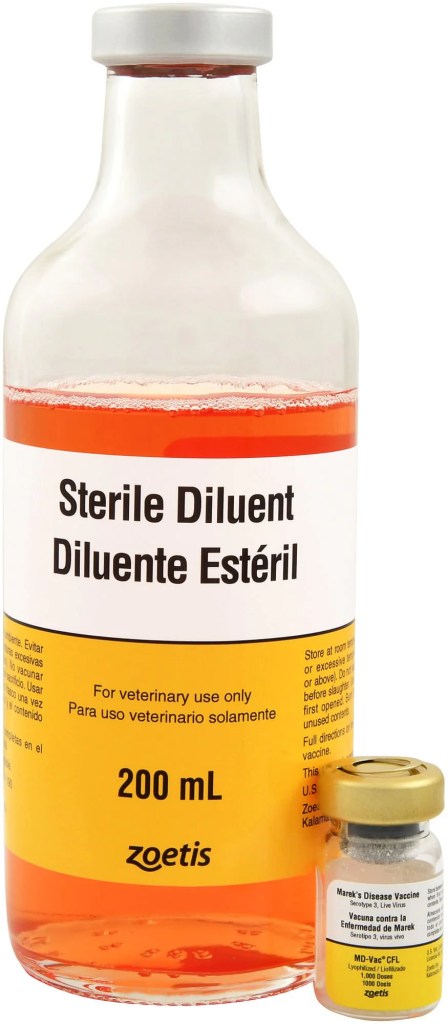
Where to Get Marek’s Vaccine When Hatching Your Own Chicks
Backyard chicken keepers can buy and administer the Marek’s vaccine. It’s more complex, requires practice or guidance if you’re new to injections, but doable if hatching your own chicks.
Check with online livestock supply stores like Jeffers Pet or Valley Vet.
Vaccine only available in 1,000-dose vials ($40-$50)
Needs to be kept cold.
Must be used within 2 hours of mixing.
Administered under the skin at the back of the neck (subcutaneous injection)
Only effective if given on day 1.



 TBN Ranch Chicken Keeping Resources