Chicks Ready to Leave the Brooder? Now What!

Chicks just out of the brooder aren’t ready yet to greet the world and are not ready to join an existing flock. So, there needs to be a middle ground created. This middle ground is called a Grow Out Pen, which is just a fancy name for a safe enclosure for young birds to grow up in!

Grow Out Pens 102015

The guidelines for transitioning chicks from the brooder to a grow-out pen is when the chicks are fully feathered, which is between six and eight weeks. Allow young birds to mature in a grow-out pen until they are around four or five months old.
This is important because, in the chicken world, size matters. Introducing small/young birds to a mature flock is a sure ticket to a drama show, and it could be a bloody one too! Grow-out pens slowly introduce juveniles gradually to an existing flock, making the transition easier for future interaction.
You’ll want to keep your grow pen in plain view of the adult flock. They will be very curious about the youngsters for a few days and then return to business as usual. The chicks will be timid, or hide for the first few days, then will accept their onlookers as nonthreatening and return to normal behavior.
Introduce Change Slowly
The whole key to enjoying chickens is to avoid those problems that cause chaos in the chicken yard. Nothing good comes from rushing introductions or changes.  The pecking order is serious business, and it’s a given that feeders, drinkers, and nest boxes have already been claimed and will be protected by an existing flock. When your juveniles are ready to join the flock, add more of those sought-after necessities so the new birds aren’t bullied.

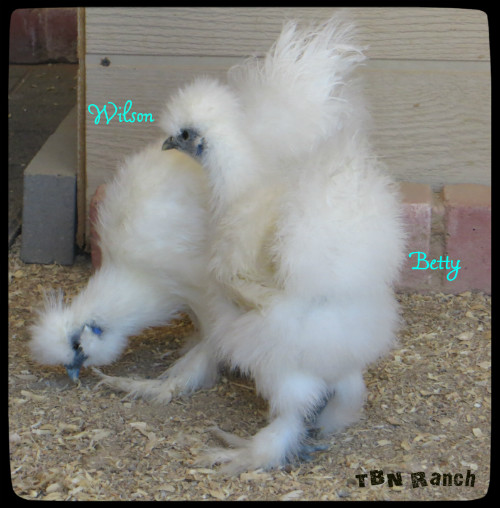
Buff Silkie 2 2-9-15

Ready to Leave the Grow Out Pen?
No problem, the trick is to not overthink it. Your existing flock is quite used to seeing the young birds already, and the juveniles are very unlikely to make a mad dash to freedom the minute the grow-out pen door opens.  It’s all a process, one that will naturally go smoothly if you let them exit the grow-out pen on their own. They’ll take a few steps out, then run back in for days, even a week. That’s fine, just close them in at night, and in the morning open the door again.
Social ranking among your chickens will begin almost immediately. Sometimes it’s hard to watch the fuzzy babies you raised all these months to get pushed around, you’ll want to intervene and protect them. My advice to you is to walk away and don’t look for problems. I guarantee, if you look for trouble you’re going to find it. The flock will work everything out on their own over time.  You’ll know when you have to step in, and when to let nature take its course.

Back to Chicken Keeping Resources HOME PAGE

Chickens in the House is Nothing to Brag About

Chickens in the house? Really? This is not a practice I would boast about to the world, yet I see pictures every single day online. Chickens wander around kitchens, sitting on the back of couches, and looking in the back doors and windows of homes. The list goes on and on.
Chickens are not house pets, and though SO MANY people allow their mature chickens in the house, I consider this practice a potential health risk, and irresponsible to say the least.
The rule of thumb is to keep a clean area between chickens and your living space.  That means chickens don’t belong in the yard, on the patio, where children play, or anywhere that family traffic is common. Chickens should have their own area outside. They are NOT companion animals like dogs and cats, and shouldn’t be allowed the same indoor perks.
Why is This so Important?
It’s common for chickens to carry Salmonella, which is a type of germ that naturally lives in the intestines and is shed in their feces. Live poultry may have Salmonella germs on their bodies (including feathers, feet, and beaks) even when they appear healthy and clean. The germs can also get on coops, hay, plants, and soil in the area where the birds live and roam. Additionally, the germs can be found on the hands, shoes, and clothing of those who handle the birds or work or play where they live and roam.
Each spring, children become infected with Salmonella, but it’s important to remember that the illness can occur in chicks or adult birds at any time of the year. Children are exposed to Salmonella by holding, cuddling, or kissing the birds and by touching things where the bird lives, such as cages or feed and water bowls. Young children are especially at risk for illness because their immune systems are still developing and because they are more likely than others to put their fingers or other items into their mouths.
How Common is Salmonella?
CDC estimates that approximately 1.2 million illnesses and approximately 450 deaths occur from Salmonella annually in the United States alone.
And Furthermore…  Shame on Manufacturers
It doesn’t help that chicken diapers and clothes are being marketed. These items are made simply because people will buy them. Nothing of the sort makes it safe to allow chickens indoors… nothing.

Back to Chicken Keeping Resources HOME PAGE

Adding Chicks of Different Ages to the Brooder

Sometimes size matters in the brooder, but there are ways to avoid and resolve the trouble. I added four new chicks to the brooder a week ago. Two blue and two silver laced six-day-old standard Cochins… and put them in the brooder with my three-week-old Silkie Bantams.
Age doesn’t matter much to baby chicks, size, however, can be reason enough to start a bully fest. The six-day-old Cochins were the same size as the Silkies, but now, a week later, the Cochins are substantially bigger. The size issue seems to go unnoticed when chicks are raised together, so they’ll continue to share the same brooder in harmony.
If new chicks refuse to get along, it’s easy enough to put a divider between the chicks, as long as they can see each other it will be pretty uneventful to reintroduce them in a week or so.

Leaving the Brooder

At two months these little fuzzy butts will be moved from the brooder to a transitional coop where they’ll be in full view of the existing flock. Around four or five months the coop door will open and they’ll have a choice to venture out and join the existing flock,  but they probably won’t for days, sometimes even a week! Then What?
It’s reality time, and their peaceful world comes to a screeching halt when they’re finally brave enough to step out and explore the real world. A world that is run by powerful chicken rulers who have earned their significant positions in the pecking order.
Learn More about the Pecking Order and Adding Chickens to an Existing Flock

Back to Chicken Keeping Resources HOME PAGE