Chicken Terms

A Glossary of Basic Chicken Terms
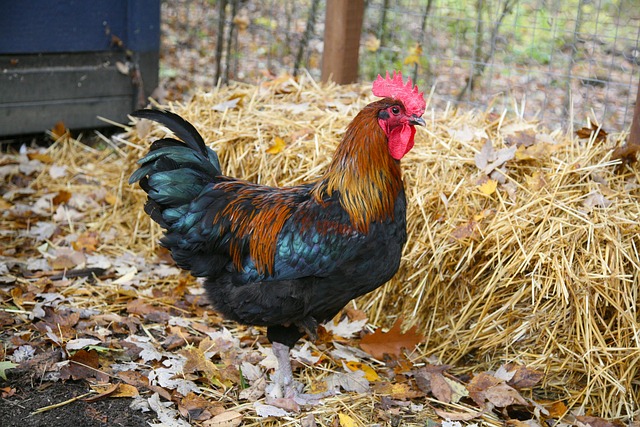
Bantam:  Diminutive breed of domestic fowl.
Boiler:  Chicken 6 to 9 months old.
Broiler:  Cockerel of 2 to 3 pounds at 8 to 12 weeks old.
Cock:  Male chicken, or rooster.
Cockerel:  Young rooster under 1-year-old.
Fryer:  Chicken 3 to 4 pounds at 12 to 14 weeks old.
Hen:  Female chicken.
Point of Lay Pullet:  Young female chicken just about to lay, about 5 months old.
Pullet:  Young female chicken under 1-year-old.
Roaster:  Chicken 4 to 6 pounds and over 12 to 14 weeks old.
Rooster:  Male chicken, also called a cock.
Sexed Chicks:  Separated by sex, pullets, and cockerels.
Straight Run:  Mix of pullets and cockerels.
Broody:  When the hen has the urge to sit on her eggs to try and hatch them.
Clutch:  Batch of eggs in a nest.
Comb: Red muscle on the head of chickens.
Coop:  The place where your poultry lives is referred to as a poultry coop.
Crest:  Bunch of feathers on the head of certain breeds.
Crop:  Pre-digestive system of the chicken. Food collects at the base of the neck and is softened before going through the digestion process.
Cushion:  Area of the back in front of the tail on the female chicken.
Down:  Soft fine feathers on chicks.
Droppings:  Chicken manure.
Dust bath: To bathe in dry dust or sand, and it helps remove any mites from their feathers.
Flight feathers:  Biggest primary feathers on the final half of the wing.
Free range: To allow chickens to roam the pasture freely.
Frizzle:  Feathers that curl rather than laying flat also a breed of chicken.
Gizzard:  Internal organ of the chicken that collects grit and grinds food down.
Grit: A grinding agent used in digestion, added to a chicken’s diet if not allowed to free range.
Growers:  Growing chickens between 9 and 20 weeks.
Hackles:  Cape feathers of a rooster.
Hybrid:  Genetically bred from two different breeds of chicken for good characteristics from both.
Impaction:  Blockage of a body passage or cavity, such as the crop.
Keel:  Breast bone – which resembles the keel of a boat.
Layers:  Mature female chickens kept for egg production.
Mash:  Mixture of wet or dry coarse ground feed.
Moult:  Yearly shedding and replacement of poultry feathers.
Muff:  Feathers sticking out from both sides of the face under the beak of certain breeds such as Ameraucana.
Nest Box:  Secluded safe place where a hen feels she can leave her eggs.
Nest Egg:  Wooden or plastic egg put in the nest box to encourage hens to lay there.
Pecking order:  Social ranking of a flock.
Pellets:  Poultry pellets are formed from a fine mash bonded together.
Poultry:  Domestic fowls, such as chickens, turkeys, ducks, or geese, raised for meat or eggs.
Pure breed:  Not been crossed with another chicken breed is known as a purebred.
Saddle:  Area of the back in front of the tail on the male.
Spurs:  Protrusions on the legs of roosters.
Utility:  Bred for meat or chickens bred for eggs rather than poultry shows.
Vent:  Orifice at the rear end of the chicken through which both eggs and feces are passed.
Wattles:  Fleshy appendages hanging on the sides of the lower beak of poultry.

Back to HOME PAGE


The Fertilization of a Chicken Egg

Basic Reproduction Explained

As in all animals, the fusion of the ovum and the sperm is how fertilization occurs. Then an embryo forms and develops into a new organism. The chicken is no exception; their eggs need to be fertilized in order to develop a chick.
A chicken will begin laying eggs between five and six months of age, until then she is called a pullet. However, climate, seasons, and other various factors do play a significant role in laying cycles.  Certain breed types are also included in the variances of egg laying, first-time or otherwise.  One thing is for sure, when a pullet reaches sexual maturity she will lay eggs whether or not there is a rooster present.
Roosters [males] have reproductive organs which produce sperms that are released during mating.  The sperms enter the oviduct of the hen [female] and continue a nearly week-long reproductive journey to meet the eggs. The sperm’s final destination is in the infundibulum. This is where they will wait about a week for the partially formed and unshelled eggs. If there is a yolk, the eggs are fertilized instantly. So, it’s safe to say you can expect fertile eggs seven to ten days after mating.
Note:  It is possible the hen may produce fertile eggs the following week as well.
When hens are in the presence of a rooster there is a way to separate the fertilized eggs from infertile by a technique called candling.  This method uses a bright light source behind the egg to show details through the shell. Fertilized eggs will show a darker yolk on one end, usually when they are one or two days old.  Within two to three days, if incubated, you may actually see indications of a growing embryo.

Back to HOME PAGE


Raising Winter Chicks in Phoenix

When Can Chicks Be Moved Outside in Phoenix?

It’s a good guess you have your new chicks in a box in the garage or shed and are watching them quickly outgrow their safe haven of comfort and warmth.
At about 6 weeks old they are becoming a handful, looking a bit crowded in their quarters, and you’ve had enough of keeping up with the mess. I understand your dilemma and have good news for you. We live in Phoenix! With mild winter temperatures, even at 6 weeks, your chicks will be fine outside with the right housing accommodations. However, first, you’ll want to lower the temperature in their brooder over the next few days to get them used to cooler temperatures.

A suitable coop for 6-week-old chicks is something that will protect them from wind and rain. If your coop is drafty, a large tarp will do wonders. Buy the highest-grade tarp you can find, or use two.
If there’s a cold snap, say below 50 degrees, simply cover the coop with a heavy blanket. Moving blankets from Harbor Freight work great and they’re only $8. The chicks will huddle together at night and keep each other warm.
Give them lots of shavings or hay in the coop, and provide a low-sided brooder box filled with shavings in the corner for them to sleep in. If they don’t use it, that’s okay too.

Prepare for the Phoenix Heat Now

While watching your chicks grow in the confinements of their coop, this is a good time to think about summer’s arrival and prepare for their outdoor environment. Keeping chickens in Phoenix is tough, keeping them in small confinement quite honestly… can be a death sentence.
June and July will no doubt reach 110 to 115 degrees. This means, your coop could easily exceed 120 degrees, even if it’s in the shade. It’s imperative to provide a play area where they can dig holes in the dirt to stay cool.
A play area can simply be a fenced area off the coop. Look for or create a shady spot preferably near a water source so it’s easy for you to access. This is important because there will be days when you’ll want to use a mister, or maybe flood them a spot to help them cool off.

I wasn’t kidding!
Back to HOME PAGE