Home

Starting a Backyard Flock: Pros, Cons, and Practical Tips

Thinking about starting a backyard flock? Chickens aren’t just about eggs, they bring personality, entertainment, and yeah… a little work too, but it’s rewarding work. Within the flock, a pecking order governs who gets first dibs on everything, the food, best perch, even the nest boxes. Watching them sort it out can be entertaining, or maybe better described as… a soap opera. Their verbal chatter is constant, clucks, cackles, and gossip-like conversations that only they understand. Some hens announce their egg-laying achievement with a noisy “cackle song” that lets you know they’ve laid. I have one hen ( Nugget, a 4 y/o Mille Fleur) who never lays an egg but has made it her job to inform me with her repetitive cackle that another hen has.
Depending on the breeds you keep, your nest boxes could be filled with white, chocolate-brown, brown, pale blue, mossy green, and even speckled eggs. Whatever the color of the egg, when you crack one open, you’ll see the difference instantly, bright golden yolks and firm whites, a freshness that store-bought eggs can’t match.

Each chicken comes with a unique personality. Some may follow you around curiously, some are aloof, and the bold leaders just seem interested in being just that. Sometimes there’s that special one who might jump in your lap for extra attention. One thing is for sure, spend some time with your chickens and you’ll see plenty of antics accompanied by endless drama. Over time, your chickens will come to know you, greeting you at the gate, especially if you have treats or kitchen scraps.
Chickens live by a sense of rhythm. As the sun goes down, they all march into the coop and put themselves to bed. In the winter, their egg-laying slows, reminding us to respect the natural cycles of rest and renewal. 
Is keeping chickens cost-effective? Well… no, not really. Fresh eggs come at a price. A spacious, predator-safe coop and run can be expensive to set up, and feeding a small flock of 6–8 birds usually runs about $30+ a month, substantially more if you choose organic feed. That’s enough to buy a lot of store-bought eggs. So what’s the bottom line? It all comes down to whether the expense and commitment are worth it to you.

Back to HOME PAGE

Silkie Bantam: A Complete Guide

Written by a real person & chicken keeper!

The Silkie Bantam (my personal favorite breed) is a very unique breed, believed to have originated in Asia — possibly China, India, or Japan. Classified as a bantam breed, they are recognized by the American Poultry Association in both bearded and non-bearded varieties, with several accepted colors including white, black, blue, buff, partridge, splash, and gray.
Physical Traits
Silkies are most famous for their signature soft, fluffy, fur-like appearance. Their skin is a black-blueish color, and their comb and wattles are mulberry-colored. Unlike most chickens, Silkies have five toes instead of four. They are small in size, with hens weighing around 2–3 pounds and roosters 3–4 pounds. They lay cream or tinted eggs, producing about three a week, when not broody.  While not prolific layers, they more than make up for it with their exceptional broody tendencies. (broody describes a hen’s natural instinct to sit on eggs and hatch them.)
Temperament
Silkies are extremely gentle, calm, and friendly, especially if they are handled often as chicks. I don’t have much experience with roosters since they aren’t allowed where I live, but sources claim they are usually less aggressive than those of other breeds.
Heat and Cold Tolerance
Silkies require a bit more care in extreme weather due to their feather structure. Their fluffy feathers don’t insulate as well as standard feathers and are not waterproof. In cold weather, they can easily become chilled if they get wet. They tolerate mild cold fairly well if kept dry and in a draft-free coop, but below freezing they need extra protection such as insulation, deep bedding, and careful monitoring for frostbite.
When it comes to heat, many sources claim Silkies struggle in high temperatures. However, I will argue that since I raise Silkies in the desert. With a misting system, a fan, plenty of shade, and a shallow pool, my Silkies have handled temperatures as high as 119 and do remarkably well. In fact, my heavier breeds show far more signs of distress in extreme heat than the Silkies.
Broody Tendencies
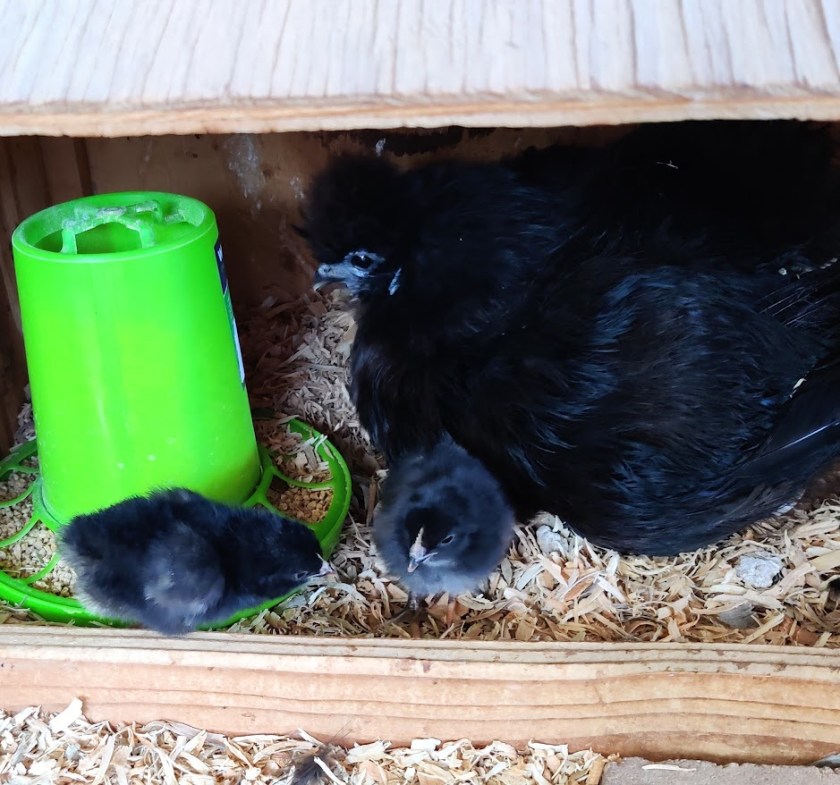
Many hens will go broody multiple times a year, and once they commit, they are determined — even if it means setting on an empty nest. A broody hen will set on eggs for 21 days, raise the chicks for several weeks to a few months, and may start the cycle again shortly afterward. While broody, a hen doesn’t lay eggs, which explains why Silkies produce fewer eggs overall than non-broody breeds. FYI, a broody hen will happily set on and hatch eggs laid by other members of the flock.

Back to HOME PAGE

Marek’s Disease: What Every Chicken Keeper Should Know

Marek’s Disease: Symptoms, Management, Prevention, Biosecurity, Commonality, and Vaccines.

Written by a real person and flock owner.

About Marek’s Disease

Marek’s Disease is one of the most common and serious illnesses affecting backyard chickens. Caused by a highly contagious herpesvirus, Marek’s attacks the nervous system, internal organs, eyes, and skin. It spreads quickly through feather dander and dust, and once it’s in your flock or environment, it can be difficult to eliminate. However, with the right prevention strategies, backyard keepers can protect their birds and maintain a healthy flock.
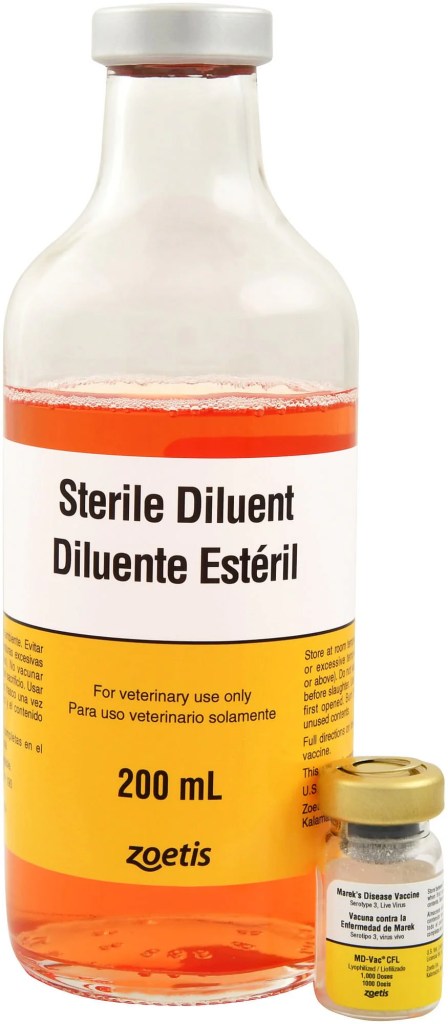
The best protection against Marek’s is vaccination. Most large hatcheries offer Marek’s vaccination as an optional add-on when you order day old chicks. This is the simplest and most reliable method for small flock owners. If you hatch your own chicks at home, you can order the Marek’s vaccine online and administer it yourself, but the process is fairly complex and often impractical for small backyard flocks. (More info on this below.)
In addition to vaccination, maintaining good biosecurity is important. Always quarantine new birds for at least 2 to 4 weeks before introducing them to your flock. Clean and disinfect feeders, waterers, tools, and footwear, especially if you’ve visited other poultry farms. Marek’s virus can survive in dust and bedding for months, or longer in some regions, so reducing dust buildup in the coop is critical. Ensure good ventilation, regularly turn bedding, and avoid letting feather dander accumulate.

Symptoms of Marek’s Disease

Prevention of Marek’s Disease

There is no cure for Marek’s disease once symptoms appear, so prevention is critical. The most effective prevention is to vaccinate with 24 hours of hatch.
Many hatcheries offer Marek’s vaccination at hatch for an extra SMALL fee.
Ask for it when ordering chicks online, and when buying chicks from a feed store make sure they are vaccinated.
Vaccine doesn’t totally prevent infection, but it can reduce symptoms and spread.
Note: It takes about 7-14 days for immunity to develop after vaccination.

Biosecurity Practices

Never introduce new birds without quarantine (2-4 weeks).
Minimize visitor access to your flock.
Clean and disinfect equipment, boots, and hands.
Avoid mixing vaccinated and unvaccinated birds.
Do not raise vaccinated and unvaccinated birds together.
Keep dust levels down; the virus spreads via feather dander and dust.

How Common Is Marek’s Disease?

Marek’s disease is VERY common worldwide, especially in backyard and small-scale flocks. Marek’s disease tends to affect birds between 3 weeks and 6 months old, but older birds can carry and spread it. Unfortunately, the virus is extremely hardy and can remain infectious in dust and dander for months, some say years, especially in arid climates.
Note: Infected birds may appear to recover, but they can still be carriers.

Marek’s Can be More Problematic in the Southwest U.S.

A combination of climate, management styles, and exposure risks favor the spread of the disease. Here’s why it may be more prevalent or persistent in places like Arizona, New Mexico, Texas, and surrounding areas:
Warm, Dusty Conditions: The virus spreads in dander and dust, which can stay airborne and infect other birds.
The dry, dusty climate of the Southwest makes it easier for the virus to linger in the environment and be inhaled.

Where to Get Marek’s Vaccine When Hatching Your Own Chicks

Back to HOME PAGE