Home

All About Heritage Chickens

Considering Raising Heritage Chickens? Here’s What You Need To Know

A heritage chicken is a breed of chicken that has been around for a long time and is considered to be a part of a country’s agricultural heritage. These chickens are usually bred for their ability to thrive in a variety of environments, rather than for their egg or meat production.
They are generally considered to be healthier and hardier than modern commercial breeds, and are often used in small-scale or backyard poultry farming. Some examples of heritage chicken breeds include the Barred Plymouth Rock, the Sussex, and the Brahma. These chickens are known for their unique characteristics and are often bred for their colorful feathers and distinctive appearances.
Heritage chicken breeds are breeds that were developed in the past and are now considered to be endangered or at risk of extinction. These breeds are valued for their genetic diversity and are important for maintaining a healthy and resilient gene pool in poultry.

Here is a List of Some Heritage Breeds You May Be Familiar With:

  1. Australorp
  2. Barred Plymouth Rock
  3. Brahma
  4. Buckeye
  5. Chantecler
  6. Cochin
  7. Dominique
  8. Dorking
  9. Faverolle
  1. Jersey Giant
  2. Leghorn
  3. Marans
  4. Orpington
  5. Plymouth Rock
  6. Rhode Island Red
  7. Sussex
  8. Wyandotte
  9. MORE
Dominique | TBN Ranch

Where Can You Find Heritage Chickens?

Hatcheries: There are several hatcheries that specialize in heritage chicken breeds. You can find a list of hatcheries that sell heritage breeds online or by contacting the American Livestock Breeds Conservancy.
Poultry shows or exhibitions: Poultry shows or exhibitions are a great place to find heritage chickens and talk to breeders. You can find a list of upcoming shows in your area by contacting the American Poultry Association or the American Bantam Association.
Online classifieds or forums: There are several online classifieds and forums where you can find heritage chickens for sale. A popular option is Backyard Chickens.

Best Place To Learn More About Heritage Chickens

Livestock Conservatory Articles of Interest

Conservation Priority List
Definition of a Heritage Breed
Online Directory of Heritage Breeds:
Use this Breeders Directory to find rare breed stock and products. To be listed in the directory, you must be member of The Livestock Conservancy or a Breeders & Products Directory Participant.
Back to HOME PAGE

How Do Feathers Help Keep Chickens Warm?

Feathers help chickens stay warm by providing insulation. The structure of feathers traps air, which helps to keep the chicken’s body heat from escaping. Chickens have a layer of down feathers close to their skin that helps to keep them warm, and they also have contour feathers on the outer layers of their body that provide additional insulation.
Chickens also fluff up their feathers when it is cold to create additional air pockets and increase the insulating properties of their feathers. In this way, feathers help chickens to maintain a stable body temperature even in cold weather.

Back to Chicken Keeping Resources HOME PAGE

Labels on Egg Cartons and What They All Mean

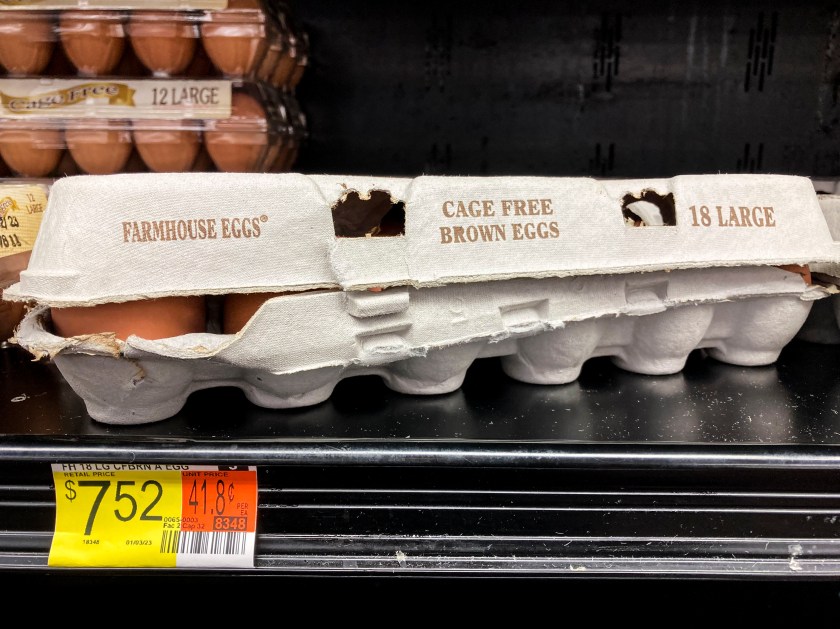
Oh my, just look at that price! (2022)

It can be a bit confusing buying eggs these days, lots of different labels, and prices too! Each label indicates something different about the way the eggs were produced, here’s a breakdown of what the most common labels mean.
Organic: In order for eggs to be labeled as “organic,” the hens that laid them must be raised according to certain standards. These standards include being fed an organic diet, having access to the outdoors, and being raised without synthetic pesticides or fertilizers.
Cage-Free: This label means that the hens that laid the eggs were not raised in traditional battery cages, which are small wire cages stacked on each other. However, it does not necessarily mean that the hens had access to the outdoors or were raised according to any specific standards.
Free-Range: This label indicates that the hens had some access to the outdoors. However, the amount of time they are allowed to spend outside, and the size and quality of the outdoor space can vary.
Pasture-Raised: This label indicates that the hens had access to the outdoors and were able to roam and forage on a pasture.
Omega-3 Enriched: This label indicates that the hens were given feed that is supplemented with omega-3 fatty acids, which can contribute to the nutritional content of the eggs.
Vegetarian-Fed: This label indicates that the hens were not given any animal byproducts in their feed and were only given a vegetarian diet.
No Hormones: This label indicates that the hens were not given any hormones to boost their egg production. This is not a requirement for all egg producers, as the use of hormones is already prohibited in egg-laying hens in the United States.
No Antibiotics: This label indicates that the hens were not given any antibiotics, either to prevent or treat illness. This is not a requirement for all egg producers, as the use of antibiotics is regulated by the FDA.
Battery: This term refers to the traditional method of raising hens for their eggs, in which they are kept in small, crowded wire cages. This method is now illegal in some countries but is still used in others. (Most commonly found on the grocery shelf at the lowest price).
Note: It’s important to note that these labels are not necessarily regulated in the same way in all countries, so the conditions in which the hens were raised may vary depending on where the eggs were produced.

Back to Chicken Keeping Resources HOME PAGE