How Do Feathers Help Keep Chickens Warm?

Feathers are an engineering marvel of the natural world, functioning as a highly efficient, multi-layered thermal system that goes far beyond simple coverage. At the microscopic level, the anatomy of a feather is designed for precision; while the outer contour feathers feature interlocking barbs that “zip” together to create a windproof and waterproof shell, the downy layers underneath lack these hooks. This creates a loose, sprawling mesh of fibers known as plumules. This structure is essential because it maximizes the volume of “dead air” trapped against the skin. Because air is a poor conductor of heat, this stagnant layer acts as a powerful barrier, preventing the bird’s high metabolic body heat, which typically ranges between 105°F and 109°F, from escaping into the cold environment.
To maximize this insulation, chickens utilize a physiological response called piloerection. When the temperature drops, tiny muscles at the base of each feather follicle contract, causing the feathers to stand on end. This “fluffing” significantly increases the “loft” of the plumage, expanding the thickness of the trapped air layer and creating a deeper thermal buffer. This is why a chicken often looks twice its normal size on a crisp morning; they are effectively expanding their own personal insulation zone to adapt to the temperature.
Beyond the physical structure of the feathers themselves, chickens employ specific behaviors to protect their unfeathered extremities. You will often see them tucking their beaks into their back feathers to breathe in pre-warmed air or standing on one leg to pull the other into the warmth of their breast feathers. Furthermore, the use of the preen gland is vital for winter survival. By spreading natural oils over their feathers, chickens ensure their “outer coat” remains flexible and water resistant. This maintenance is critical because once feathers become waterlogged, the air pockets collapse, and the insulating properties are lost. Through this combination of sophisticated anatomy and instinctive behavior, chickens are remarkably well equipped to maintain a stable body temperature even in harsh conditions.
Back to HOME PAGE

All About Molting

Every year your chickens will molt, in other words, lose their feathers and grow new ones. Unfortunately, it also means most hens will not lay eggs until their molt cycle is done. However, there are exceptions to that rule. There are hens whose rate of lay is not affected, but you can expect their molt time to last longer... CONTINUE READING

Back to Chicken Keeping Resources HOME PAGE

All About Molting

An Informative Article on Why, When, and How Molting Effects a Hen’s Egg Production.

Every year your chickens will molt, in other words, lose their feathers and grow new ones. Unfortunately, it also means most hens will not lay eggs until their molt cycle is done. However, there are exceptions to that rule. There are hens whose rate of lay is not affected, but you can expect their molt time to last longer.
Late molters will lay eggs 12 to 14 months before they molt, and early molters might begin to molt only a few months after their point of lay. Late molting is preferred; those birds usually have a more ragged feather appearance, but will generally be your better-laying hens.  Early molters are just the opposite; they have a smooth and tidy appearance but are usually poor layers.
Late molters will lay eggs longer before molting, and within 2 to 3 months will have completely shed their feathers. Their loss of feathers is replaced at the same time, which means a hen will return to full production quicker. Early molters lose their feathers just a few at a time and will drag out the molting process for as long as 4 to 6 months. These hens will generally be the poor producers in your flock.
There is a definite order in which feathers are lost, so it gives you a general idea of what molting stage they’re in.  Chickens lose their head feathers first, then those on the neck, breast, body, wings, and tail last.
The particular time of year your birds will molt depends on the climate of your geographic region.  Wherever you live, your chickens will not so subtly inform you when you can expect this yearly process to occur.
Note: A little crimped or rolled oats added to your chicken’s diet during molting may assist in feather growth.

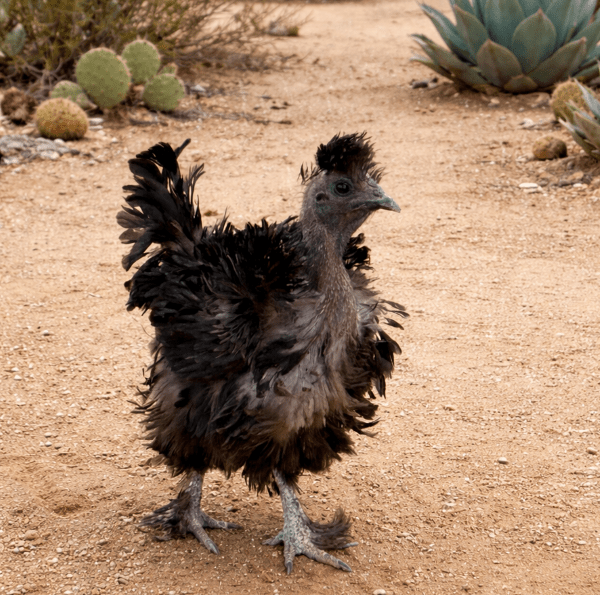
Jojo, she is a very dramatic with her molting.
Back to HOME PAGE