Chicken Keeping City Ordinances Phoenix AZ 2025

A good example of a backyard coop for 6 chickens
  • Poultry & Rodents (Section 8-7) phoenix.municipal.codes
  • Recent Changes: Ordinance (G-1367) & State Law : 2024 (HB 2483)

Restrictions

No coop/enclosure can be within 20 feet of a neighboring property line — unless you get written permission from the neighbor.
Poultry cannot be kept in the front yard; coops/enclosures must be in the side or rear yard.
Enclosures must prevent the birds from wandering onto neighboring properties.
Up to 6 poultry (or 25 rodents, or a combo) are allowed on a lot ½ acre or less, unless you get written permission from neighbors to have more.
If your lot is larger, you can keep more: for each additional ½-acre, you can have 20 more birds (or 25 rodents, or combination).
Roosters (male poultry) are not allowed unless they are incapable of making loud vocal noises (i.e., no crowing).
Enclosures must be kept clean so there is no offensive or noxious smell that affects neighbors.

Sanitation & Maintenance (Section 8-8)

Manure and droppings must be removed from the pen/coops at least twice weekly, and removed from the property at least twice a week.
The area must not become a health nuisance — meaning no bad odors, no vermin, no accumulation of refuse, etc.
The premises (coop/pen) are subject to inspection by the City Health Officer.
Animals (including poultry) may not run at large; they must be confined.

Minimum Lot Size (Section 8-10)

Generally, you need at least 10,000 square feet of lot area to legally keep certain “animals” under the ordinance.
However: poultry may be kept on smaller lots (< 10,000 sq ft) if you get written permission from all neighbors (occupants and owners of adjacent lots).

Penalties

Violating the keeping-of-animals rules (including the poultry rules) can result in a Class 1 misdemeanor.
Alternatively, the city prosecutor may treat some cases as civil violations, with fines ranging from $150 to $2,500.

Recent Changes to Be Aware Of

Ordinance G-1367: Several of the current rules (8-7, 8-8, 8-9, 8-10) were amended under this ordinance.
State Law (HB 2483): In 2024, Arizona passed a law that limits how restrictive cities can be with backyard chicken rules. Specifically: municipalities cannot ban single-family homeowners (on lots ½ acre or smaller) from keeping fowl.
Because of that, Phoenix’s regulations must align — so some restrictions (like total bans) are not allowed anymore under state law. (Arizona Legislature)

Back to HOME PAGE

Rewilding With Chickens: Lessons Learned from a Desert Flock

Observing, Adapting, and Rewilding in Arizona

Bringing a flock of hens home seemed simple at first, just a few eggs, I thought. But they brought lessons I never imagined. I make my way to the coop each day at sunrise, the hens clucking away and breaking the morning quiet. It may be hard to imagine, but the smell of dry, gritty earth and sun-baked foliage is something you learn to find beauty in over time.
Keeping chickens here feels like a kind of rewilding, not of wilderness, but of care and diligent attention. In a place where water and shade are precious, you begin to see how every living thing adapts. The hens move with quiet wisdom, digging into the cool earth or finding shelter beneath sparse desert trees and makeshift shade cloths.
Eggs of all colors and sizes are gathered each day. They follow the natural rhythm of my flock, arriving whenever, rather than on a schedule. That kind of cycle feels sacred, a small, circular rebellion against the idea that everything must be constant and controlled.
When the monsoon season arrives, I welcome the brief shift in temperatures and the distinctive smell of rain on the crispy creosote bushes. Somehow, the smell of rain on the wet city streets feels strangely comforting. As thunder rolls and the wind violently picks up, the desert becomes a conversation again, one of long-awaited change. The flock huddles down when harsh weather threatens, quietly finding shelter until it passes. Winter, by contrast, is mild and comfortable, offering the flock a much needed reprieve. There were moments when the heat left me exhausted, and the needs of my flock felt greater than what I could give. Yet in facing those moments, I uncovered a resilience I never expected to find.
Rewilding doesn’t always mean returning to forests or rivers. Sometimes it’s about remembering how to live in the place you already are. Even a small desert chicken farm can provide that sense of reconnection, where a flock of hens teaches you to observe, adapt, and find grace—even in a climate that is not always kind.

Back to HOME PAGE

Most Common Urban Chicken Predators in Phoenix AZ

How to Keep Your Flock Safe from These Common Natural Predators

Coyote

Coyotes are common in urban areas of Phoenix and are known to prey on chickens. These animals are highly adaptable predators that can thrive in a variety of habitats, including rural, and highly populated urban areas. They are opportunistic hunters & it’s almost certain the coyote will eventually find your chickens.
Note: The coyote rarely takes one bird, they are known to kill the entire flock, take one or two birds and leave the dead behind.

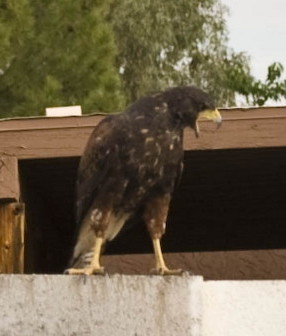
Harris Hawk

The Harris Hawk is a bird of prey that can swoop down and carry off small animals, including chickens. They are known to be skilled predators, and they hunt a variety of prey. They hunt in groups, which is uncommon among raptors.
They often hunt cooperatively, with one bird flushing prey from cover while another waits in ambush. This allows them to take down larger prey than they could handle alone.
The Harris hawk is a skilled and adaptable hunter that has evolved unique hunting behaviors to maximize its chances of success in capturing prey.

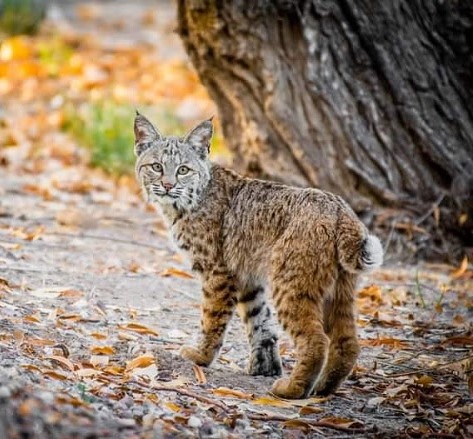
Bobcat

Bobcats are carnivorous animals and are known to prey on a variety of animals, including chickens. When hunting chickens, bobcats use their keen senses of sight, hearing, and smell to detect their prey. So it’s especially important to keep your keep clean. Bobcats typically wait until dusk to hunt, but keep in mind, I have experienced an attack during the day, so always assume your birds are at risk if unprotected. Bobcats aren’t known to be greedy, they usually take just one bird.

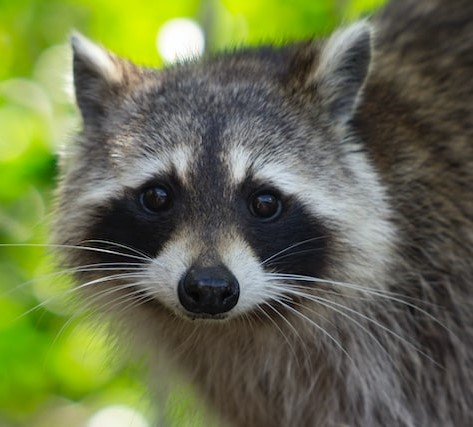
Racoon

Raccoons are known to be skilled at breaking into chicken coops and killing chickens. They are not a huge threat in the city, but I have seen them on our urban farm.
Raccoons are a type of mammal that are known for their distinctive “hands.” Raccoon hands which are very dexterous and have long, flexible fingers that can grasp and manipulate objects with ease, such as latches on coop doors.

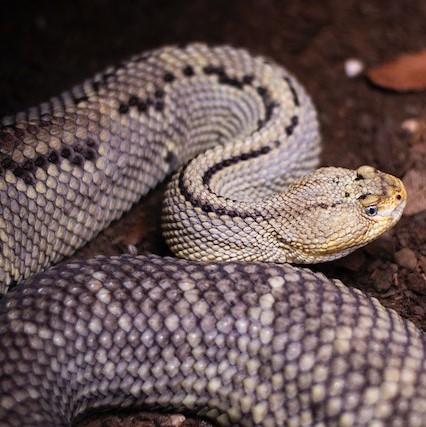
Rattlesnake

Rattlesnakes can pose a threat to chickens, they are venomous snakes that are found not only in desert areas but the city as well. They are known to prey on small animals which includes birds. Chickens are potential prey for rattlesnakes because they are small and often forage on the ground, which makes them vulnerable to snake attacks. If a rattlesnake can get into a chicken coop or other chicken enclosure, it may be able to kill or injure chickens.

How to Protect Your Backyard Flock From Predators

Secure your coop: Make sure that your coop is secure and predator-proof. This includes using sturdy materials for the coop, such as wire mesh or hardware cloth, and ensuring that all openings are covered with tight-fitting, predator-resistant material. It is also important to have a strong lock on the door, as many predators are quite clever at finding their way in.
Provide a secure run: A run is a fenced-in area where your chickens can roam during the day. Make sure the run is secure with a sturdy fence that is buried at least 6 inches into the ground to prevent predators from digging underneath it. Cover the top of the run with netting or wire mesh to prevent hawks or other birds of prey from swooping in.
Keep the area clean: Predators are attracted to areas where they can easily find food, so make sure to clean up any spilled food or water and store feed in a secure container. Also, remove any debris or brush around the coop that predators could use as cover. Droppings from your birds are also an attractant, clean the coop at least once a week.
Use lights and sound: Some predators are deterred by lights or loud noises. You can install motion-activated lights around the coop or a device that emits sound to deter predators.

Back to HOME PAGE