About The Urban Coyote


Thriving Amidst the City Skylines

Coyotes have established a ubiquitous presence in American cities, spanning from coast to coast. Remarkably, coyotes, born and raised within city limits, exhibit a preference for urban environments. It is not a result of being displaced from more suitable habitats; rather, the majority of these creatures consider the city their true home—a place they willingly choose to inhabit.
Contrary to common belief, coyotes do not strictly limit their hunting after dark. Coyotes are adaptable eaters and require sustenance daily. They actively pursue prey whenever the opportunity arises, regardless of the time of day. However, coyotes generally tend to dedicate a significant portion of their hunting time to the early morning and late evenings. They don’t typically hunt in large packs but instead tend to operate individually or in small family groups.
Coyotes are highly adaptable creatures known for their opportunistic feeding habits, as they are willing to consume a wide range of food sources. However, their preference lies with commonly available prey such as whitetail deer, rabbits, rodents, and small animals which include the family dog or cat. Chickens are a superior delicacy and are highly sought after.

Note: There is a misconception regarding coyotes and their living habits, particularly their use of dens. A den is primarily used for the pup-rearing season. It is basically a temporary shelter for nurturing offspring. Denning is a transient phase and only lasts as long as the female coyote requires it to raise her young. Once this phase is completed, she will move on, and the family unit will disperse.

Similar to rats or raccoons, coyotes are versatile creatures, adapting well to various environments. They possess a wide range of dietary and habitat preferences, allowing them to flourish in urban areas, much like they would on an expansive prairie. They possess an uncanny ability to capitalize on human resources without causing significant disturbances to the humans themselves. As a result, the majority of the urban coyote population in the United States leads inconspicuous lives, concealed from the prying eyes of humans, as they go about their resourceful and resilient existence.
Coyote attacks on individuals are extremely rare. Preventing coyote attacks often involves modifying human conduct and raising awareness about effective measures to discourage habituation. In the few cases where humans were attacked, it was discovered that the coyotes responsible had been intentionally fed by people. Similarly, some individuals were bitten while attempting to rescue their pets from coyote encounters when the pets were allowed to roam freely. On rare occasions, people may be bitten by cornered coyotes, and even more rarely, by coyotes infected with rabies.

Back to Chicken Keeping Resources HOME PAGE

The Hierarchical System Among Chickens

The Pecking Order, A Natural Disturbance Among the Flock

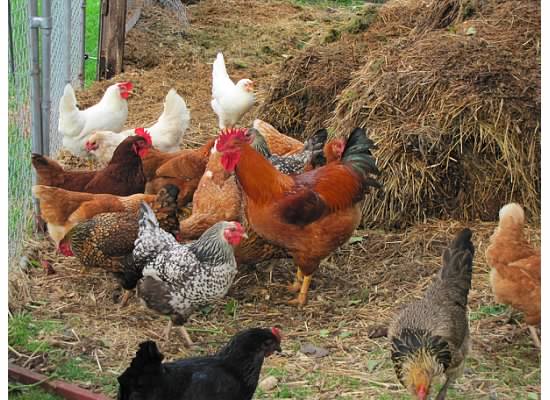
Chickens are social animals that naturally establish a pecking order within their group. The pecking order is a hierarchical system that determines the rank and status of each chicken in the flock. The pecking order is important for the social organization of the flock and helps to maintain order, reduce aggression, and ensure access to resources such as food, water, and nesting sites.
The establishment of a pecking order is a natural process that begins when chicks are first introduced to each other.
Chickens use a variety of signals and behaviors to establish their place in the pecking order, including aggression, dominance displays, and submissive behaviors.
The factors that determine the pecking order among chickens:
Age
Older chickens tend to have higher status in the pecking order than younger chickens. This is because older chickens are larger and more experienced, and they have had more time to establish their dominance within the flock.
Size and Strength:
Chickens that are larger and stronger tend to have higher status in the pecking order. These chickens are able to compete more effectively for resources such as food, water, and nesting sites, and they are often able to intimidate smaller and weaker birds.
Personality:
Chickens have different personalities, and some birds are more assertive and dominant than others. Chickens that are more aggressive and assertive tend to have higher status in the pecking order than more submissive birds.
Previous Interactions:
Chickens remember previous interactions with other birds and use this information to establish their place in the pecking order. If a chicken has successfully challenged another bird in the past, it may be more likely to challenge that bird again in the future.
Once the pecking order is established, each chicken knows its place in the hierarchy and behaves accordingly. Chickens at the top of the pecking order are more likely to have access to resources such as food and water, and they may also have access to better nesting sites. Chickens at the bottom of the pecking order are more likely to be subjected to aggression and may have limited access to resources. However, the pecking order also helps to reduce aggression and maintain order within the flock by establishing clear social boundaries and reducing the need for constant competition.

Back to Chicken Keeping Resources HOME PAGE

Fun Facts About Chickens

Did You Know?

Chickens are one of the oldest domesticated animals, with evidence of their domestication dating back to ancient Egypt over 4000 years ago.
Chickens are intelligent birds and can remember and recognize up to 100 other chickens.
Chickens have a complex social hierarchy and communicate with each other using over 30 different vocalizations.
Chickens can dream and have a sleep-wake cycle similar to humans.
Chickens have a good sense of direction and can find their way home over long distances.
Chickens have a pecking order and establish a social hierarchy through pecking and other forms of behavior.
Chickens can exhibit personality traits such as shyness or aggression, and some breeds are known to be more docile or energetic than others.
Chickens are omnivores and will eat a variety of foods, including seeds, insects, and even small reptiles.
Chickens have a highly developed sense of taste and are able to distinguish between different flavors.
Chickens are known for their ability to produce eggs, but they can also be raised for their meat.
More Interesting Facts…
Chickens, like all animals, have certain vital signs that are important indicators of their health and well-being. Some of the vital signs of chickens include:
Heart rate: A chicken’s normal heart rate is between 250 and 300 beats per minute.|
Respiratory rate: A chicken’s normal respiratory rate is between 15 and 25 breaths per minute.
Body temperature: A chicken’s normal body temperature is between 105-106.7 degrees Fahrenheit (40.5 and 41.5 degrees Celsius).
Capillary refill time: This is the time it takes for the blood to return to a chicken’s comb (the fleshy protuberance on top of its head) after being pressed. A normal capillary refill time is less than 2 seconds.
Hydration: Chickens should have moist, elastic comb and wattles (the fleshy protuberances on either side of the head). Dry comb and wattles can be a sign of dehydration.
Behavior: Chickens should be active and alert, with a normal appetite and thirst.
Monitoring these vital signs can help you identify any health issues that your chickens may be experiencing, and allow you to take appropriate action to address them.

Back to Chicken Keeping Resources HOME PAGE