
The Dorking is a breed of chicken that is believed to have originated in the Roman era. It is named after the town of Dorking, located in the county of Surrey in England. The breed was first mentioned in literature in the late 16th century and was used primarily for meat and eggs. Dorking chickens are large birds with a single comb and five toes on each foot. They are known for their docile and calm temperament, making them a good choice for backyard chicken keeping. Dorking chickens come in several varieties, including the White Dorking, Red Dorking, and Dark Dorking. They are slow-growing birds and are not as prolific as some other chicken breeds.
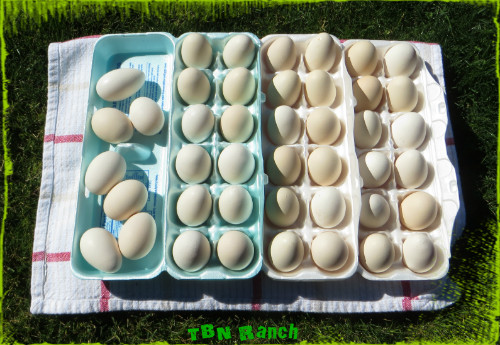
Dorking chickens are not known for being particularly good egg layers, and they typically produce fewer eggs than other breeds. On average, a Dorking hen will lay around 80-100 eggs per year. This is lower than many other breeds, which can lay closer to 200 eggs per year. However, the eggs produced by Dorking chickens are larger and may have thicker shells, which can make them more desirable to some people.
Plumage/Colors: Silver grey, Red, White, Dark, Cuckoo
Eyes: Bright red
Comb: Single, large, or Rose
Feet & legs: Featherless, five toes
Cock weight: Large Fowl 10-14lb (4.55-6.35kg)
Bantam: 40-48oz (1130-1360g)
Hen weight: Large Fowl 8-10lb (3.60-4.55kg)
Bantam: 32-40oz (910-1130g)
Egg production – Low to medium
Egg Color – Tinted
Classification – Heavy; Soft Feather



 TBN Ranch Chicken Keeping Resources