Campine

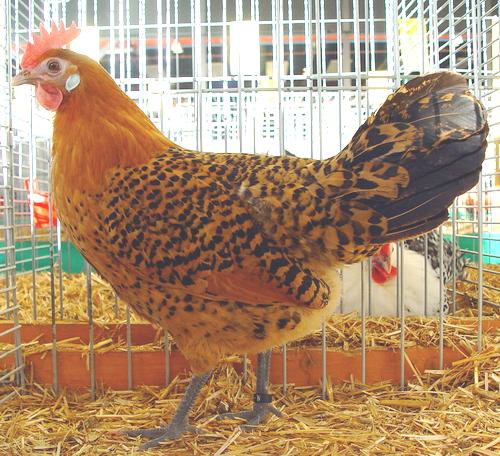
The Campine chicken, pronounced Kam-peen, is a beautiful and rare breed that originated in the Kempen Country near Antwerp, Belgium. They are close relatives of the Belgian Braekel. The Campine chicken comes in two varieties, the Silver and the Golden. Hens and roosters are nearly identical in feather coloration.
In 1893, Campine chickens were first imported into America by Mr. Arthur D. Murphy of Maine and the American Poultry Association recognized the breed in 1914.
Characteristics
Type: Large Fowl
Size: Male: 6lb. / Female 4lb.
Purpose: Egg Laying
Recognized Varieties: Silver & Golden
Crested: No
Feathered Legs: No
Number of Toes: 4
Single comb
Moderately cold tolerant
Not especially docile
Non-setter
Not broody
Tolerates confinement
Alert, intelligent, active
Egg Production
Expect about 3 medium to large white-shelled eggs per week.
Sexing
When Silver Campine females are mated to Golden Campine males the chicks can be sexed at day-old – the female chicks have a reddish blush and the males have gray on the top of their heads.
ALBC Status: Critical
For more information about the Campine visit the ALBC (American Livestock Breeds Conservatory.)

Back to Chicken Keeping Resources HOME PAGE

Orpington

The Orpingtons are very sweet, and friendly, and are seldom bullies towards the other members of the flock. However, living in the desert where the temperatures reach well over 110 they have proven their tolerance for heat to be quite low. Especially considering they can be broody and won’t leave the coop where temperatures can be life-threatening. Every situation is different and they may be fine as free-range chickens with plenty of shade and water.
Details of the Buff Orpington:
Type:   Large Fowl & Bantam
Size:   7-8 pounds
Purpose:   Dual (meat or egg production)
Recognized Varieties:   Buff, Black, Blue, White, (buff is most common.)
Eggs:
Color:  Brown
Size:  Large
Frequency:  3-4 per week
Breed Features:
Feathered Legs: No
Crested: No
Comb Type: Single Comb
Number of Toes: 4
Character & Traits:
Accepts confinement well
Cold Hardy
Heat tolerant to 100 degrees
Docile, friendly
Broody / Setter
Good layers through the winter

Back to HOME PAGE


About Combs and Wattles, Chicken Anatomy

Both male and female chickens have fleshy appendages at the tops of their heads called combs.  Wattles are two oblong fleshy appendages that hang below their chin.

What Are They For?
They both have a very important function. Scientists suggest that blood is circulated between the comb and wattles to help keep the chicken cool in hot weather. This gives the comb its deep red color and allows the blood to be cooled by the air before traveling through the bird’s body.
In winter, however, the comb is prone to frostbite in some breeds. But, little Vaseline on the comb and wattles will protect them from harm.
Another important function of the comb is to help attract a mate. A large bright comb is a sign of health and vitality. The rooster is at the top of the pecking order and his comb is larger and brighter than a hen’s. But, even among hens, the brightness and size of a comb often decide who is boss.
Chicks will begin to grow a comb within the first few weeks of their life. The comb also indicates maturity in females or pullets. When it reaches a bright red, the pullet is usually at her point of lay.
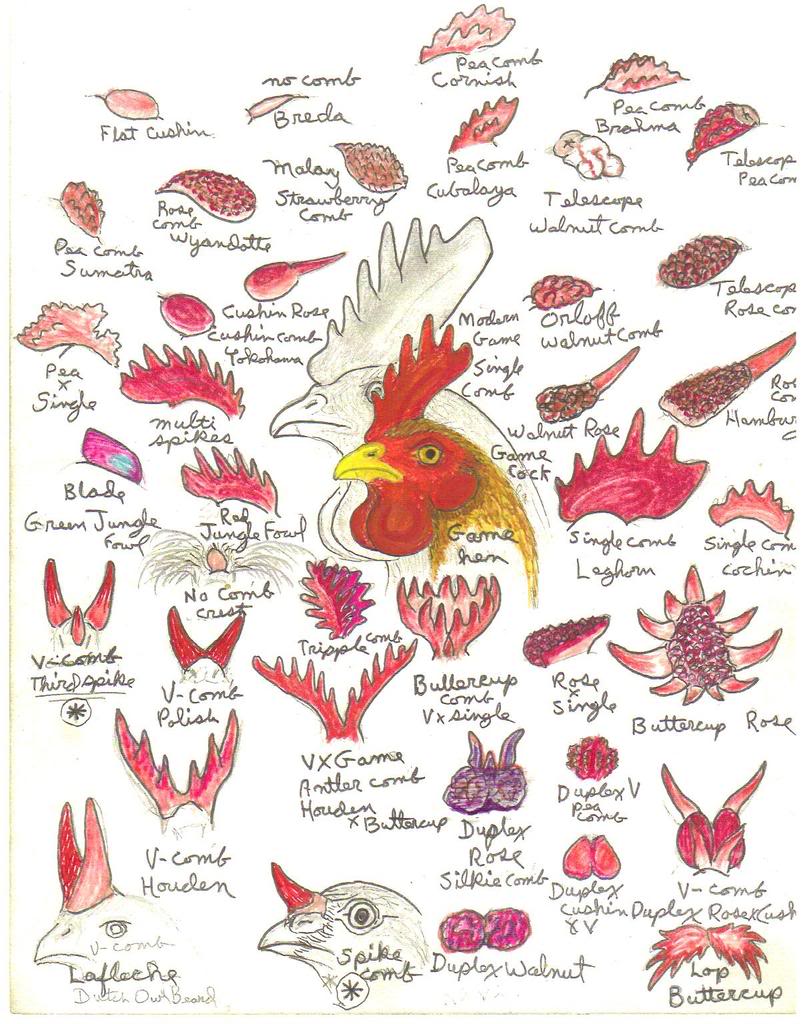
Combs vary in size, shape, and color based on the sex, age, and breed of a chicken.
7 Most Common Combs:
Buttercup
Cushion
Rose
Pea
Strawberry
V-Shaped
Single

Back to HOME PAGE