FAQ’S About Chickens

Back to Chicken Keeping Resources HOME PAGE

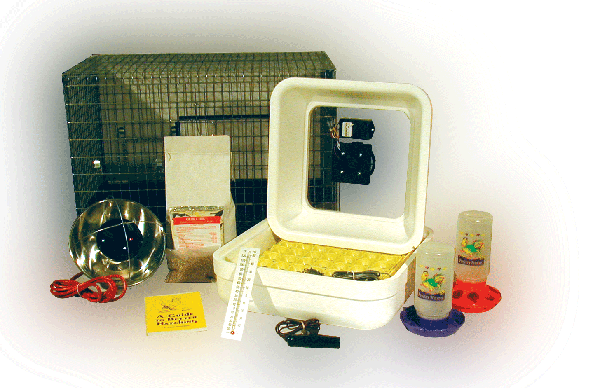
Best Classroom Incubator and Brooder Kit

If you’re looking for the best COMPLETE kit for hatching baby chicks in the classroom, this is it. The key to an enjoyable experience is being prepared with the proper set-up. This incubator and brooder kit is from a reputable company that will stand by its product.
You can also expect a friendly and knowledgeable staff that will be happy to help you with any questions you might have along the way.
Order the kit first, then ask a Murray McMurray representative about how and when to order hatching eggs. It’s that easy!
Note: Make sure you’ve arranged a place for your chicks to go once they’ve hatched. Craig’s list in ‘Farm & Garden’ is the best place to re-home baby chicks. They’ll probably go fast if you price them at $3.00 ea. Remember what breed they are, that will be important to many chicken keepers.
Order at Murray McMurray $299

Everything you will need to incubate, hatch, and brood, plus a book and a poster are included in this kit.
You Will Receive:
Full View Picture Window Incubator
Includes:
Electronic thermostat, fan, and automatic egg turner.
The book Guide to Better Hatching.
Candling Device used to check the progress of development.
Brooder – After the birds are dry from hatching use the accompanying brooder to continue the healthy growth of chicks. This brooder is made of heavy galvanized wire mesh, wire floor, and approx. 1 1/2” to 2″ deep set-in plastic tray. There are clips on the side of the cage for easy removal and cleaning of the bottom pan. The brooder is to be used in a room that is approximately 70 degrees with no direct drafts.
The brooder holds 30 chicks for up to 10 days. It is easily assembled.
The Brooder Kit Includes:
Brooder Cage measuring 30” W x 18” L x 18” H.
Plastic poultry Waterer.
Snap-on Feeder.
5 lbs. of Chick Feed, 1 lb. Grit. and 4oz Quik Chik
Single Bulb Brooder Lamp with Infra-Red Heat Bulb
Brooder Thermometer

Back to Chicken Keeping Resources HOME PAGE

Salmonella and Poultry

If you’re a poultry keeper and not concerned with salmonella, you should be. Here are the facts and how to protect yourself and your family. Salmonella is a type of bacteria that is carried in the intestines of animals and can be shed into the environment. People typically become infected after eating contaminated foods or from contact with animals or their environments.
Fact:  Chicks, ducklings, and other poultry are a recognized source of Salmonella.
Exposure to Salmonella
People get sick from Salmonella by hand-to-mouth contact. Usually, this happens when people handle birds or their droppings and then accidentally touch their mouths or forget to wash their hands before eating or drinking. Even birds that do not look sick may be shedding Salmonella. And even though a bird looks clean, it may still have germs like Salmonella on its feathers or feet. Salmonella can cause diarrhea, vomiting, and fever. Occasionally people become sick enough to need to see a doctor or be hospitalized. Most people develop symptoms 1 to 3 days after being exposed to Salmonella and recover in about a week. Some people are more susceptible to infection and will have more severe disease. These people include young children, pregnant women, the elderly, people on chemotherapy, diabetics, and others with weakened immune systems.
Prevention
Do not let children less than five years of age or others at high-risk handle poultry or items contaminated by poultry. Wash your hands thoroughly after handling poultry or their droppings. Do not eat or drink around poultry or their living areas. Do not let poultry live inside your home. Do not wash the birds’ food and water dishes in the kitchen sink.
Disinfectants for Good Poultry Housekeeping
Roccal®: Mix 1/2 fluid oz of Roccal per gallon of water.
Nolvasan® (chlorhexidine diacetate 2 percent): Mix
3 fluid oz of Nolvasan per gallon of water.
Household bleach (sodium hypochlorite 6 percent):
Mix 3/4 cup of household bleach per gallon of water.
Lysol® spray for footwear
Purell® hand pump for hand disinfection

Source: United States Department of Agriculture, USDA

Back to Chicken Keeping Resources HOME PAGE