Getting Chickens to Roost in the Right Place

Chickens have a strong homing instinct which drives them to return to the same place to roost at dusk. Those who for whatever reason have decided otherwise can easily be picked up when it’s dark and placed in the coop.  After a few days to a week at most, they usually give up the tree limb, fence, or corner they fancied and join the others in the coop without your interference.
Make sure it’s dark though! Because as soon as you turn your back they’ll run back to where you took them from. It’s very common for youngsters to choose a corner on the ground away from the coop.  Just pick them up and place them where you want them to be and they’ll catch on after a while. However, don’t be concerned if your young birds pile up together in the coop, just be glad they’re in there! As they mature they’ll find their way to the roost, usually at around five months old.
This four-month-old Leghorn chose this spot to roost for the night. After a few evenings of fetching her off the fence and putting her in the coop, she gave up and now joins the others on her own.
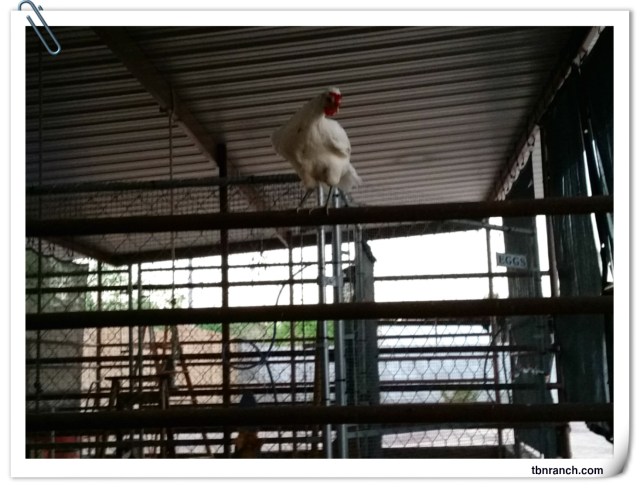
Leghorn Dottie 9316

Do all Chickens Roost?
No, don’t ask me why… some, such as Silkies for example, are known to hunker down for the night in the coop, off the roost.
I have four one-year-old hens that refuse to roost, it doesn’t matter, as long as they are safely confined at night I just let them choose their comfort zone.
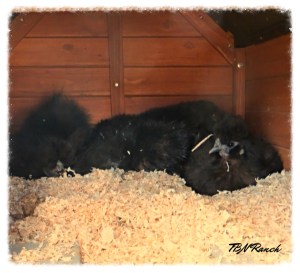
Broody Silkies 10-23-14

Night Behavior
A chicken’s behavior is dramatically different at night. During the day they are full of life, feisty, and confident, but when the night comes they turn into total milk duds, almost as if they were in a hypnotic state. Take advantage of this time, this is your hassle-free ticket to handle, inspect, and doctor chickens. Especially the ones that are difficult or impossible to catch during the day.
Chickens are so docile at night that you can usually sneak a new bird in the coop after dark, it will most likely go unnoticed until morning. Some chicken keepers choose to introduce birds this way. But I must warn you, a chicken’s night stupor disappears the moment they march out of the coop at the crack of dawn. Be prepared to witness a whole new ball game of unkind introductions, to say the least! Learn more about Introducing Chickens to an Existing Flock.

Back to Chicken Keeping Resources HOME PAGE

Save

Save

Save

Save

Save

Save

Save

Save

Save

Save

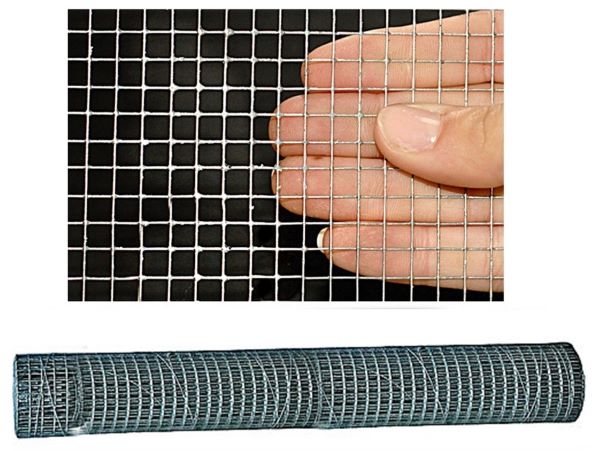
Chicken Coops: Hardware Cloth or Chicken Wire?

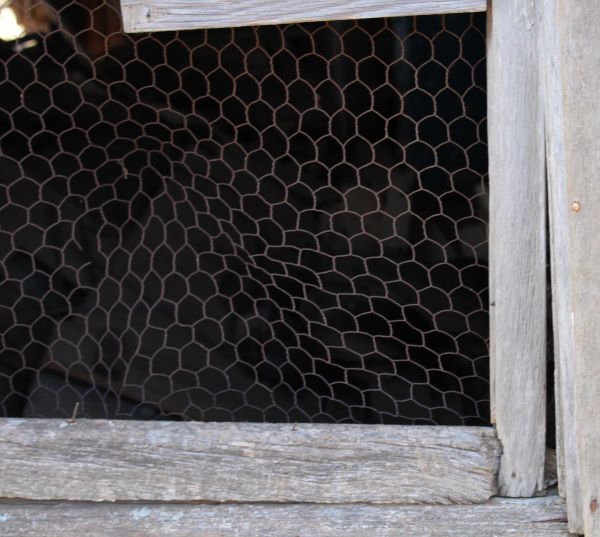
Building a coop can be fun using scrap materials, brainstorming ways to be creative, and saving money. But all too often where you scrimped ends up costing you more later. One decision you might make, for example, is to choose chicken wire for your flock’s enclosure. It’s cheap and easy to handle, but in the long run, you’ll find it wasn’t worth saving those pennies.

Chicken Wire

First of all, chicken wire is NOT predator-proof. Countless animals can chew right through the stuff. Secondly, if you’re penny-wise, you certainly aren’t going to fancy wasting expensive chicken feed.
Wild birds are the biggest culprit in feed waste. One little sparrow might not eat much, but that tiny sparrow will soon bring hundreds of friends who will devour 3 pounds or more in just one afternoon. These little guys can fit through the holes in chicken wire, not only costing you money, but they’ll poop everywhere. I think we can both agree, we don’t need any more cleaning added to the chore list.
I’ve said this before, but it’s just plain smarter to build everything right the first time. Use hardware cloth on chicken coops, and enclosures.  It’s stronger, and an extra perk is its tidy appearance.  The ends can be finished nicely, it doesn’t bend making your coop look like a train wreck as time goes by.
You’ll find hardware cloth at Home Depot or similar building supply stores. Check your local feed stores too, sometimes they’ll sell by the foot so you don’t have to buy more than you need.

Back to HOME PAGE


Winter Chicken Keeping, Tips and Common Concerns

Let’s get one common question answered first… whether or not to add heat. Chickens have over 8,000 feathers offering them a nice cozy coat. They fluff up those feathers trapping air under their down and stay toasty warm even in temperatures below freezing. So, the answer is no, chickens don’t need added heat in the coop. However, it’s important they have a dry, draft-free shelter.
Windy conditions will ruffle their feathers and compromise their ability to stay warm. Even a spot heater in the coop defeats its purpose in the long run, not to mention it’s a major fire risk. Chickens would indeed huddle under a heat lamp, but when they move away from it their feathers are not fluffed up and they’ll be cold. They do better in a consistent climate, not fluctuating temps. So you have a choice, either confine them to a totally heated shelter all winter or don’t provide them any heat at all.
Your chickens will roost together at night to keep each other warm, make sure they have enough space to do this. Check on them at night, you shouldn’t see any birds on the ground, or roosting alone. This is an indication they couldn’t find a spot with the others. If you only have one or two chickens, rather than providing a heat source, do them a favor and get another chicken.

Good Housekeeping

Keep the coop clean, and change litter weekly. Damp conditions from droppings not only compromise chickens’ ability to stay warm but contribute to the risk of respiratory illness. If your chickens are free-roam during the day, it’s a wise decision to keep their water outside the coop. It isn’t necessary to provide water at night, it only increases unwanted moisture in the coop. Ventilation is good, and drafts are bad. If there are gaps in the coop walls, patch them. You don’t have to spend a lot of money, be creative! Save those empty feed bags, they’re a great way to insulate a coop!

Broody Silkies 10-23-14

Bedding

My personal choice is deep pine shavings. Many people use straw, but it has a tendency to mold, be brittle, and pokey, which can cause irritated vents on your birds.
Grass hay is nice, it stays soft, but it’s a bit pricey. All hay or straw is bulky and takes up a lot of space in the trash can. This is something to consider if you are an urban chicken keeper.

Diet for Winter Health and Warmth

Greens are just as important in winter as in summer. A good way to introduce greens and break the boredom in the coop is to hang a cabbage. This will keep them busy and healthy at the same time. Offering your birds a little scratch feed before bed will help them stay warm, but remember, scratch feed should be considered a treat, not a complete food for chickens.

Back to Chicken Keeping Resources HOME PAGE

Save