If you use sand in your coop, here’s the best sifter on the market!
The Sand Dipper (Mid-AdjustableModel) has a long handle that can be adjusted from 34″ to 64″, making it easy to clean the coop. It’s lightweight, has a comfortable cork-rubber handle, and a stainless steel basket. The holes in the basket are the perfect size to let sand, including quarter-minus gravel fall through. I have a couple of tiny Mille Fleur chickens among the flock, and this sifter works great for cleaning up their small droppings too. I couldn’t be happier with this purchase. 🙂 You’ll find the Sand Dipper on Amazon.
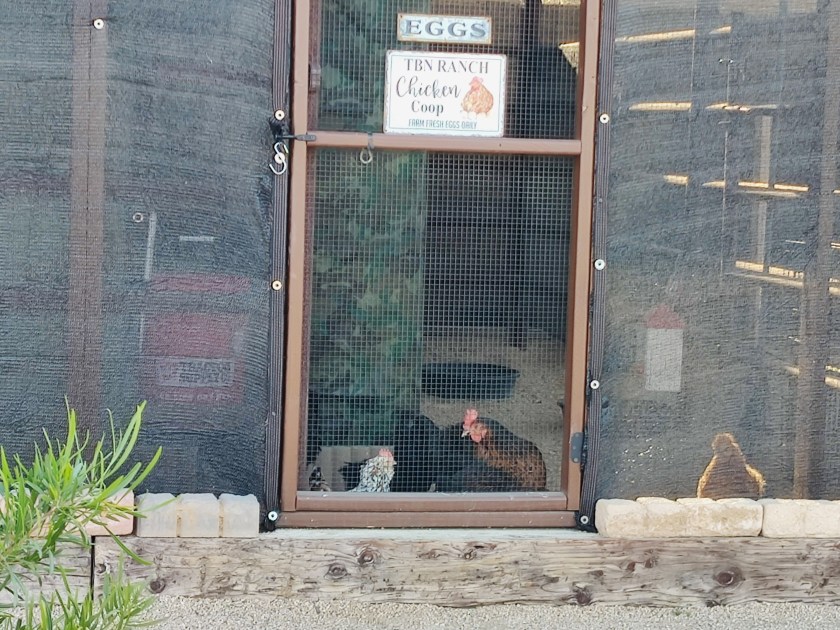
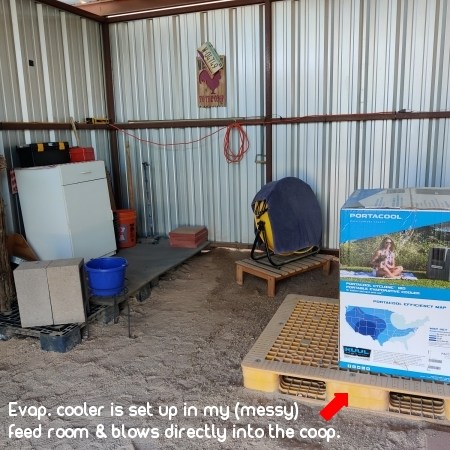
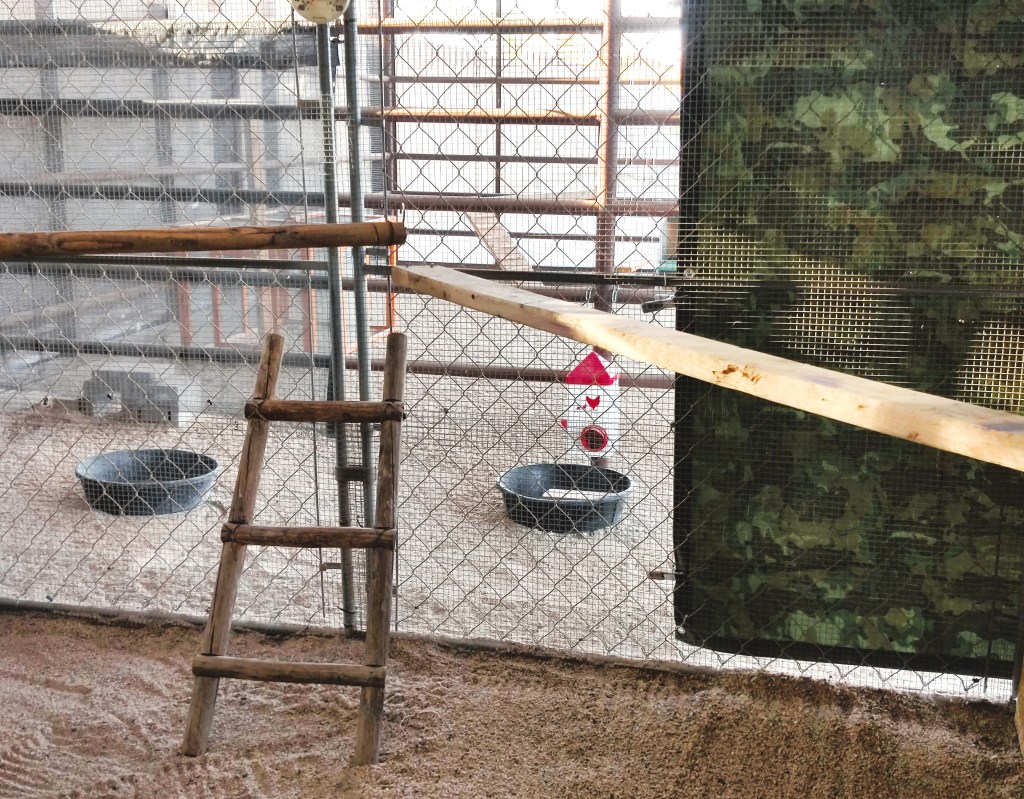
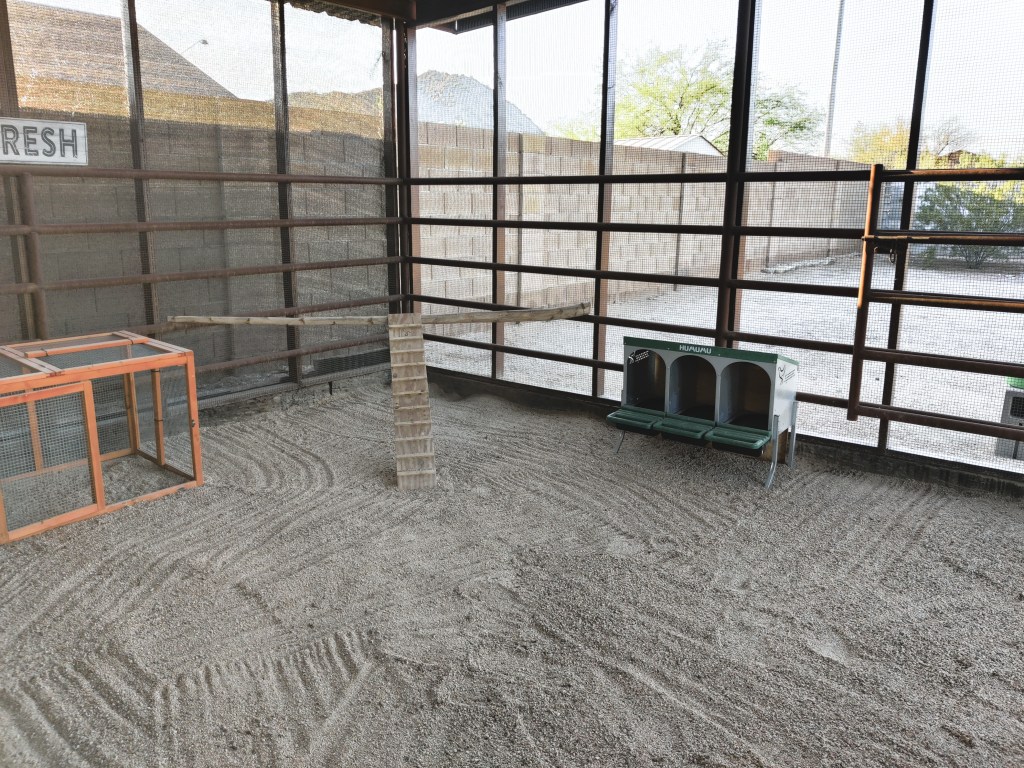
There have been many coop improvements made over the winter. The coop was once an open-sided covered corral for horses that I had professionally enclosed with heavy-grade hardware cloth – more about that build HERE. The desert doesn’t offer many options for lush greenery, but I managed to find bushes native to the desert southwest and planted three of them in front of the barn for a little color and hopefully some shade when they mature. I have a giant drum fan to help move the air in the coop, and it’s suitable for normal summer heat, but Phoenix doesn’t have normal heat; we have to keep chickens alive in 115+ temps, which is nearly impossible without human intervention. Usually, that means a mist system of some sort, along with fans, ice, and whatever else might offer them some relief. In other words, everything needed to keep chickens alive in these ridiculous high temps is a giant inconvenience and one I was determined to somewhat avoid this summer. Here’s what I came up with… I bit the bullet and bought an evaporative cooler large enough to cool the coop area. I also bought 10 lb. feeders and scattered them in different areas of the coop to help minimize feeding chores. Daily farm chores now are basically watering and clean-up. Even my clean-up chores are easier now since I ditched the pine shavings and switched to sand. If you want to know more about sand vs. shavings, all the information is in a previous article HERE. Purchasing an evaporative cooler is a double win-win scenario: it benefits the chickens by providing a more comfortable environment, and let’s be honest, it’s a relief for me as well. Working in scorching temperatures I definitely won’t miss.
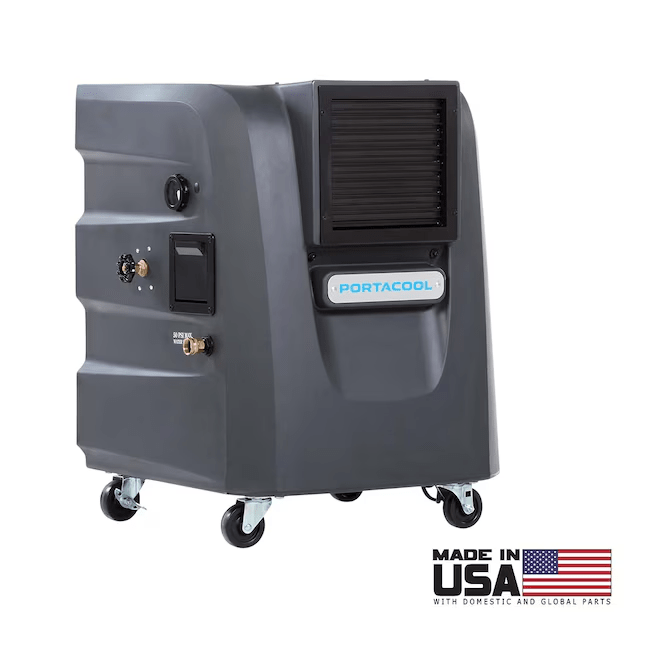
About The Evap. Cooler… Portacool 2000-CFM 2-Speed Outdoor Evaporative Cooler
What’s an evaporative cooler? It produces cool air wherever needed, such as a backyard patio, garage, barn, or workshop. Evaporative coolers are most effective in dry climates where humidity levels are low. They can be an energy-efficient and cost-effective cooling solution compared to traditional air conditioning systems, as they consume less electricity. You can learn more about this evap. cooler or check out the large selection of different models available at Lowe’s.
There are many ways to help your chickens survive the heat of summer. Luckily, in most parts of the country, this isn’t a big concern. However, if you are a desert dweller and have chickens, you’ll find a wealth of information in this article on how to manage them in hot weather.
Understanding why the airborne components in your coop can cause respiratory disease and how to protect yourself.
Poultry dust is the airborne particulate matter that is frequently present in elevated concentrations inside your chicken coop. Occasionally, (usually) reaching a density sufficient enough that it’s visible to the naked eye. Certainly you have seen this in a ray of light while cleaning. Poultry dust refers to tiny particles that float in the air and are often found in high amounts inside the coop. This dust is considered “biologically active” because it contains microorganisms, and this is a good reason indeed for wearing a mask in your chicken coop. Poultry dust poses an elevated risk of respiratory diseases, as its fine particles can transport pathogens deep into the lungs. Inside the chicken coop, airborne components such as softwood dust, fungal spores, and harmful bacteria are continually stirred up by the scratching behavior of your chickens, and when you’re cleaning the coop. This “dust” contains various harmful components such as manure, feed, feathers, dander, and other residues from poultry. It also includes litter, biological contaminants, endotoxins from bacteria, and inorganic particles from building materials like concrete dust or insulation fibers. If you use substances like diatomaceous earth and chemical powders or sprays used for mite and lice control, lime, and other floor applications they also contribute to the composition of the dust. Dust particles also can carry viral particles, mites, molds, and more. Smaller particles are particularly dangerous as they take longer to settle, remaining in the air for an extended time and increasing the risk of inhalation. You can help protect yourself by using a disposable dust mask such as the N95. But, use what you can afford, certainly any mask is better than nothing at all.
 The Sand Dipper (Mid-Adjustable Model) has a long handle that can be adjusted from 34″ to 64″, making it easy to clean the coop. It’s lightweight, has a comfortable cork-rubber handle, and a stainless steel basket. The holes in the basket are the perfect size to let sand, including quarter-minus gravel fall through.




 TBN Ranch Chicken Keeping Resources