About the Plymouth Rock Chicken | TBN Ranch

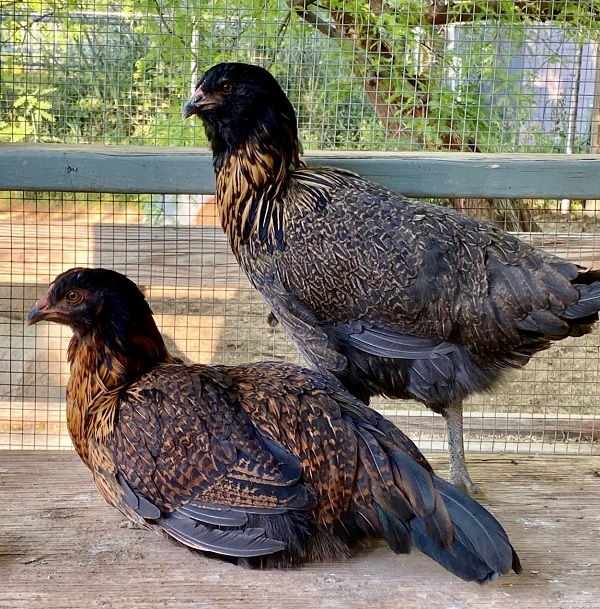
The Plymouth Rock, also called the Barred Rock, is an American breed of domestic chicken. It is a dual-purpose hardy breed, raised both for meat and eggs. This friendly sweet breed has a single comb with five points; the comb, wattles, and ear-lobes are bright red. The legs are yellow and unfeathered.
Though the Plymouth Rock tolerates confinement, they’re most happy when allowed to free range. All varieties of Plymouth Rock aside from the Barred and White varieties are relatively rare. The Plymouth Rock is a good setter, meaning it has strong maternal instincts and is a good choice for brooding.
Weight: Heavy, 7-8 lbs.
Bantam, 3.0 lbs. Male
Bantam, 2.5 lbs. Female
Use: Dual Purpose
Egg Color: Brown
Rarity: Common
Varieties: White, Buff, Silver Penciled, Partridge, Columbian, Blue, Black

Back to Chicken Keeping Resources HOME PAGE

How Long Does a Chicken Live?

It depends on whether or not they are LUCKY.  Hens on a mass-production egg farm can expect an unpleasant one or two-year lifespan before they are slaughtered.  Not a rosy picture, but wait, it’s even worse if a chicken hatches as a rooster. One may be somewhat luckier than the other… but quite frankly I’m not sure which one.
Backyard chickens can live eight to ten years in an ideal situation. Meaning, quality grub, green fixins, fresh water, shelter, and space to exercise their instinctual behaviors. Of course, there are always chickens with that special gusto for life who continue scratching in the dirt far beyond the norm.
The older a hen gets the fewer eggs she lays. Her production cycle may even cease altogether. But this is just a part of their change of life, the same as ours. Chickens grow old, but let’s not overlook their other valuable ageless contributions. They provide an endless amount of fertilizer for your garden and eat ticks, flies, mosquitoes, and the creepy crawlers that destroy the foliage in your yard. Chickens are hard workin’ bug eating machines that are quite happy to earn their keep…  at every stage of their life.

Back to Chicken Keeping Resources HOME PAGE