
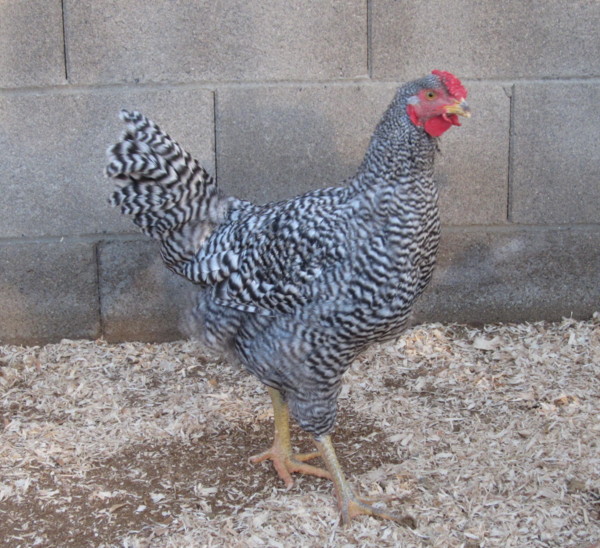
The Dominique, also known as Dominicker, originated in the United States. They are considered America’s oldest breed of chicken, probably descending from chickens brought to New England from southern England during the Colonial Era. However, most modern Dominiques may be traced to stock developed by A. Q. Carter after 1900.
By the 19th century, they were widely popular and were raised in many parts of the country. The Dominique is a dual-purpose breed valued for meat and brown eggs. They weigh 5 to 7 pounds at maturity, are considered cold-hardy, are good mothers, and adapt well to confinement or free range. They are early to mature, and although sometimes considered flighty, however, I find them extremely calm. The birds’ plumage pattern, also known as “hawk coloring”, offers some protection against some aerial predators.
Egg Production
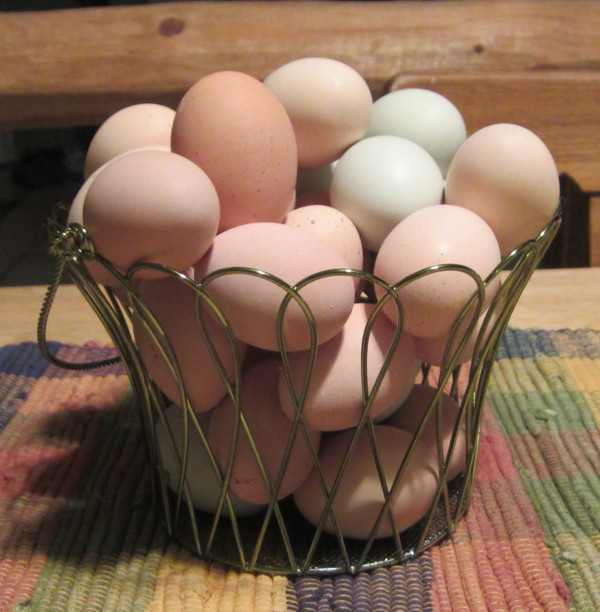
Although categorized as a dual-purpose breed, these birds are first and foremost egg producers with hens averaging 230-275 medium-sized brown eggs.
Sexing Dominique Chicks
Sexing the Dominique is really pretty simple, with about 95% accuracy. The cockerels have yellow shanks and toes, the pullets have a grayish-black coloration on the front of their shanks and also on the top of their toes. The color differences become less apparent as the chicks mature.
Popularity Concerns
Since the 1920s the Dominique’s popularity was on a steady decline, by 1970 only four known flocks remained. Dedicated breeders participated in a breed rescue and their numbers showed a rise in numbers from 1983 to 2006. By 2007, once again a decline was observed. Presently, the American Livestock Breeds Conservancy (ALBC) has put the Dominique on the ‘Watch’ list.
Who is the ALBC?
The American Livestock Breeds Conservancy ensures the future of agriculture through the genetic conservation and promotion of endangered breeds of livestock and poultry.
The American Livestock Breeds Conservancy is a nonprofit membership organization working to protect over 180 breeds of livestock and poultry from extinction. Included are asses, cattle, goats, horses, sheep, pigs, rabbits, chickens, ducks, geese, and turkeys.
Founded in 1977, the American Livestock Breeds Conservancy is the pioneer organization in the U.S. working to conserve historic breeds and genetic diversity in livestock. We hope you’ll browse through these pages and learn more about the diverse and valuable agricultural heritage that is ours to enjoy and steward.


 TBN Ranch Chicken Keeping Resources