What’s New in the Chicken Coop

The Ultimate Set-up Just Got Better
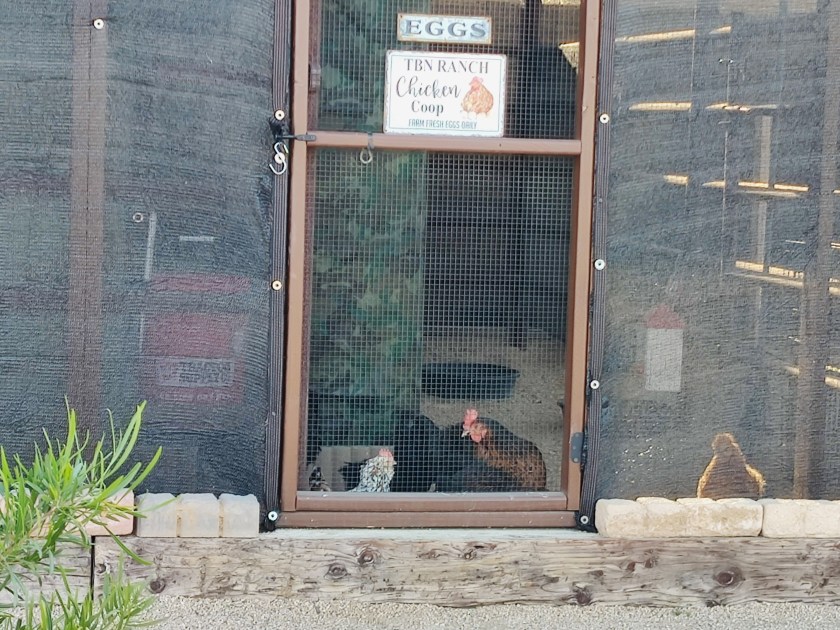
There have been many coop improvements made over the winter. The coop was once an open-sided covered corral for horses that I had professionally enclosed with heavy-grade hardware cloth – more about that build HERE.
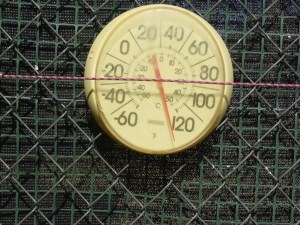
The desert doesn’t offer many options for lush greenery, but I managed to find bushes native to the desert southwest and planted three of them in front of the barn for a little color and hopefully some shade when they mature. I have a giant drum fan to help move the air in the coop, and it’s suitable for normal summer heat, but Phoenix doesn’t have normal heat; we have to keep chickens alive in 115+ temps, which is nearly impossible without human intervention. Usually, that means a mist system of some sort, along with fans, ice, and whatever else might offer them some relief. In other words, everything needed to keep chickens alive in these ridiculous high temps is a giant inconvenience and one I was determined to somewhat avoid this summer. Here’s what I came up with…
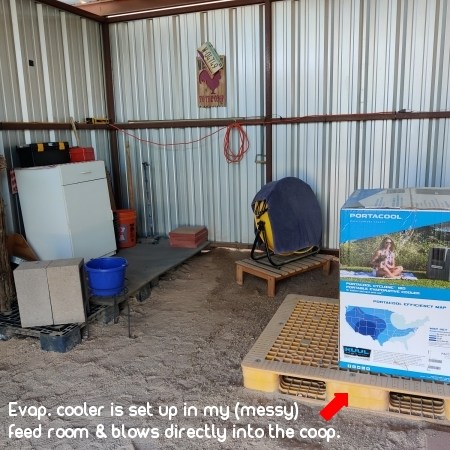
I bit the bullet and bought an evaporative cooler large enough to cool the coop area. I also bought 10 lb. feeders and scattered them in different areas of the coop to help minimize feeding chores. Daily farm chores now are basically watering and clean-up. Even my clean-up chores are easier now since I ditched the pine shavings and switched to sand. If you want to know more about sand vs. shavings, all the information is in a previous article HERE.
Purchasing an evaporative cooler is a double win-win scenario: it benefits the chickens by providing a more comfortable environment, and let’s be honest, it’s a relief for me as well. Working in scorching temperatures I definitely won’t miss.

About The Evap. Cooler…
Portacool 2000-CFM 2-Speed Outdoor Evaporative Cooler
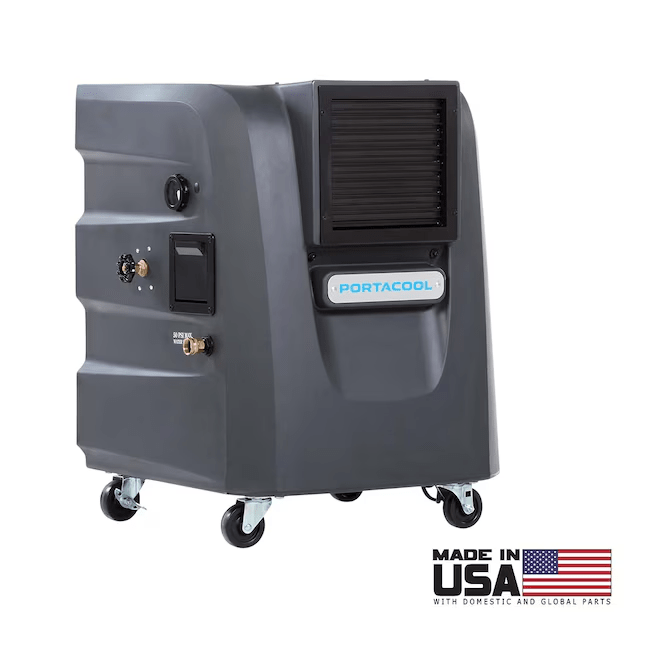
What’s an evaporative cooler? It produces cool air wherever needed, such as a backyard patio, garage, barn, or workshop. Evaporative coolers are most effective in dry climates where humidity levels are low. They can be an energy-efficient and cost-effective cooling solution compared to traditional air conditioning systems, as they consume less electricity. You can learn more about this evap. cooler or check out the large selection of different models available at Lowe’s.

TBN Ranch Chicken Coop

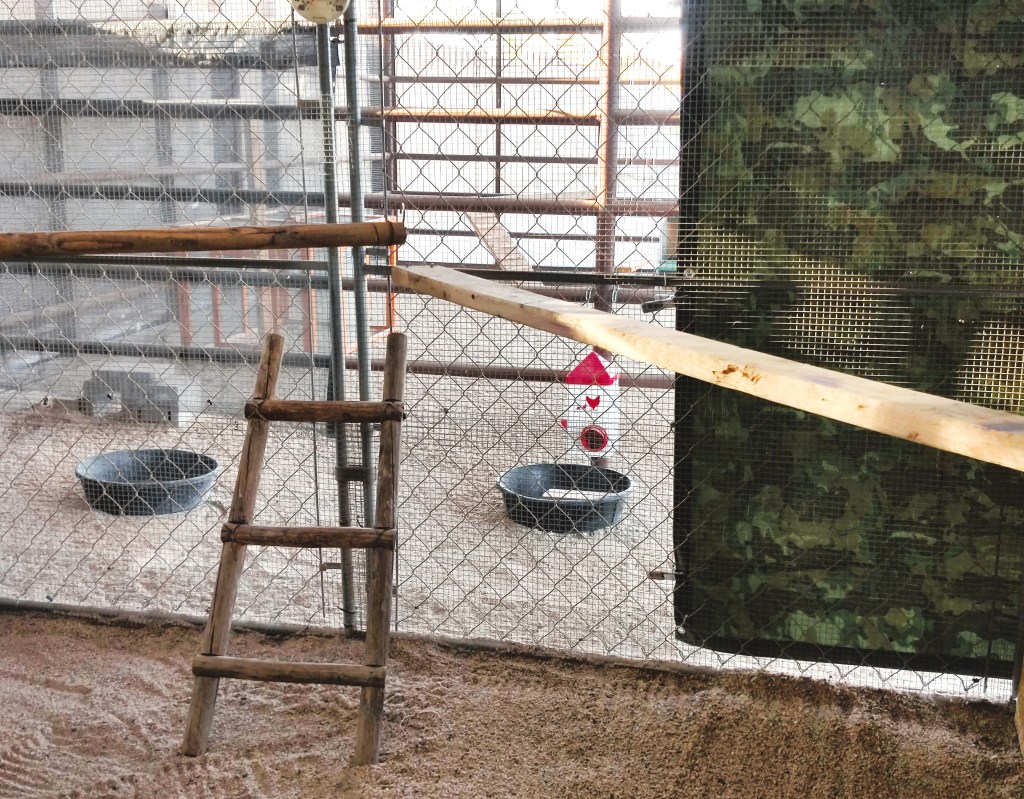
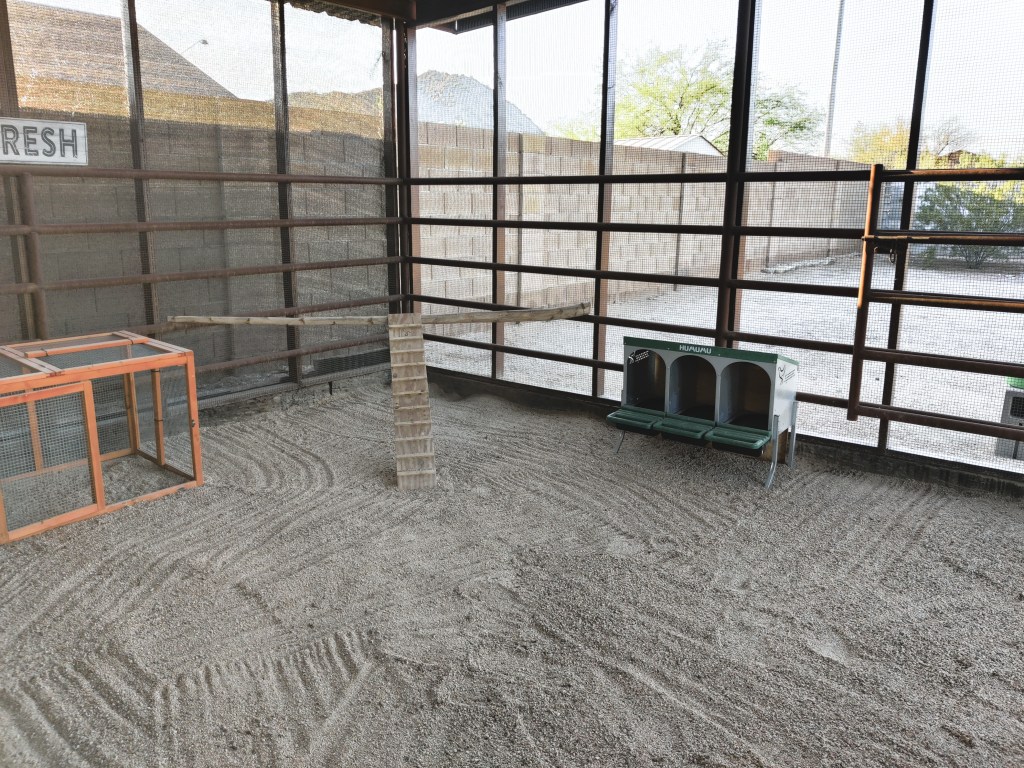
The Coop, Inside & Out…

A Few of the Hens…

A Guide for Keeping Chickens in Hot Climates

There are many ways to help your chickens survive the heat of summer. Luckily, in most parts of the country, this isn’t a big concern. However, if you are a desert dweller and have chickens, you’ll find a wealth of information in this article on how to manage them in hot weather.
Back to HOME PAGE

Chicken Keeping in Triple Digits

Surviving Phoenix, Arizona

Shade is hard to come by in Phoenix,  but not impossible if you’re creative. If your chickens are in a small coop they are unlikely to survive triple-digit temperatures, I know that sounds a bit harsh, but it’s true.  June will most likely exceed 110, which means 120+ in the coop, and that’s a death sentence.
Your birds will fair well in temperatures up to 105 if they are not confined, have shade, and a place to dig a hole in the dirt. Make sure they have cool water available, if the water is too hot they won’t drink enough to stay hydrated. Make it easy on yourself, use buckets instead of those chicken drinkers that are impossible to clean and a big hassle to fill.
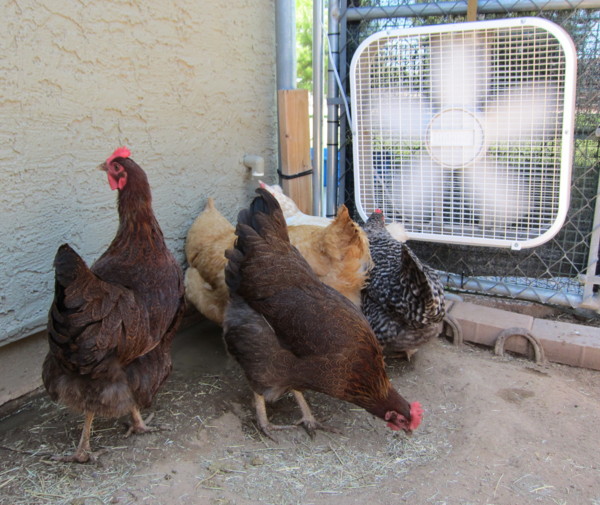
When temperatures reach over 105 in the shade it’s time to introduce a fan to the chicken yard.  I don’t use anything fancy, a $20.00 box fan will do the trick. Hang it from a fence (wreath hangers work nicely) or anyplace where it won’t tip over. Your birds will stand in front of that fan like they were watching a movie!

Gavin Flock, Summer 2011

June and July are the worst months for excessive heat, 110 -115+, and when you really have to stay on top of your chicken-keeping responsibilities. Mist systems help cool the air, especially with a fan to keep the air moving. I like the standing misters ($10.)  that attach to a hose. Place it right in the chicken yard, and dig up a small area near it so the moisture forms a little mud pool for the birds.
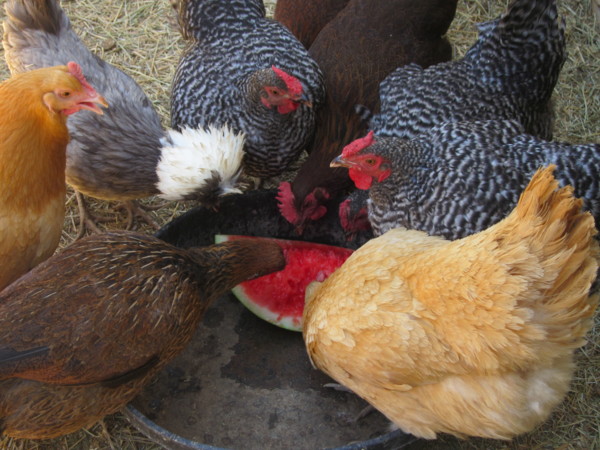
If you free-feed your chickens, don’t in summer.  Feed produces heat, so feed early morning, a little during the day, and just before they return to the coop at night.  Never offer scratch feed in summer, it’s a hot feed and unsuitable for your feathered desert dwellers. Offer your flock a watermelon, or a head of lettuce instead, this will help keep them hydrated.

Danger Signs of Heat Exhaustion

The first sign of trouble is dark red, then pale comb and wattles. As their condition worsens they will become unstable on their feet, lethargic, wobble, and even fall over and lie lifeless. They will die quickly if you don’t act fast.
Note: Heavy or meat Birds such as Orpingtons are the first to show signs of heat intolerance, watch them closely.
Chickens will hold their wings out from their body,  pant, and lay in holes on their side  – all normal behavior when they’re very hot.
What to Do
Submerge the chicken in a 5 gal. bucket of warm water and place the bird under a shade tree.  Don’t bring the bird indoors to air conditioning, this will only make matters worse when you return the chicken to the outdoors. A fan on low will help cool the bird quickly, they usually recover within 15-20 minutes.
Ideas for Providing  Shade
Shade Cloth
Mesh Tarps
Lattice
Palm Frond
Shade Sails

Back to Chicken Keeping Resources HOME PAGE